

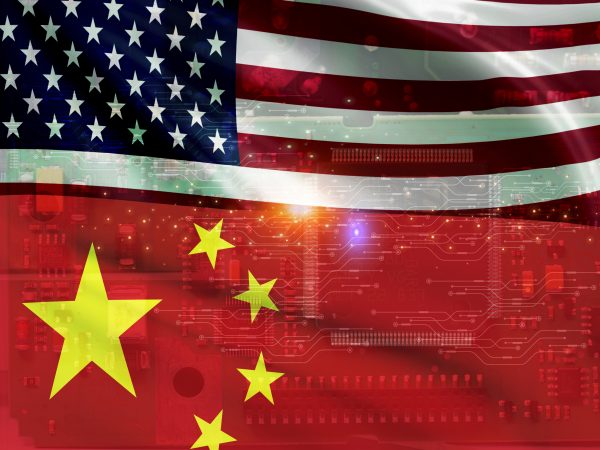
Donald Trump’s return to the White House is expected to usher in a raft of changes to the United States’ foreign policy posture. But there is at least one area in which the Republican president-elect is in agreement with the Democratic incumbent, Joe Biden: Both believe that China constitutes the nation’s primary great power rival.
For both the Biden administration and the first Trump administration (2017-2021), one of the pivotal tasks for meeting this challenge has been to retain or extend U.S. supremacy in relation to the design and production of certain critical technologies including, but not limited to, those that have dual military and non-military applications. However, how the United States should go about this has been the subject of markedly differing strategies.
Key among them, and the subject of considerable attention, has been the two leaders’ respective approaches to green energy technologies.
Biden’s approach has been to make the U.S. a more formidable challenger to China’s dominance in this sector through a mixture of import restrictions, such as the recent imposition of 100 percent tariffs on Chinese electric vehicles, and subsidy programs aimed at advancing green energy technological sovereignty in areas including EV batteries – the most significant by far being those under the umbrella of the Inflation Reduction Act (IRA).
While agreeing on the application of tariffs, Trump, on the other hand, has proposed that the answer to the China challenge lies not so much in competing on the same parameters, but rather in reversing green policies and leveraging the United States’ competitive advantages in fossil fuels. Against this, he faces the reality that the IRA is supporting jobs in Republican states. Added to this is perhaps the biggest conundrum of Trump’s green policy: that while tariffs and bans may protect legacy technology like internal combustion automobiles from foreign competition in the U.S. market, it may have little impact on the trajectory of green policies in the rest of the world – potentially damaging U.S. carmakers by decoupling their domestic and export markets.
Biden’s Tech War
A related policy difference between Biden and Trump that looks to be no less consequential to the outcome of the China-U.S. tech war is their approach to negotiating an aggressive push for technological sovereignty and tech cooperation with advanced sector trade rivals that are U.S. allies.
Bolstering the U.S. advanced tech sector and its research ecology has been a top priority for Biden, who worked to de-risk supply chains and out-compete China in areas including green energy tech, artificial intelligence (AI) and semiconductors. Key symbols of these efforts have been the 2022 passing of the IRA and the CHIPS and Science Act.
While strengthening U.S. technological sovereignty has been at the core of these programs, this priority has been balanced by friendshoring provisions and a commitment to advanced tech collaboration with major allies, such as with Australia and the U.K. through AUKUS, and Japan and South Korea through a reinvigorated trilateral partnership.
The Biden administration’s strategy, which has seen some measure of success, has been to incentivize solidarity for U.S. tech war policies by deepening and expanding a U.S.-led, multilateral tech sector symbiosis. In doing so Biden has sought to leverage an important advantage over Beijing, whose key partners are relatively tech poor, and whose industrial overcapacity and push for fuller spectrum tech sovereignty has made it a competitive threat to the advanced nations that had once participated in fostering its industrial rise.
Trump’s Approach
Trump, by comparison, has pushed a domestic tech industry sovereignty hardline, which has already stoked anxieties among U.S. tech partners. He has leveled accusations against Taiwan, for instance, of “tak[ing] about 100 percent of our chip business,” while criticizing U.S. financing of its semiconductor sector. He has not only committed to winding back the IRA, but also pledged to “stop Chinese and other countries (authors’ emphasis) producing automobiles and autonomous vehicles.”
On this front Trump’s “America first” policy agenda carries consequential risks. By emphasizing advanced tech industrial sovereignty not only at the expense of China, but also to the potential detriment of Washington’s partners and allies’ economic interests, “made in America” policies could fundamentally alter the calculus of technologically advanced nations hitherto willing to invest in U.S. partnerships and operations and absorb the opportunity costs of cooperating with U.S. policies aimed at constraining China’s technological rise.
It could even have a broader impact on the overall integrity of the U.S. alliance system – an increasingly pivotal factor as strengthening cooperation between authoritarian states, including Russia, North Korea, and Iran, poses growing threats to the global liberal order.
Competitive Threats From China and the Japan-South Korea Rapprochement
Changes in relation to the sources of competitive threats to advanced nations’ tech industries can impact foreign policy more broadly. That dynamic is the subject of a recent report by the Australia-China Relations Institute at the University of Technology Sydney.
Drawing on a case study on Japan and South Korea’s recent rapprochement, a core finding of the report was that in countries with economically vital tech industries and strong ideologies of techno-nationalism, efforts aimed at fending off challenges to tech-sovereignty may transcend beyond reforms to domestic industrial policies and enter in the realm of foreign affairs, even altering well-consolidated international relations’ postures.
In line with this, while Tokyo and Seoul’s long-running tensions prior to the rapprochement have often been associated with historical animosities and territorial tensions, it is just as instructional to understand them in relation to competing trade structures.
Japan and South Korea’s broadly similar techno-nationalist beliefs are seen to have manifested in the two nations pursuing largely parallel industry and trade policies. And the combination of these parallel ideologies and policies made the struggle for tech industry success in both countries not only seem economically and politically existential but, increasingly, a zero-sum game.
Yet the two nations have come to view China, shifting as it has from complementary trading partner to prime competitor to their cutting-edge industries, as the major threat to their status as advanced tech industry leaders, overshadowing the longstanding trade tensions between Japan and South Korea. This incentivized the two nations to set aside entrenched animosities to join forces to confront a common challenge. In line with this, the report found that closer cooperation between the two countries in the early rapprochement period was overwhelmingly focused on high-tech industries and their supply chains, particularly in semiconductors and EV technology.
The Japan-South Korea-U.S. Trilateral Partnership
China, however, was not the only shared threat for Japan and South Korea’s advanced tech industries. Also of concern were competitive challenges posed by the Biden administration’s tech subsidies. Such was the strength of mutual concern that an “American threat,” as opposed to a Chinese one, was even raised by Japanese and Korean industry figures as a core motivation for closer tech industry and supply chain cooperation.
Yet despite this, Japan and South Korea, with some caveats, leaned heavily toward the United States for tech collaboration – a trend confirmed by the “Spirit of Camp David” joint statement in August 2023, as well as this year’s inauguration of a U.S.-Japan-Korea Commerce and Industry Ministerial.
Aside from Washington’s importance as a security partner, there were several key economic reasons why this was so, despite the challenges posed by U.S. competition and the potential steep costs cooperation with the United States could potentially impose upon both nations’ still-important China trade profiles.
First, China’s shift from a complementary partner to a core industry competitor coincided with the U.S. overtaking China as both Japan’s and South Korea’s largest and most important export market.
Second, particularly in with the area of cutting-edge semiconductors, the U.S., Japan, and South Korea’s industries were both complementary and symbiotic.
Third, the U.S. displayed a sensitivity to the interests of its partners in their heavily weighted advanced tech sectors. Washington implemented friendshoring agreements, made reasonable concessions to South Korean semiconductor producers with economic interests in China, and, perhaps most importantly, opened up access to its subsidy programs to both South Korea and Japan. This provided enormous benefits to the former in particular, with South Korean firms having secured U.S. loans and tax breaks worth billions of dollars for investing in battery and solar production in the United States.
Risks of “America First”
All of these gains in trilateral cooperation could come under pressure should a second Trump administration pursue a “made in America” policy that places U.S. technological and industry sovereignty above a strategy of collective gain through collaboration.
Such a move could not only dismantle the gains of U.S. collaboration with two advanced tech industry leaders, it could more broadly weaken its relationship with the two East Asian nations whose strategic location, U.S. bases, and military capacity make them vital for Washington’s efforts to retain the regional balance of power.
With technological sovereignty drives also strengthening in Europe and several middle power nations, many of which are beginning to push back against China’s overproduction in EVs and other industries, a “made in America” policy that too aggressively erodes market space for “friendly” trade rivals could also threaten to have a broader impact on U.S. partnerships, especially in the case of emerging tech hubs with equidistant foreign policies such as Malaysia.
Given the increasingly complex research ecosystems and value chains necessary for fostering critical advanced technologies, collaboration and segmentation is no longer optional for attaining or retaining the cutting edge in the industries pivotal for economic and military success in the 21st century. A proportionate “made in America” tech sovereignty policy can, and should, seek to retain U.S. standing as a tech industry leading partner, and help reverse some of the hollowing out of U.S. industry that has had an adverse impact on the lives and communities of many working-class Americans. A disproportionately hardline policy could, conversely, see a more isolated U.S. lose the tech war, and a great deal more.