

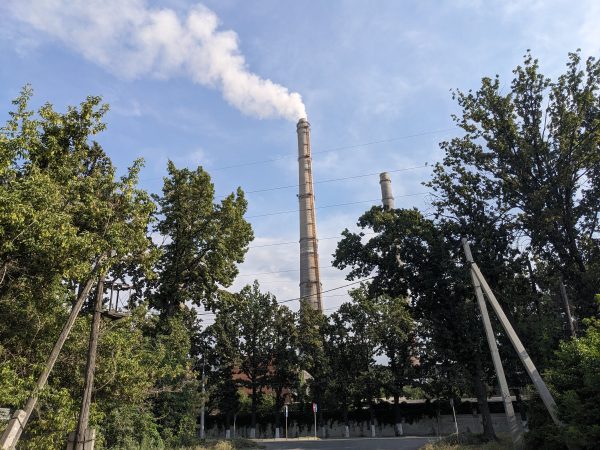
It is a puzzling question: why do the energy-rich Central Asian states experience frequent energy crises? The answer points to a trap, a ticking bomb that every winter threatens to explode into an insurmountable challenge for the region’s people and its governments alike: the region’s old infrastructure needs billions in immediate renovations and the region’s governments lack both the time and the will to do what needs to be done.
Serving Beyond Lifecycle: Old and Poorly Maintained Energy Infrastructure
The energy crisis of winter 2022-2023 was not the first to hit Central Asia but it was among the worst. The region’s two largest energy systems suffered from an “unprecedented” collapse. In Uzbekistan, a country perceived to be self-sufficient, power shortages blanketed the entire nation. Uzbek President Shavkat Mirziyoyev highlighted that in Tashkent alone, around 6,000 wholesale gas consumers had been disconnected from the gas network and 120 of 584 mahallas, neighborhoods, were experiencing frequent and prolonged electricity and gas disruptions. Seventy-five percent of Uzbekistan’s power infrastructure is more than three decades old, including 66 percent of the transmission grid and 74 percent of substations. Thus, in Tashkent, seven high and 524 low-voltage transformers failed under the pressure of the high electricity demand load in just one day on January 15, 2022.
In Kazakhstan, a country with installed power generation capacity (23,547MW) almost totaling that of the other Central Asian countries combined, entire cities were cut off the grid last winter. This left thousands of residents languishing in “catastrophic” conditions and prompted a personal intervention by Kazakh President Kassym-Jomart Tokayev. Just when that crisis had settled and the emergency lifted on February 13, six regions in Kazakhstan faced another massive power cut.
The average deterioration level of power transmission facilities in Kazakhstan is about 60 percent, which was the main cause of the 3,900 technical malfunctions and accidents detected in Kazakhstan’s power system in 2019. Similarly, Barki Tojik, Tajikistan’s national power company, has 450 transmission and distribution substations, most of which were built in the 1960s and 70s, and requires a large-scale modernization of its key infrastructure and equipment. In Kyrgyzstan, the degree of deterioration of the power system reached 50 percent and now causes up to 80 percent of emergency shutdowns.
The problem of dilapidated infrastructure is the single biggest challenge for Central Asia’s energy systems. Unless this problem is addressed in a timely and efficient manner, the entire region will continue suffering from energy crises such as those seen last winter. We are already witnessing power shortages in the region and the winter of 2023-2024 has only just began.
Energy Sector Mismanagement
The scale of much-needed repairs poses a financial challenge to the countries of the region and the cost of modernizing the entire energy infrastructure is unbearably high. According to the Asian Development Bank’s estimates, Central Asian countries need at least $33 billion annual spending in the energy sector alone through 2030 to secure uninterrupted and sufficient energy supplies. And because the numbers are in the tens of billions of dollars, without reforming energy tariffs, which are currently below the cost-recovery level, addressing this problem will be practically impossible.
In Tajikistan, for instance, 80 percent of electricity is supplied by the monopoly provider Barki Tojik and current tariffs recover only 50 percent of the cost of electricity production. About 25 percent of electricity is subsidized in Uzbekistan, which makes it not only unprofitable and unattractive to most investors but also detrimental to the sustainability of the energy system. The Kyrgyz President Sadyr Japarov announced that electricity tariffs would increase by 30 percent (from$0.0089 to$0.012 per kW/h) in May 2023 as “the debt of the country’s energy sector amounts to 137 billion soms” (equivalent to $1.6 billion). Considering that the average cost of generated electricity is $0.028 per kW/h, this reform is still far below the required amount to reverse the situation. In order to alleviate the situation during the fall of 2023, the Kyrgyz Energy Ministry ordered people to use no more than 5kWh of electricity per day to avoid blackouts.
None of the major stakeholders in the chain of energy supply – producers of energy, operators of distribution networks, and consumers who face the prospects of increased utility bills – have any incentives to reform the infrastructure. Access to cheap energy is also crucial for extractive industries that export liquid and solid minerals to international markets. Their production processes are linked with the producers of the energy supply. Inherited from Soviet industrialization plans, these enterprises represent a closed cycle that links multiple cities and mines into a single production unit.
In Kazakhstan, 27 monotowns produce 40 percent of industrial output by operating mining and/or enrichment plants with little incentive for private and public owners to engage in the substantial renovation of the existing infrastructure as it may threaten their production plans. The operators of distribution networks are also not interested in reforms. Since governments set maximum utility tariffs for energy sold in the domestic market, 22 private operators of coal-fueled power stations in Kazakhstan complain that they face diminishing returns and little profit margins despite the Tariff in Exchange for Investments Program.
Besides the absence of domestic incentives for investments and reforming the tariff system, external triggers escalate the energy crisis for Central Asian consumers. The energy deficit in Central Asia is linked to grave mismanagement in the stable supply of energy for domestic consumption. In Uzbekistan and Tajikistan, electricity export to neighboring countries, especially Afghanistan, is often provided at the expense of domestic consumption. Because of the difficulties in collecting payments from local customers and low electricity tariffs – $0.028 in Uzbekistan and $0.019 in Tajikistan – Central Asian countries are interested in exporting electricity to neighboring Afghanistan, which pays far higher prices for electricity: $0.05 for Uzbek electricity and up to $0.045 for Tajik electricity. This explains why Central Asian countries export electricity and fuel even during domestic energy supply shortages.
External reliance on Russia is another grave case of mismanagement. For example, Kazakhstan buys electricity from Russia at high prices, while the owners of the collapsed thermal power plants, together with other high-ranking government officials, organize illegal crypto-currency mining operations which make up at least 5 percent of the entire energy use in the country (600 MW/h). Although the crypto-mining operations of more than 50 companies moved elsewhere, domestic consumption remains vulnerable to electricity supplies from Russia.
Uzbekistan ceased gas exports to Russia in 2020 and to China during the winter season of 2022-2023. Referring to 1.2 trillion cubic meters of gas reserves, Uzbekistan’s then Minister of Energy Alisher Sultanov claimed in 2021 that the country had enough gas “for three Uzbekistans.” And yet, from October 2023, Uzbekistan officially started importing Russian gas via Kazakhstan, with a total annual volume of 2.8 billion cubic meters to cover shortages during the cold winter months, as part of the so called “gas union” among the three countries. Natural gas accounts for 85 percent of power generation capability in Uzbekistan. President Shavkat Mirziyoyev highlighted that Uzbekistan is ready for a long-term gas partnership with Russia and Kazakhstan.
The “gas union” initiative received full support from the Kazakh authorities, as well. While Kazakhstan serves as a transit country for the moment, efforts are already underway to install gas-fired units as a substitute for coal-based operations at the Almaty-2 and Almaty-3 thermal power facilities, which will soon bring the question of increasing gas imports onto the government’s agenda.
While Russian President Vladimir Putin stated that with this partnership, Russia had “confirmed its status as a reliable natural gas supplier,” the history of its energy relations with Central Asia shows that Moscow acts as a reliable partner only so long as it serves its interests. Deprived of access to the European market, Russia has been looking for opportunities to export gas to alternative destinations. This ad hoc decision does not imply a long-term reliable partnership and is certainly not a viable solution to energy crises in the region.
In addition, in the Central Asian context, infrastructure development projects usually have a high level of state involvement, which results in corruption. RFE/RL’s Uzbek Service, Radio Ozodlik, revealed a corruption case that involved Uzbek officials and a Russian tycoon, Gennady Timchenko with close links to Putin, who took control over “hundreds of gas and oil fields” in the country with export rights.
These contracts are important since the majority of energy for domestic consumption in Uzbekistan is produced with natural gas. Foreign ownership implies additional incentives for export at the expense of the domestic market. In Kazakhstan, the thermal power plant that collapsed and left close to 100,000 people without electricity and heat in November 2022 belongs to oligarchs with close links to the Nazarbayev’s family. Its renovations are paid from state budget, while the company made 2.3 billion Kazakh tenge ($50 million) in profits from fines alone. To offset the budgetary gaps, the Kazakh government proposed to borrow $3.2 billion from the National Pension Fund in order to, among other things, modernize infrastructure.
Besides corruption, government-backed energy projects are often marred by long delays in project completion. In Kyrgyzstan, the construction of the hydroelectric dam Kambar Ata I began in 1986. Various companies, including Russian ones, promised funding, of which at least $300 million went missing, with many fingers pointed at the family of then-resident Kurmanbek Bakiev. With energy crises looming, the governments of Kyrgyzstan, Kazakhstan, and Uzbekistan in January 2023 decided yet again to complete the project, stating that it could produce enough electricity for the entire region. But even with the will of the three states combined, they signed a road map plan for the operation of the dam only by 2028.
In the meantime, domestic users remain the victims of such mismanagement and are left with high bills and no heat and/or power for months at a time. The former head of the Kazakh JSC “Samruk-Energo,” Serik Tyutebaev, reported in January 2023 that new energy infrastructure is being implemented in two regions of Kazakhstan (Ekibastuz and Almaty) with a completion date by 2030 that will supposedly abate the country’s vulnerability to power supply disruptions. The announced plans are to add four new coal-fired power units that will boost power generation by an additional 4 GW. In addition, a recent visit by Putin to Kazakhstan flagged the possibility of construction of three more coal-fired power plants in Kazakhstan. Construction of infrastructure that runs on fossil fuels is a one step forward, two steps back solution for the sustainable energy transition and climate commitments.
Recent decisions made to avoid another energy crisis in the region are not only set to hamper any sustainability efforts put forward but also bear geopolitical consequences.
Green Energy Hope
One way to enhance the region’s energy security is to replace the power system, which was put into operation several decades ago and has become obsolete, with new and sustainable technologies, including renewable energy sources.
In Uzbekistan, the Green Economy Strategy for 2019-2030, approved by the president in 2019, aims to enhance the country’s energy security through the development of renewable energy sources, which are expected to account for 21 percent of the power balance by 2030. Aware of existing and emerging energy risks, Kazakh authorities in 2013 set ambitious targets for renewable power generation: 3 percent of total generation by 2020, 10 percent by 2030 and 50 percent by 2050.
However, such hopes are overoptimistic as the targeted renewable energy generation capacity will need to be integrated into the existing centralized power system. All renewable energy facilities are being plugged into a crumbing central power grid. So, without addressing the problems of outdated power transmission infrastructure, the contribution of sustainable energy transition initiatives to preventing future energy crises will still be limited.