

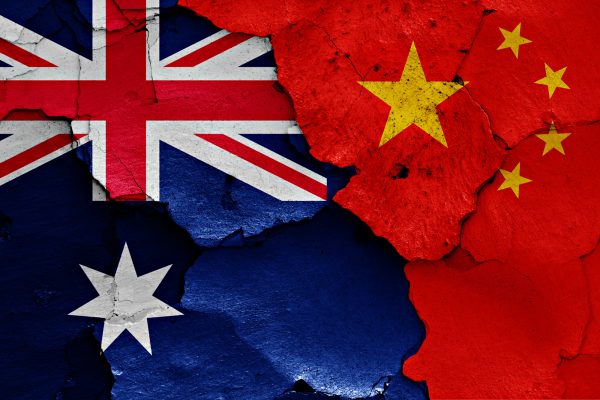
China and Australia’s top trade officials recently met for the first time since 2019. Although Chinese Commerce Minister Wang Wentao described the recent talks with his Australian counterpart, Don Farrell, as an important step in getting bilateral economic and trade cooperation back on track, it is unlikely that there will be any significant improvement in bilateral economic relations between the two countries.
Wang himself sounded a note of caution, warning that trade disputes would not be resolved any time soon and that Beijing will not compromise on “principled” issues. Chinese officials have argued that Australia must first take steps to stem the decline in bilateral relations and create a better atmosphere for talks. After the meeting, the Australian side also downplayed the likelihood of an imminent lifting of trade restrictions.
Chinese leader Xi Jinping wants everyone to believe that his meeting with Australian Prime Minister Anthony Albanese last November came about because Australia — not China — has changed. Xi will never admit that he is the one who capitulated after a failed two-and-a-half-year strategy to make an example of Australia by cutting off ties and imposing trade sanctions. Over two years of trade restrictions have failed to bring Australia to heel. Recent reports suggest that Beijing’s economic sanctions against Australia have been ineffective. Instead, the Chinese Communist Party (CCP) has been forced to live with an increasingly critical Australia. The list of concerns that Albanese raised in his meeting with Xi signals that Australia, like the United States, continues to treat China as a threat rather than a partner.
Albanese, who was elected in May 2022, may have initially thought that he could take a more open and conciliatory approach, but China’s aggressive foreign policy has made it unpopular with Australians. When the CCP used diplomatic and economic coercion to punish Australia for calling for an investigation into the origins of COVID-19, it turned even more Australians against China. Negative sentiment toward China remains high in Australia. A recent poll shows that three-quarters of Australians believe that China could become a severe military threat within the next two decades. Growing anti-Chinese sentiment in Australia poses a serious problem for any move toward normalization. Bilateral economic disputes appear to have degenerated into a diplomatic freeze.
Trade flows between the two countries are unlikely to normalize in the short term. So far, Australia has signaled that it is unwilling to withdraw its WTO complaints against China’s tariffs on wine and barley, despite pressure from Beijing. Indeed, China’s efforts to force Australia’s hand may have backfired, as Australia has found new markets for its exports. By redirecting its exports to countries like India and Mexico, Australia can also reduce its dependence on a single market, one that is proving to be increasingly unreliable.
Recently, relations between Beijing and Canberra have been less combative, but the Albanese government remains rightly wary of China’s ambitions. Under Albanese, Australia is continuing many of the same bilateral and multilateral efforts carried over from the regime of his predecessor, Scott Morrison. These include working with the United States, Japan, and India as a part of the Quadrilateral Security Dialogue (commonly known as the Quad); working with India and Japan to improve supply chain resilience; continuing a new security pact with the United States and United Kingdom on nuclear submarine development; launching a new security agreement with Japan; and engaging deeply with Pacific Island states such as Fiji, Samoa, and Tonga.
The Australian government is working harder than ever to build relationships and partnerships with Pacific Island nations, Japan, India, and other middle powers in the Indo-Pacific. There are also reports of a plan to station six U.S. B-52 bombers, which have nuclear weapons capability, in northern Australia at Tyndall Air Force Base. In addition, Australia plans to build 11 large storage tanks for jet fuel, providing the United States with refueling capacity closer to China than its main fuel depot in Hawaii. The above measures, along with the signing of AUKUS (the trilateral security pact between Australia, the U.K., and the U.S.), make clear that Canberra will not bow to Beijing’s increasingly assertive political and military posture in the region, even if it harms Australia’s own economic interests in the short term.
According to a recent Australian media report, the only products China is buying from Australia are things that it absolutely needs and aren’t readily available elsewhere. That’s the only reason why Australian iron ore and gas have never fallen out of favor with China. For virtually everything else — from grain to timber, from seafood to wine, and even services — Australia remains firmly on China’s trade blacklist. Even the much-heralded return of Australian coal to Chinese buyers a few months ago is more symbolic than anything else. Shipments are a fraction of what they were three years ago, when Australia supplied coal for more than 20 percent of China’s electricity generation.
Australia and China remain as deeply divided and suspicious of each other as ever: diplomatically, militarily, and even in terms of fundamental values. To some extent, the current trade war was born out of a clash of values. China and Australia signed a free trade agreement in 2015, cementing a strong historical trade relationship based on China’s demand for Australian iron ore for its industrial machinery.
However, the relationship began to show signs of strain after Australia became one of the first countries to raise national security concerns about Huawei and introduced foreign interference laws specifically to address the threat China posed. The political dynamic reached a low point in 2020, when Australia called for an independent investigation into the origins of the COVID-19 pandemic. For Beijing, this was seen as a direct attack on China’s reputation and the latest in what the Chinese regime called a “series of misguided actions” by Canberra.
In the months that followed, Chinese authorities suspended import licenses for major Australian beef producers, ordered several power plants and steel mills to stop buying Australian coal, and imposed punitive tariffs on Australian barley and wine. Later, in March 2021, the Chinese government announced that it would extend the 220 percent anti-dumping tariff on Australian wine for another five years.
Notably, Taiwanese President Tsai Ing-wen has called on Taiwanese consumers to buy more Australian wine in response. Australia is also actively looking for other economic partners. In late 2022, it signed the Australia-India Economic Cooperation and Trade Agreement, in which the two countries agreed to cut tariffs on goods by more than 85 percent to reduce their dependence on China.
Indeed, in response to China’s values-related economic coercion in recent years, mutual assistance has emerged between Japan, Taiwan, Australia, Czechia, Lithuania, and several other countries. In particular, last April the European Union approved 130 million euros ($140 million) in financial aid for Lithuanian companies. This came after China imposed discriminatory trade restrictions on Lithuania after Taiwan was allowed to open a representative office in the Lithuanian capital, Vilnius.
But the big potential question is: How long can such acts of mutually-beneficial cooperation and assistance last? In particular, will these democracies (including the EU) be able to maintain their strong values and mutual support as the geopolitical landscape changes (for example, as China intensifies its divisive strategy) and interest structures evolve? The danger is that Australia, and even more so smaller democracies, will be largely left to fend for themselves.
By now, the need for principled solidarity should be obvious. Security alliances exist, but they were built to address military, not economic, coercion. In response to the kind of cynical and economically coercive statecraft China uses, a new kind of alliance is needed, like NATO, that combines economics with democratic principles. Thus, if a democratic state like Australia stands up to China by calling out its human rights record or demanding an international investigation into the origins of COVID-19, and the CCP retaliates economically, the members of the proposed alliance would be obligated to financially support that country so that it doesn’t have to bear any CCP-inflicted economic sanctions alone.
Such an idea is a no-brainer, but it definitely requires patience, discipline, and a long-term focus. It is the best response to the CCP’s own decades-long strategy of maintaining a “united front” with its allies and dividing and conquering its opponents. It is high time for a values-based economic equivalent to NATO to keep China in check.