

• Home
  • Politics
  • Health
  • World
  • Business
  • Finance
  • Tech
  • More
    • Sports
    • Entertainment
    • Lifestyle
What's Hot

Dellia Group mulls options after interest in fruit-snacks firm

July 13, 2026

Sam Neill, Beloved New Zealand Actor and ‘Jurassic Park’ Star, Dies at 78

July 13, 2026

Kim Jong-un Leads Meeting on Growing ‘Quality and Quantity’ of North Korea Nuclear Force

July 13, 2026
Facebook Twitter Instagram
  • Contact
  • Privacy Policy
  • Terms & Conditions
Monday, July 13
Patriot Now NewsPatriot Now News
  • Home
  • Politics

    Texas Hispanics swung hard to Trump. A new poll shows they’re furious at his deportations.

    July 12, 2026

    The high-stakes, battleground Senate race that no one is talking about

    July 12, 2026

    Lindsey Graham’s Passing Is Another Stage In The Death Of Trumpism

    July 12, 2026

    How ICE melted from view at the World Cup

    July 12, 2026

    The secret to becoming a sporting superpower

    July 12, 2026
  • Health

    Kennedy presses ahead with plans to reduce antidepressant use

    July 13, 2026

    Lindsey Graham Cause Of Death, Aortic Dissection. An ER Doc Explains

    July 13, 2026

    Supporting Science Is An Act Of Patriotism

    July 13, 2026

    AAIC 2026: Researchers focus on tau, target blood-brain barrier

    July 12, 2026

    Lindsey Graham’s Sudden Death Sparks Questions About Cardiac Arrest

    July 12, 2026
  • World

    Kim Jong-un Leads Meeting on Growing ‘Quality and Quantity’ of North Korea Nuclear Force

    July 13, 2026

    Iran Ceasefire is Over, But Talks to Continue

    July 13, 2026

    Texas Man Gets 40 Years for Leading Violent Online Child Exploitation Ring

    July 13, 2026

    Colombia’s Incoming Conservative Admin to Close Its Embassy in Cuba

    July 13, 2026

    Iran Reports New Attacks On Military Targets On Its Largest Island Near The Strait Of Hormuz

    July 13, 2026
  • Business

    ATF Rule Could Cause Classic Showdown Between Mom And Pop Shops Versus Online Retailers

    July 10, 2026

    Costco Shows That You Can Build A Thriving Business With One Simple Trick (Pay Your Workers)

    July 9, 2026

    The Agency Elizabeth Warren Built Now Advances Trump’s Agenda

    July 9, 2026

    Meta To Shell Out Billions For New AI Data Center Outside US

    July 9, 2026

    How Big Banks Are Scheming To Jack Up Your Fees

    July 8, 2026
  • Finance

    Dellia Group mulls options after interest in fruit-snacks firm

    July 13, 2026

    He works two hours a month to make six figures a year — why he says ditching the 9-to-5 is ‘the ultimate power’

    July 13, 2026

    Mark Cuban has strong words on AI companies and job losses

    July 13, 2026

    Spectrum makes significant decision as customer losses mount

    July 13, 2026

    Costco and Walmart capture grocery-store crowns

    July 13, 2026
  • Tech

    LAPD Cuts Ties with License-Plate Camera Vendor over ‘Who Owns the Data’

    July 12, 2026

    Apple Lawsuit Accuses OpenAI of Stealing Trade Secrets in Massive Scheme

    July 11, 2026

    Bloomberg Claims Startup Co-Founded by Bill Gates’ Daughter Cheats on Sales Credit

    July 11, 2026

    Nobel Prize-Winning Chemist Leaves U.S. to Join Chinese AI Project

    July 11, 2026

    European Commission Finds Meta Violated Digital Services Act with Addictive Design Features

    July 11, 2026
  • More
    • Sports
    • Entertainment
    • Lifestyle
Patriot Now NewsPatriot Now News
Home»Finance»Why ASEAN Countries Often Run Trade Surpluses
Finance

Why ASEAN Countries Often Run Trade Surpluses

April 15, 2025No Comments5 Mins Read
Facebook Twitter Pinterest LinkedIn Tumblr Email
Why ASEAN Countries Often Run Trade Surpluses
Share
Facebook Twitter LinkedIn Pinterest Email

When U.S. President Donald Trump unveiled his tariff plan to the world a few weeks ago, Southeast Asian countries were especially hard hit, with tariffs ranging from 18 percent on the Philippines to nearly 50 percent on Cambodia. Malaysia, Indonesia, Thailand, Vietnam, and Laos were looking at tariffs of between 24 and 48 percent.

ASEAN was seemingly treated more harshly than other regions because many of its member states run trade surpluses (in goods) with the United States, and Trump is obsessed with bilateral trade imbalances. Although the U.S. backed down within days, Trump’s wild ride does raise an interesting question: Why do so many countries in Southeast Asia run large trade surpluses, and is this actually a bad thing?

The simple answer is that countries in Southeast Asia run large trade surpluses because many have followed a model of economic development called export-oriented industrialization. One of the more reliable ways for an emerging market to accelerate economic growth is to manufacture things like textiles and electronics and then export them to foreign markets. Emerging markets can make these goods at lower cost because production inputs, such as labor, are generally lower than they are in the U.S. or Europe.

This model of economic development has been supported by and benefited the U.S. for decades, and has been championed by stewards of the liberal international order such as the World Bank. This type of development has been particularly effective in Asia, with the World Bank famously dubbing it the East Asian miracle in the 1990s.

See also  Indonesia’s President Says New Capital On Track, Despite Resignations

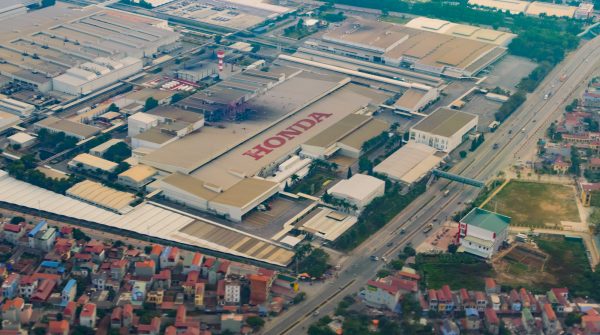
In Southeast Asia, Thailand has used this model to transform itself into an export powerhouse. Vietnam’s phenomenal recent growth has followed the same trajectory, with big foreign companies like LG and Nike investing billions of dollars to build production facilities in the country. The explicit purpose of locating production in Vietnam and Thailand is to produce goods at a lower cost so they can be exported to foreign markets.

If you are following the logic of this strategy, you will have noticed that running a large trade surplus with the rest of the world is the entire point of this type of economic development. And with the U.S. being a massive market with an appetite for affordable goods, it’s not surprising that such a global economic system produces net exporting countries that run sizable trade surpluses with it.

Trump believes this is unfair, and also bad for the United States. Is he right to think that? Export-led industrialization often involves state intervention in markets to make exports more competitive. Net surplus countries frequently manipulate their currencies (an undervalued currency boosts exports), suppress wages, and subsidize or otherwise protect certain industries so they can gain an advantage in global markets. You might call this unfair.

And there is some truth to the claim that global trade has become unbalanced, especially given the geopolitical context of a rising China driving growth by exporting surplus production to the rest of the world, a lot of which is indeed absorbed by the United States. But what would a more sustainable balance look like? Biden’s idea was to make the U.S. a more attractive location for high-value production and investment by pursuing an American version of industrial policy. Trump’s idea has been to slap tariffs on every country in the world based on a poor understanding of global trade.

See also  Trade, Tariffs and Trump in Southeast Asia

The result is that for decades the U.S. built and championed a system of global trade where emerging markets could industrialize by exporting surplus production to the rest of the world. They were in fact encouraged to do so, and many countries in Southeast Asia successfully followed that model. Now, the U.S. is dismantling this system in spectacular fashion because it no longer suits them. But I wonder whether the system was actually still working for the net exporting countries anyway.

It became obvious during the COVID-19 pandemic that relying on exports as an engine of economic growth was a major liability for emerging markets. It places them at the mercy of external forces over which they have little control. Thailand, the most export-dependent nation in Southeast Asia, has still not fully recovered from disruptions to global trade and travel that started in 2020, and things are only likely to get worse in the years ahead.

Even though it walked back the tariffs, the U.S. is making it crystal clear just how risky this style of economic development is and how vulnerable it is to external shocks. While it will no doubt continue in some form, the U.S.-led global economic order that gave rise to the East Asian miracle is undergoing a fundamental transformation. Exporting excess production to foreign markets like the U.S. is no longer a reliable model of economic development, especially in the current geopolitical environment.

What comes next is anybody’s guess. But there are other models of economic development, ones that require less dependence on the U.S. and don’t force developing countries to run perpetual trade surpluses. We might see regional trade within ASEAN become more important, or a bigger role for states or domestic markets in driving growth. Whatever comes next, the countries that can adapt the quickest to this new reality and develop alternative models of economic growth and development are going to have a significant advantage as we push forward into an opaque and uncertain future.

See also  What South African Rooibos Tea Can Tell Us About Africa-China Trade Flows
ASEAN Countries Run Surpluses trade
Share. Facebook Twitter Pinterest LinkedIn Tumblr Email

Related Posts

Dellia Group mulls options after interest in fruit-snacks firm

July 13, 2026

He works two hours a month to make six figures a year — why he says ditching the 9-to-5 is ‘the ultimate power’

July 13, 2026

Mark Cuban has strong words on AI companies and job losses

July 13, 2026

Spectrum makes significant decision as customer losses mount

July 13, 2026
Add A Comment

Leave A Reply Cancel Reply

Top Posts

The Alarming Ways Extreme Heat Affects You Brain

August 23, 2023

“I’ve Never Heard of Mr. Boles” – Robert Kennedy Jr. SHREDS Democrat Leader After She Lies About His Alleged Ties to GOP Donor (VIDEO) | The Gateway Pundit

July 20, 2023

Chemical makers settle PFAS-related claims for $1.19 billion

June 3, 2023

Instagram Reels Offers ‘Risqué Footage of Children’ Next to Ads for Major Companies

November 29, 2023
Don't Miss

Dellia Group mulls options after interest in fruit-snacks firm

Finance July 13, 2026

Norway snacks business Dellia Group said it is assessing “strategic alternatives” after attracting buying interest…

Sam Neill, Beloved New Zealand Actor and ‘Jurassic Park’ Star, Dies at 78

July 13, 2026

Kim Jong-un Leads Meeting on Growing ‘Quality and Quantity’ of North Korea Nuclear Force

July 13, 2026

Kennedy presses ahead with plans to reduce antidepressant use

July 13, 2026
About
About

This is your World, Tech, Health, Entertainment and Sports website. We provide the latest breaking news straight from the News industry.

We're social. Connect with us:

Facebook Twitter Instagram Pinterest
Categories
  • Business (4,399)
  • Entertainment (5,646)
  • Finance (4,167)
  • Health (2,461)
  • Lifestyle (1,897)
  • Politics (3,861)
  • Sports (4,852)
  • Tech (2,371)
  • Uncategorized (4)
  • World (5,621)
Our Picks

Benefits, Types, Side Effects, Cost

May 2, 2024

High School Athlete Gives Thumbs Down at Podium After Losing to Trans Runner

May 23, 2023

AWKWARD! Ted Cruz Gets Busted By His Own Past Words On Birthright Citizenship

July 5, 2026
Popular Posts

Dellia Group mulls options after interest in fruit-snacks firm

July 13, 2026

Sam Neill, Beloved New Zealand Actor and ‘Jurassic Park’ Star, Dies at 78

July 13, 2026

Kim Jong-un Leads Meeting on Growing ‘Quality and Quantity’ of North Korea Nuclear Force

July 13, 2026
© 2026 Patriotnownews.com - All rights reserved.
  • Contact
  • Privacy Policy
  • Terms & Conditions

Type above and press Enter to search. Press Esc to cancel.