

Electric vehicles (EVs) have become a new source of China’s trade tensions. In May, the U.S. government imposed a 100 percent tariff on Chinese EV imports. The European Union quickly followed suit, imposing a 37.6 percent tariff on Chinese EVs. The Chinese government denied the overcapacity charge. However, evidence of overcapacity is clear. Chinese state media reported the ongoing “price war” between Chinese EV producers and attributed the unhealthy competition to an “over-supply of cars.”
There is no need to use statistics to illustrate the rapid growth of China’s EV market in recent years. For many foreigners returning to China after COVID-19, their observations are more than sufficient. Before the pandemic, EVs were a rare sight on Chinese streets. However, upon returning post-pandemic, people are often astonished by the prevalence of EVs in China. These vehicles now dominate the streets, particularly in lower-tier cities.
Moreover, almost all Didi (China’s equivalent of Uber) drivers have switched from gas cars to EVs. Many of these drivers explain that EVs allow them to save several hundred yuan per month, as electricity is much cheaper than gasoline.
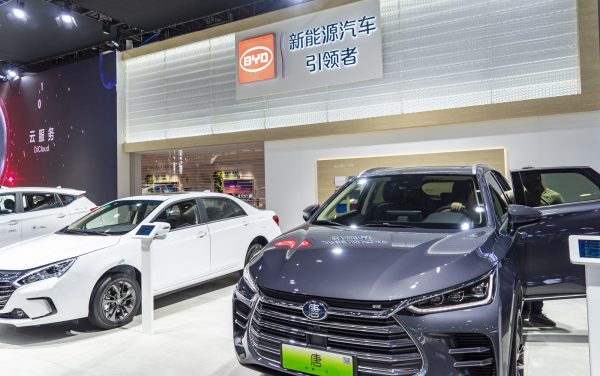
The growing demand for EVs has led to an increasing number of EV producers. The largest EV producer in China is BYD; other major Chinese EV companies include XPeng, Nio, and Li Auto. Chinese automobile state-owned enterprises (SOEs) that previously specialized in traditional cars, such as SAIC, GAC, and BAIC, as well as private car manufacturers like Geely and Great Wall (Changcheng), have also entered the EV market.
Even non-automobile companies have decided to ride the EV wave. Huawei and Xiaomi, two of China’s largest smartphone companies, now have their own EV brands. The disgraced real estate giant Evergrande also had ambitious EV plans before the company collapsed into chaos. Besides these large brands, many lesser-known EV companies still manage to capture customers.
In general, while Chinese EV companies have expanded tremendously over the past several years, the EV market has now reached a point of saturation. Demand for EVs is also decreasing, with many potential customers adopting a “wait-and-see” tactic. They want to see how low prices can go before making a decision. Complaints and protests from new BYD buyers due to sudden price drops just days after their purchases have further encouraged this cautious approach.
The key to China’s EV growth lies in the industrial policies of both national and local governments. In many cases, local support has been more extensive and critical to the development of Chinese EV producers than national policy.
One notable example is Hefei, the capital of Anhui province, which became the site of BYD’s super factory in 2021. The Hefei government made tremendous efforts to support and facilitate BYD’s investment. The negotiation between BYD and the Hefei government took only 23 days, an unprecedented speed for any local Chinese government. When BYD claimed that the factory location was not flat enough for construction, the Hefei government mobilized over 1,000 trucks to move dirt and create a flat surface overnight.
The BYD factory became the anchor of Hefei’s EV industry, attracting BYD’s suppliers and leading to the emergence of a complete EV supply chain. Following BYD’s success, other car producers followed suit. Currently, there are more than six EV manufacturers and over 500 EV parts suppliers operating in Hefei. As a result, Hefei earned the reputation as China’s “EV capital.”
The Hefei government employed several policies to support local EV development. First, it initiated an EV fund of over 100 billion yuan to invest in EV companies and support their relocation to Hefei. For example, the Hefei government invested 11.2 billion yuan into Nio when the company faced financial difficulties, resulting in Nio moving its headquarters, car factory, battery factory, and research center to Hefei.
Additionally, Hefei uses policies to create markets for local EV producers. In 2024, Hefei launched the “EV to Village” policy, which aims to promote EV sales in rural areas. Any buyer will receive a 5,000 yuan subsidy from the government. While the policy is part of the rural revitalization project, the Hefei government also aims to help its local EV producers enter the untapped rural market.
Hefei is an unexpected center of innovation. For a long time, more than 90 percent of China’s innovation capacity was concentrated in Beijing, the Yangtze River Delta, and the Pearl River Delta, leaving inland cities like Hefei behind. Despite being home to the University of Science and Technology of China and having a strong talent pool, Hefei saw many of its local talents leave for employment opportunities in Shanghai and other big cities due to the lack of a viable tech cluster. EVs became Hefei’s golden opportunity. By identifying EVs as a priority industry for development, Hefei has become one of China’s most successful production centers. Many other cities, especially inland ones, are now determined to follow Hefei’s lead.
One example is Wuhan, which has a historical connection to China’s automotive industry. During the Third Front Campaign in the 1960s, Mao Zedong ordered the relocation of car factories away from Changchun, which was considered vulnerable to Soviet aggression. As a result, workers from Changchun’s First Auto Works (FAW) established the Second Auto Works, now named Dongfeng, in Shiyan, Hubei province. Later, Dongfeng moved its headquarters and many other facilities to Wuhan, capital of Hubei. Like many other SOEs, however, Dongfeng faced challenges adapting to the market economy. For Wuhan, the rise of EVs represents an opportunity to revive its struggling auto industry and become China’s “Car Valley.”
In 2023, the Wuhan Economic Development District adopted an action plan aimed at significantly enhancing the quality of Wuhan’s EV industry within two years. The goal of this plan is to establish Wuhan’s EV sector as a national leader. A “major leader” from the district heads the EV Development Leadership Small Group (LSG), which coordinates the implementation of the action plan. The LSG includes notable agencies such as the district’s Development and Reform Committee, Economic and Information Bureau, Investment Attraction Bureau, traffic police, and other organizations related to the auto industry.
The LSG has established its office within the Economic and Information Bureau, which is tasked with overseeing the daily implementation of the plan. This arrangement grants the Economic and Information Bureau – traditionally a weaker agency with limited policy enforcement tools – the authority to drive the action plan’s execution.
Under the action plan, SOEs such as Dongfeng serve as the “dragon head” of EV development. In practice, this means that the plan aims to transfer technology to Dongfeng and its current suppliers. The ultimate goal is to bolster Wuhan’s local car manufacturers and make them nationally and internationally competitive.
Wuhan’s industrial policy includes incentives for cutting-edge companies to establish factories in Wuhan, with a particular emphasis on auto parts makers. According to the plan, focusing on auto parts will enable Wuhan to “fill the gap in the supply chain” and build the “most influential auto supply chain in China.” This supply chain will support leading SOEs like Dongfeng. The plan also sets a specific goal to increase the local content of Wuhan-produced cars to 80 percent by 2025.
China’s local governments have a strong interest in ensuring the survival and success of local car factories. Eric Thun detailed how local governments support carmakers through protectionist policies and awarding government procurement deals, and many of these old tactics have been applied to the EV industry.
For example, after Hyundai established a joint venture with BAIC, Beijing’s state-owned carmaker, the Beijing government mandated that the city’s taxi companies replace their existing fleets – primarily made up of non-Beijing cars – with Hyundai’s Elantra and Sonata models. Additionally, the Beijing Police Bureau replaced its police cars with the Grand Cherokee, produced by the joint venture between BAIC and Jeep. In recent years, Beijing has adopted similar policies for EVs, aiming to replace all taxi cars with BAIC’s EVs by 2025.
The Hefei government has also used government investment funds to support struggling EV producers and explore new markets for EV companies.
Strong local support has made China’s EV overcapacity almost inevitable. As many local governments attempt to emulate early movers and invest in EV factories, EV production is set to increase dramatically. More importantly, less efficient EV companies are unable to exit the market because local governments have a vested interest in keeping them afloat. This lack of firm exit has long been a problem for the Chinese economy, contributing to the decline in China’s total factor productivity (TFP) over the past decade and leading to overcapacity in sectors such as steel, solar panels, and other products. The EV industry is following China’s established pattern of overcapacity due to the absence of market-driven exits.
Overcapacity leads to serious problems for China’s EV industry. The price war forces EV producers to cut costs by any means necessary and press their suppliers, resulting in declining revenue throughout the entire supply chain. Consequently, the focus of the entire supply chain – from EV producers to auto parts makers – shifts away from innovation to cost-saving. Additionally, new and innovative companies struggle to enter the market, further deteriorating the industry’s productivity and innovation capabilities.
While China attempts to alleviate the problem by boosting exports, reactions from the United States and European Union indicate that China cannot export its way out of the problem without straining relations with both the U.S. and the EU.