

Netflix’s ‘Beef’ dramatizes a quiet truth about American healthcare: connections buy speed, not necessarily quality.
getty
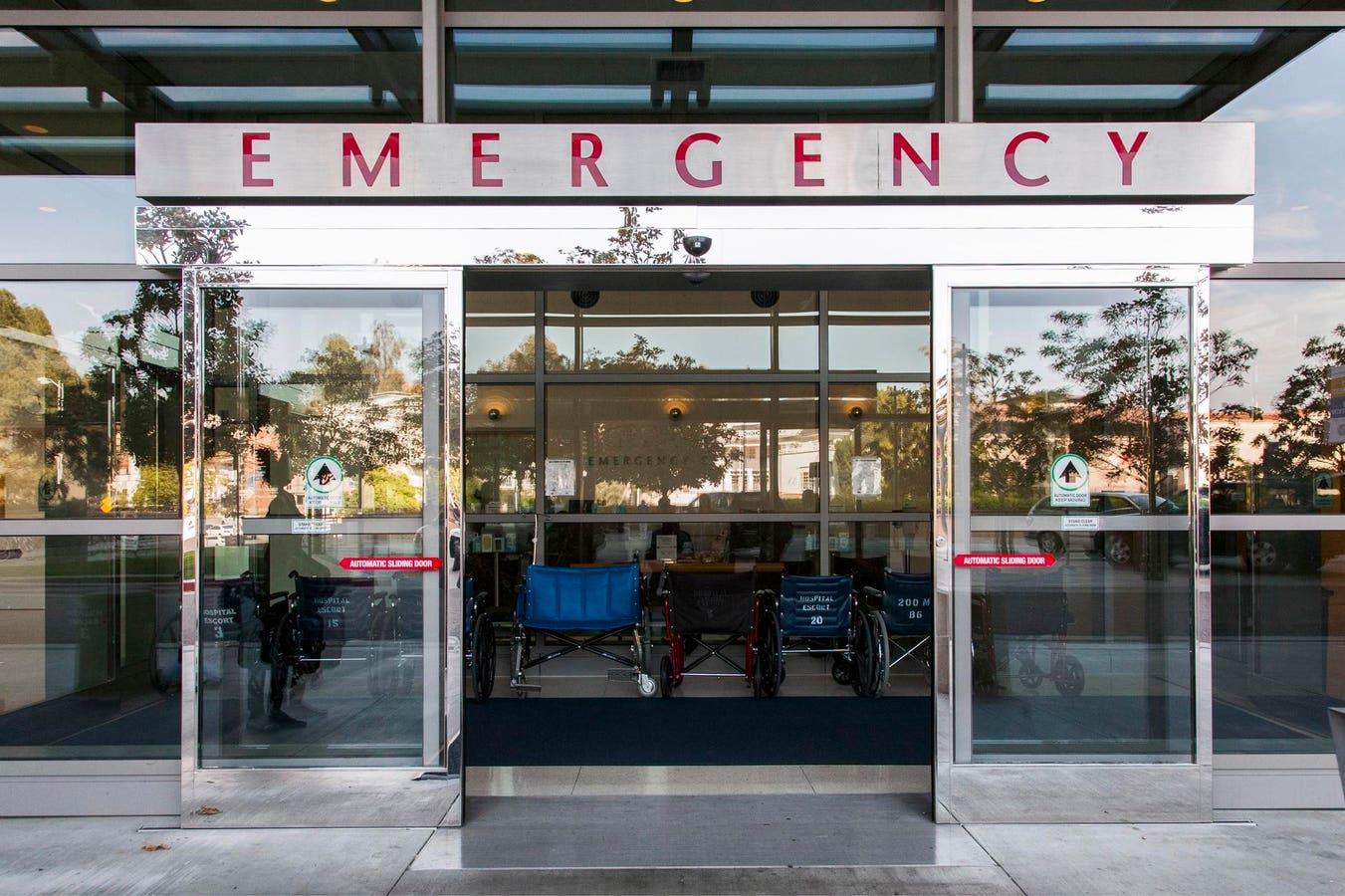
Netflix’s “Beef” makes an argument about American healthcare access more bluntly than most policy papers do. In the second season, a young woman sits for hours in a crowded emergency room, injured, scared and mostly invisible to the staff around her, until her boss shows up with a proposal: his connections can make the wait disappear, but only if she deletes the one thing she’s holding over him.
She refuses. Not because faster care doesn’t tempt her, but because the price attached to it feels wrong.
The scene works because it calls out something many Americans have quietly suspected: when someone with the right connections steps in, what changes isn’t the quality of care. It’s the speed of it. Access itself is the thing being traded.
That begs the question: does knowing the right people really get you better healthcare? Not necessarily. What it gets you is faster healthcare — and in today’s system, speed has become one of medicine’s most valuable commodities.
But it’s worth being precise about what kind of access we’re talking about. There’s the “Beef” kind — a favor, a connection, a name that jumps you ahead of everyone else in the queue. And there’s a different kind: navigation, coordination, the infrastructure that gets the right information to the right doctor at the right time. The first is a shortcut. The second is a system. It’s easy to mix the two up, because both look like getting in faster. But they carry very different risks — and they point to very different investments.
The New Divide in American Healthcare Access
Americans have spent decades debating the cost of healthcare, the quality of healthcare and who should pay for it. Far less attention has gone to an issue quietly becoming just as important: access.
Having insurance no longer guarantees timely care. Even well-insured patients often wait weeks for a primary care visit and months for certain specialists. According to AMN Healthcare’s most recent survey, it now takes an average of 31 days to schedule a new physician appointment across 15 major metropolitan markets — up 19% since 2022 and the longest wait the survey has recorded since it began in 2004. Some specialties fare worse still: new patients wait an average of 42 days for an OB/GYN appointment and 40 days for gastroenterology. Emergency departments, meanwhile, have increasingly become the overflow valve.
Healthcare is now dividing — not simply between those who have insurance and those who don’t, but between those who can access care quickly and those who cannot.
This isn’t just an inconvenience. Time changes outcomes. Cancer diagnosed three months earlier may require less aggressive treatment. A cardiac condition evaluated sooner can prevent a hospitalization. A neurological disorder caught before symptoms progress may preserve years of quality of life. Medicine has always been about making the right diagnosis. Increasingly, it’s about making that diagnosis before the window begins to close.
That’s why access itself is becoming medicine’s most valuable asset.
Scarcity Creates Value
Consider the rapid growth of concierge medicine. Industry estimates put the global market at roughly $22 billion to $25 billion in 2025, growing at close to 10% a year — among the fastest-growing segments in healthcare services. True, critics often describe it as healthcare for the wealthy, but many patients aren’t paying primarily for longer appointments or waiting rooms with Scandinavian wood accents. They’re paying for being seen: same-day visits, direct communication with their physician, faster referrals and care coordination before problems become emergencies.
The same dynamic is driving demand for patient navigators, employer-sponsored healthcare advocates, specialty referral services and digital health platforms that help patients move through the healthcare maze. People aren’t simply purchasing healthcare anymore. They’re purchasing time.
This shift reveals deeper structural problems. The Association of American Medical Colleges projects the United States could face a shortage of up to 86,000 physicians by 2036. At the same time, demand for care keeps rising as the population ages and chronic disease becomes more prevalent. Physicians also spend an extraordinary share of their day on administrative work, limiting how many patients they can see.
When demand consistently exceeds supply, waiting becomes inevitable. Economists understand what happens next: scarcity creates value.
Until recently, healthcare value has been measured through breakthrough drugs, new devices or novel surgical techniques. But now, the scarce resource isn’t technology. It’s physician attention. It’s appointment availability. It’s the ability to navigate a congested system faster than everyone else.
The shortcut version of access has a cost the “Beef” scene doesn’t dwell on. Triage exists for a reason: it’s the process by which a system learns what it needs to know before it acts — allergies, medication history, the difference between a headache and a stroke. And that process is fragile even when it runs as designed: one peer-reviewed study of emergency department triage found discrepancies in the medication histories nurses recorded for 37% of patients, and a separate academic-ED study found roughly 4 in 10 patients had at least one mismatch between their reported drug allergies and what was in the chart. That’s the baseline error rate inside the normal, unhurried process. A patient who skips that queue skips the process built to catch those errors. The ER physician pulled from the back to see a VIP in the waiting room is seeing someone the system hasn’t yet vetted the normal way. That isn’t automatically safer, faster care — it’s faster care with a different, and sometimes worse, risk profile. This is precisely why the more durable opportunity isn’t replicating VIP treatment at scale. It’s building the systems that do triage’s job — surfacing the right information at the right moment — without requiring a favor to get it.
The Investment Opportunity Isn’t Just Better Medicine
The nation’s emergency departments illustrate the consequences. U.S. hospitals recorded 155 million emergency department visits in 2022, the most recent year for which federal data is available, and many continue to struggle with staffing shortages, overcrowding and boarding times. When patients can’t access timely care elsewhere, the emergency department becomes the default front door to the system.
This has profound implications for investors.
Much of healthcare innovation has focused on discovering better treatments. Another opportunity is emerging around improving access itself. Artificial intelligence can automate documentation and reduce physician burnout, freeing doctors to spend more time with patients. Digital triage tools can direct patients to the right level of care before emergency departments become overwhelmed. Remote monitoring lets clinicians manage chronic disease without requiring every interaction to happen inside an exam room. Navigation platforms can coordinate referrals and eliminate weeks of unnecessary delay.
None of these technologies cure disease. What they do is improve the speed and efficiency with which care reaches patients — and that distinction matters. Healthcare’s next wave of value creation may not come exclusively from discovering new therapies. It may come from helping the physicians we already have care for more patients without sacrificing quality. In other words: improving access.
Time Is Becoming Healthcare’s Most Valuable Currency
Most Americans still equate healthcare with hospitals, surgeries and prescription drugs. But increasingly, the defining question isn’t whether excellent care exists. It does. The question is whether patients can reach it before their condition worsens.
The hospital scene in ‘Beef’ does this without any dialogue about healthcare policy. The audience instinctively recoils at the idea that a favor could move someone ahead in line, because it feels unfair — and also because it’s unclear what that favor actually buys. Knowing the right physician gets someone through a door faster. It doesn’t set up a parent’s homecare in another state, and it doesn’t find a medication in short supply for a child three states away. Those are logistics problems, not relationship problems, and no amount of access-by-connection solves them.
That’s the distinction that matters for where healthcare innovation is actually headed. As physician shortages deepen, the winners won’t be the platforms that let a wealthier or better-connected patient skip the line — that’s a zero-sum trade, and it doesn’t scale. The winners will be the ones that replace the need for a favor altogether: systems that route patients to the right level of care, carry their information with them and coordinate the parts of the system that don’t talk to each other today. That’s a bigger, and more investable, idea than access as a private perk. It’s access as infrastructure.