

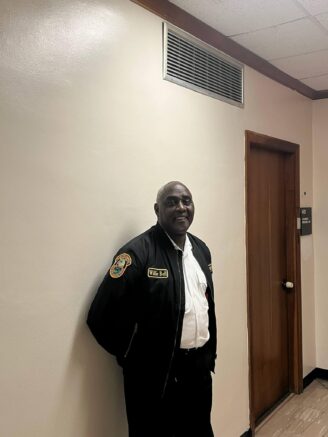
For almost 44 years, Willie Bell never missed his appointment to check for prostate cancer. But then the pandemic hit. The doctor’s office was closed. Three months passed before he was able to be screened in January 2021.
“So the doctor kept putting it off and I call him and say, ‘listen I get my PSA level checked every year. I would hate for you to tell me that you backed me off for a year, then you find cancer, because I’ll be pissed off,’” said Bell, a 66-year-old retired police officer who lives in Miami.
When Bell’s doctor finally came back to him, the doctor had bad news. Bell was pissed.
“‘We could have caught this last year in October,’” Bell recalls telling his doctor.
From a young age thanks to cancer awareness events at his college and screening efforts made by the police station where he worked, Bell knew that prostate cancer disproportionately affects Black men because they tend to have more dangerous and aggressive forms of cancer. And it scared him. He was scared because at the time he believed it was a death sentence. He also knew that his prostate-specific antigen (PSA) levels were high his entire life — reaching seven, eight and nine out of 10. PSA levels can be detected through a blood test to screen for prostate cancer. Having a level between 4 and 10 puts patients at a 25% chance of having cancer, while a PSA higher than 10 increases the likelihood to over 50%.
When Bell got diagnosed in 2021, he opted to get his prostate removed. And he got it done at Sylvester Comprehensive Cancer Center at the University of Miami School of Medicine. Soon after his procedure, Bell volunteered for the African Cancer Genome Registry.
Researchers at the Sylvester Center are working with national and international institutions to answer why Black men and women are at a higher risk of developing and dying from aggressive prostate or breast cancer. That began with recruiting 200 people at sites in Miami, Philadelphia, Alabama, and Baltimore, and another 1,800 from sites in the Caribbean countries of the Bahamas, Barbados, Haiti, Jamaica, and Trinidad and Tobago. The researchers, who are part of a collective called the African Caribbean Cancer Consortium, hope to recruit additional cancer survivors from the African nations of Benin, Burkina Faso, Kenya and Namibia. Since recruitment started in December, the registry has reached a total of 500 people, but eventually this will be the largest study of its kind, said Sophia George, one of the primary investigators in charge of the African Cancer Genome Registry. The goal in the future is to have tens of thousands of participants.
Not counting skin cancers, breast cancer is the most common cancer among women in the U.S and its rates are increasing in Black women, according to the American Cancer Society. Black women are also 41% more likely to die from breast cancer than white women. Similarly, prostate cancer is the second-leading cause of cancer death in the U.S. for Black men, behind only lung cancer. Breast and prostate cancer are also the leading causes of death in the Caribbean and across Africa.
According to George, the underlying factors driving these rates are not well understood.
“First of all we’ve been under-studied for so long, chronically,” said George, a breast cancer researcher at Sylvester Center. “And now there is a movement afoot to be more intentional about studying populations that experience higher burden of disease.”
George and co-primary investigator Camille Ragin, a prostate cancer researcher from Fox Chase Cancer Center in Philadelphia, are looking at genetic factors by collecting blood, saliva, and other tissue samples from tumors while also seeking to study the socioeconomic and lifestyle factors that influence the disease. Using the tumor samples, researchers will sequence the whole genome to identify germline genetic drivers, and they will determine inherited cancer risk. Researchers will also send questionnaires to participants who are all cancer survivors.
The long-term goal, according to George, is to ask questions about where people are born and to see the similarities and differences between the types of tumors diagnosed. “We’ve studied Haitian women living in Haiti, Haitian women living in Miami and African Americans and we see differences and similarities in the types of tumors diagnosed,” George said.
For example, in a study published in 2021, while looking into the genetics of breast cancer George found variation in the types of mutations among women in the Caribbean. Although in the U.S. and Western Europe, 5% to 10% of patients have a variant in the BRCA1 and BRCA2 genes, that incidence increased in West Africa to about 14% of patients. The rate was even higher in the Bahamas, where researchers found that 23% of patients carried a variant on their cancer genes.
That left George and her colleagues with more questions than answers. Besides these genetic variants, is there another component? “That is what this study is about, both from the perspective of breast and prostate cancer,” said George. She added that the registry will try to answer questions about the genetic variations and similarities across different populations, and how the environment, including diet and BMI, might influence the incidence of cancer, especially in young Black people. Ultimately, studying more people might help clinicians be more intentional about providing preventative care to underserved populations, George told STAT. It could also lead to targeted treatments and therapies to combat more aggressive cancers.
For the study, Pfizer’s Institute of Translational Equitable Medicine is collaborating with the African Caribbean Cancer Consortium, but George said that the registry plans to seek funding from a wide array of sources in the future.
To be sure, this is not the first time a study has focused on disproportionate incidence of cancer among Black participants. Wei Zheng, an epidemiologist and professor of medicine at Vanderbilt University Medical Center, led the Southern Community Cohort Study, one of the largest attempts to study lifestyle factors and biomarkers for the risk of breast cancer and other chronic diseases in African Americans. Zheng is not affiliated with the African Caribbean Cancer Consortium. Sometimes, Zheng said, getting Black Americans to participate in medical research can be challenging.
“Black Americans are less likely to participate in a study,” Zheng said, so this study put a lot of emphasis on getting people to participate. In the end, 86,000 people participated with about 67% being Black. But this is not the norm. Another study Zheng led, which focused on African Americans, only had 40,000 participants, with almost 20,000 presenting with breast cancer. The other half did not have cancer and acted as a control. This pales in comparison to large studies that focus on people with European ancestry, Zheng said, which routinely have well over 100,000 participants with breast cancer.
Researchers often struggle to get more racial and ethnic minorities, especially African Americans, to participate in clinical trials because of the barriers they face as well as the documented history of exploitation and harm. According to the American Association for Cancer Research, other barriers include a lack of health literacy, as well as a lack awareness of clinical trials and financial barriers which includes a lack of health insurance.
“There is still some mistrust and work that we have to do with our communities to help them understand why we do research, why we might collect samples from them,” said Franklin Huang, an oncologist and researcher at University of California, San Francisco. Huang, who is also not working on the registry, is one of the lead investigators in a similar study called RESPOND, the largest U.S.-based study focusing on African American men with prostate cancer. He added that since most research is being conducted at well-resourced academic medical centers that do not typically serve underrepresented populations, this is another barrier to getting more diverse results.
George, who is also the associate director of diversity, equity and inclusion at Sylvester Center, said having a diverse workforce helps.

“The doctors and staff are so supportive and that really does help,” said Charinus Johnson-Davis, a 48-year-old breast cancer survivor and one of the first people, along with Bell, to sign up for the registry. Johnson-Davis, who lives in Florida, was diagnosed at 36 years old, and has a family history of breast cancer — her grandmother and her grandmother’s sisters died from cancer, but it skipped her mother’s generation. She was able to sign up for the study using a QR code while getting a check up at her oncologist. People from the registry then contacted her within 24 to 48 hours.
Because of their positive experiences with the University of Miami, both Johnson-Davis and Bell said they try to tell other people about getting screened while telling cancer survivors about the research being done in an effort to get more people to participate.
“I think we just have to continue to show people through research, through the medication, how they are thriving and they continue to get people tested and continue to keep having the conversation,” Johnson-Davis said. “I think especially in the Black community, we weren’t having those conversations, but now I think we’re having more of those conversations especially with our younger girls and boys.”
Other patients, George adds, might not feel comfortable giving tissue samples or answering certain questions on their questionnaires, but they sometimes change their mind after the doctors who are a part of the study have sufficiently answered their questions. This is especially important in patients whose first language is not English. In the U.S. and in the Caribbean materials and forms are available to participants in English, Haitian Creole, French and Spanish.
The first phase of the study is expected to conclude in the spring of 2024. The experts who spoke with STAT both said that they would also be happy to join forces with the African Caribbean Cancer Consortium to help collect more data.
“So, it’s the whole paying it forward and looking for the future and trying to find a way to end cancer,” said Johnson-Davis, who has a 10-year-old niece. “That’s what it’s all about.”