

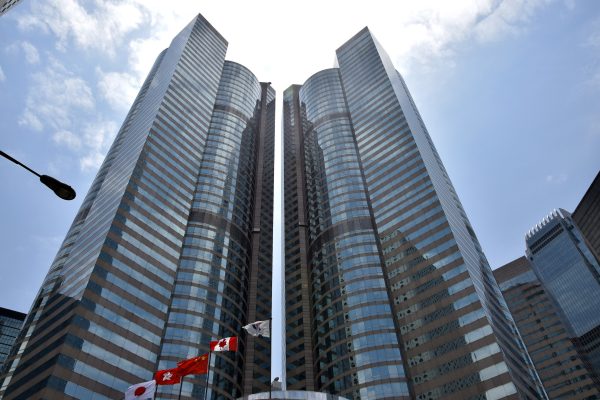
The ownership of two key ports along the Panama Canal has become a major flashpoint between the United States and China. At the heart of the showdown is the Hong Kong-based CK Hutchison Holdings and its subsidiary, Hutchison Ports. Controlled by Hong Kong tycoon Li Ka-shing, CK Hutchison owns two ports at either end of the Panama Canal. U.S. President Donald Trump has claimed that the canal is “operated by China” and called for the United States to “take back” control. He has even reportedly ordered the U.S. military to explore options to secure “unfettered” access to the canal.
To “de-risk” from the geopolitical contention, CK Hutchison reached a $19 billion deal to sell its expansive overseas port businesses to a consortium led by U.S. firm BlackRock in early March.
While this deal might make commercial sense for the company, Beijing is reluctant to cede ownership of these ports due to their strategic value and may intervene to stop the deal. According to the Wall Street Journal, China’s top leader, Xi Jinping, was enraged that CK Hutchison didn’t seek Beijing’s approval in advance, and Bloomberg has reported that Chinese regulatory agencies have been instructed to scrutinize the deal for any potential security breaches or antitrust violations. State-run Hong Kong newspaper Ta Kung Pao, commonly regarded as a Beijing mouthpiece, published a series of articles accusing the company of being “profit-seeking and unrighteous,” warning that “dancing with” U.S. politicians would lead to “the condemnation of history.” China’s government amplified that messaging when the Chinese Hong Kong and Macao Affairs Office reposted the articles on its own website.
This backlash reflects Beijing’s increasingly uneasy relationship with Hong Kong’s business elites. Despite the waves of securitization in recent years, the Chinese party-state still lacks formal channels of influence vis-a-vis Hong Kong businesses, and the port sale has only deepened the Chinese Communist Party (CCP)’s suspicion toward Hong Kong’s capitalist class. While Beijing has long co-opted local businesses to govern Hong Kong – a strategy pioneered by the British colonial government – it has become increasingly distrustful of their autonomy, profit-driven motives, and lack of patriotism. Beijing’s public pressure campaign against CK Hutchison portends a growing effort by the CCP to direct Hong Kong’s independent business interests.
Is CK Hutchison part of “China, Inc.”?
Due to Hong Kong’s weakening autonomy, some Western commentators increasingly view the city as indistinguishable from China. However, enterprises based in Hong Kong and mainland China still fundamentally differ in their susceptibility to Beijing’s influence. Thus, while a subsidiary of CK Hutchison Holdings has operated the ports in Balboa and Cristóbal since 1997, Trump’s claim that China controls the Panama Canal is misleading.
Unlike typical participants in China’s Belt and Road Initiative or other overseas infrastructure projects, CK Hutchison is not a state-owned enterprise (SOE). It is a private company listed on the Hong Kong Stock Exchange, and its institutional makeup is international. Next to the Li Ka-shing family’s 30 percent share, U.S.-based BlackRock (5 percent), the Vanguard group (2.78 percent), and the Norges Bank Investment Management (1.18 percent) are among its main institutional shareholders. Additionally, its board of directors has a notably international profile, with most members having backgrounds in Anglophone countries such as Canada, Australia, and the United Kingdom. Operating by standard international corporate practices, CK Hutchison is more transparent and commercially driven than state-run firms that own or operate the other ports in China’s network.
The company’s success story reflects a “Hong Kong” – rather than Chinese – ethos, mirroring the city’s rise as an international business hub during the colonial era. Before Li Ka-shing purchased a controlling interest in 1979, Hutchison was one of the oldest and most prominent British-owned merchant houses operating in the colony, specializing in export trade, dockyards, and shipping. Under Li’s leadership, Hutchison expanded its international footprint, becoming the world’s largest independent port operator, acquiring Husky Oil in Canada, and establishing mobile phone operations in Australia, Europe, and the United States. This trajectory contrasts with that of mainland China-based companies and SOEs, whose success is often tied to close cooperation with the CCP leadership and access to state support.
CK Hutchison’s position as a Hong Kong-based company insulates it from the established toolkit used by the Chinese party-state to discipline Chinese companies. For instance, the CCP influences Chinese businesses and SOEs through the party committees embedded in each firm. Under Xi Jinping, the role of party committees has been strengthened and institutionalized, with Xi calling for the integration of party leadership in “all aspects of corporate governance.” The party committee chairman now also chairs the board of directors of SOEs, allowing the CCP to take over many aspects of the board’s functions in corporate governance. Importantly, these changes have been implemented not only in wholly or partially state-owned firms, but also in the private sector. These mechanisms allow the CCP to intervene in Chinese enterprises’ decision-making, ensuring that these enterprises align with the party’s political objectives.
CK Hutchison’s governance structure does not have a party committee. As a result, Beijing lacks any direct institutional channels to influence CK Hutchison’s decision-making. While Victor Li Tzar-kuoi, the chairman of CK Hutchison and son of Li Ka-shing, has developed ties with the CCP through his position on the National Committee of the Chinese People’s Political Consultative Conference, the CCP’s influence over the company remains weakly institutionalized. Recent reports that China’s highest leadership has summoned Victor Li to discuss the port deal underscore the informal nature of Beijing’s pressure.
Hong Kong’s de jure autonomy further complicates Beijing’s ability to pressure CK Hutchison. When China assumed sovereignty over Hong Kong in 1997, it promised to let the city operate with “a high degree of autonomy” and maintain its independent judicial system, meaning that Chinese national security laws do not automatically apply. Until recently, the party-state had preferred indirect means to influence Hong Kong politics, including through ad hoc legal interpretations of the Basic Law (Hong Kong’s mini-constitution), political influence via proxies like the Central Government Liaison Office, and the cultivation of strategic partnerships with Hong Kong’s business elites.
Following mass protests in 2019, Beijing institutionalized its control over Hong Kong and localized its national security policies within the Hong Kong legal system by introducing legislation such as the 2020 National Security Law (NSL) and Article 23 of the Basic Law in 2024. Still, these new legal instruments are primarily aimed at dismantling Hong Kong’s civil society and political opposition rather than disciplining businesses. The government has repeatedly assured the private sector they can conduct business as usual.
Among the NSL cases brought against companies, pro-democracy media outlets and organizations with significant links with prominent activists were the main targets. As Mark L. Clifford, a former board member of a media company targeted by the NSL, remarked, “It’s one thing to go after Jimmy Lai and Apple Daily, but quite another to go after ‘Superman’ KS Li and his companies, the most successful international business H.K. has ever produced.”
The Challenge of Disciplining Hong Kong Capitalists
Beijing’s calculus in attempting to induce or coerce CK Hutchison to collaborate with its national security agenda involves two countervailing logics. On the one hand, Beijing and Hong Kong leaders want to avoid a heavy-handed approach to restore confidence in the city’s business environment and woo foreign investment and talent. They want to convince the world that businesses will not be coerced into forgoing commercial interests in favor of national security, especially after the passage of the NSL and Article 23.
The Hong Kong government has vigorously campaigned to rehabilitate Hong Kong’s image after its brutal crackdown on civil society and to dispel suggestions that Beijing controls the city. While the NSL’s prohibitions against “collusion with foreign forces” could in theory apply to CK Hutchison, pursuing such charges against a major Hong Kong conglomerate would be unprecedented and highly destabilizing. A potential intervention by Chinese regulatory agencies – along the lines suggested by Bloomberg – would further undermine Hong Kong’s legal autonomy and business confidence, as China does not have formal regulatory authorities over this “purely commercial” deal.
The desire to portray Hong Kong as “open for business” explains why Chief Executive John Lee equivocated when asked whether the NSL would apply to the port sale. The fact that China’s central propaganda outlets and government offices have avoided directly condemning the deal – relying instead on fanning public opinion on social media – suggests Xi Jinping is still weighing his options.
On the other hand, Beijing does not feel confident entrusting crucial maritime assets to a private Hong Kong company. Since assuming power in 2012, Xi has repeatedly expressed his ambition to “construct a strong sea power,” viewing this as vital to realizing his wider “China dream” of national rejuvenation. This entails not only the modernization of the People’s Liberation Army Navy but also heavy investments in China’s maritime industry. The U.S. Trade Representative recently accused Beijing of seeking to cultivate global trade dependence on China through strategic investments in the maritime, logistics, and shipbuilding sectors.
While the Chinese government has used SOEs and other proxies in these strategically significant industries to push its maritime strategy, CK Hutchison’s overseas port operation remains a notable exception to the “China, Inc.” approach. According to data collected by MERICS, among the 78 ports with Chinese or Hong Kong ownership or operations, Hutchison operates terminals in 33, outnumbering even China’s SOEs – 26 terminals are operated by China Merchants Group, 19 by COSCO, and 19 by others.
The Chinese leadership is rethinking allowing a private Hong Kong company to control such a critical component of its maritime strategy, as well as its broader partnerships with Hong Kong’s business elites. To stabilize China’s indirect rule in Hong Kong and secure Hong Kong’s status as an international financial hub, Beijing has long relied on a ruling coalition formed with local elites, including the business sector. For instance, before the reform of the “patriots only” electoral system in 2021, the functional constituencies (FCs) – elected by members of corporations or registered professional bodies – had constituted half of the seats within Hong Kong’s legislative body. The FCs have served as a reliable counterbalance against democrats in the directly elected geographical constituencies by opposing any attempt to democratize Hong Kong, which they saw as a potential threat to their business interests.
However, decades of partnership between Beijing and Hong Kong’s local business elite belie a degree of mutual distrust and suspicion. The Hong Kong capitalists are interested in maintaining close ties with Beijing to exploit economic opportunities in China, but some of them are also wary of China’s more assertive and interventionist approach to the economy. Beijing has been suspicious of Hong Kong businesspeople’s profit-driven motives and “lack of patriotism” as potential obstacles to its political agenda in Hong Kong.
The rift between Beijing and Hong Kong business elites became visible in the 2010s. The chief executive election in 2012 was an early indication: within the Election Committee, local tycoons – including Li Ka-shing – backed Henry Tang Ying-yen, the son of a Hong Kong industrialist originating from Shanghai, while Beijing favored Leung Chun-ying, a long-time Beijing loyalist, at the last minute and got him elected.
Li in particular has drawn Beijing’s suspicion for “unpatriotic” business decisions and speeches before. Since 2013, Li has gradually moved his assets out of Hong Kong and China, including relocating his flagship company from Hong Kong to the Cayman Islands and selling a major commercial complex in Shanghai in 2016. A state-affiliated Chinese think tank viewed his divestment as a betrayal, accusing him of being “ungrateful” for state support in building Hutchison’s real estate business in China and abandoning the country at the first sign of economic trouble in the 2010s. During the 2014 Umbrella Movement, Chinese state media singled out Li for not making his stance on the protests clear. At the height of the mass protests in September 2019, Li even publicly appealed to the government to show mercy to the young people.
Therefore, beyond salvaging the strategic value of CK Hutchison’s port businesses, the CCP has the incentive to make an example of Li to assert its dominance over Hong Kong’s freewheeling capitalists. This is why Beijing’s mouthpieces have appealed to anti-American nationalist sentiments and ramped up the rhetorical pressure on the Li family, even though the actual strategic costs are likely less acute than the frequent invocation of “national security” by propagandists and Hong Kong’s political figures suggests. The mounting political pressure will serve as a warning signal to Hong Kong’s disloyal business elites.
What’s Next?
Beijing’s vociferous response to the CK Hutchison port sale has already had a chilling effect on Hong Kong’s business elites. While Hutchison’s port holdings represent a distinct strategic value for Beijing’s maritime strategy, as Xi expands the definition of national security, more sectors in Hong Kong may find themselves in a similar situation. Businesses could feel compelled to align with the political goals of the Chinese leadership, limiting their autonomy in pursuing commercial interests.
Any intervention by Beijing not only validates Trump’s allegation about the strategic role of Hong Kong businesses to China, but also sets a precedent for further encroachments on Hong Kong’s private sector. Even if Beijing refrains from directly blocking the Panama ports deal, the underlying issue remains: Hong Kong’s business community still operates with a level of autonomy that Beijing increasingly finds unacceptable. Going forward, China will likely seek to reduce such autonomy, focusing on bringing strategic assets held by Hong Kong firms – including overseas ports and beyond – more directly under Beijing’s influence. The question is no longer whether Beijing will act, but how far it is willing to go.