

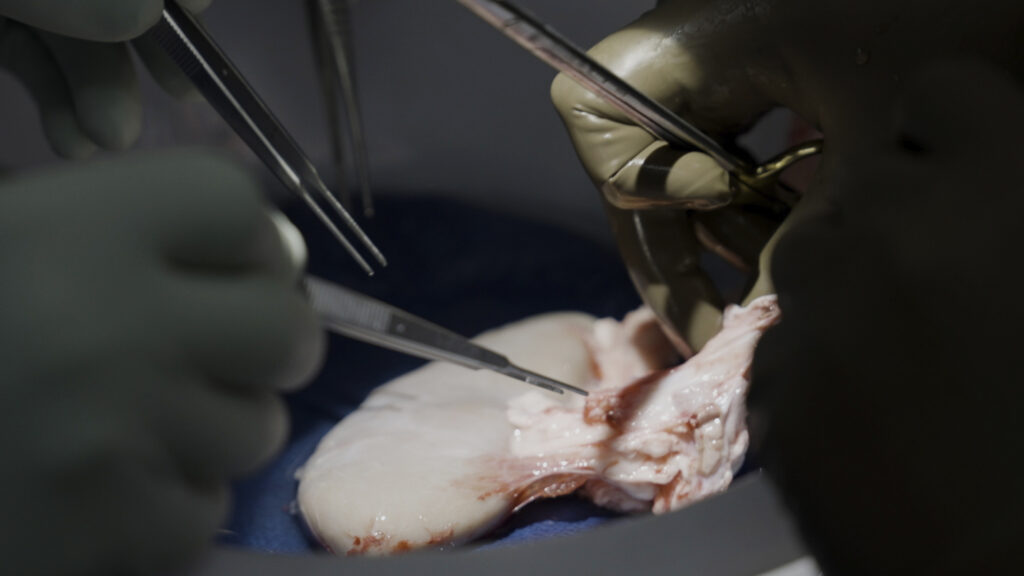
When doctors think about sticking an organ from another animal into a person, one of their many questions is about what might happen after they take that organ out. Would the patient produce antibodies that would complicate a human-to-human transplant later on?
The scientists at eGenesis didn’t think so, based on what they saw in primate studies. But now they have confirmation. On Thursday evening, the biotech company — one of a handful racing to develop xenografts, as these interspecies transplants are called — announced that two of its first recipients of genetically engineered pig kidneys have now successfully gotten organs from human donors.
It wasn’t a seamless transition. In both cases, doctors removed the xenograft and the patient went back on dialysis for months before a human organ was available. But the fact that the two of them could spend the better part of a year not needing to be hooked up to tubes represented a milestone. The whole project of putting pig kidneys in humans is motivated by the fact that there aren’t enough human organs for everyone who needs them. Many die waiting.

This article is exclusive to STAT+ subscribers
Unlock this article — plus in-depth analysis, newsletters, premium events, and news alerts.
Already have an account? Log in
View All Plans