

Labor migration to Russia has traditionally played a central role in Kyrgyzstan’s economy. Between 2012 and 2021, average remittance inflows were the equivalent of 30 percent of Kyrgyzstan’s GDP. Following Russia’s full-scale invasion of Ukraine in February 2022, the share of remittances in GDP has fluctuated, falling to approximately 17.6 percent in 2024. Despite this instability, remittance inflows have remained historically high in absolute terms. The volatility of recent years nevertheless points to a broader shift in the relationship between remittances and the Kyrgyz economy, suggesting that the country’s long-standing dependence on migration income is becoming more complex and potentially less predictable.
Russia’s war in Ukraine has contributed to changes in migration flows from Kyrgyzstan to Russia. According to estimates based on Kyrgyzstan’s 2022 National Population Census, approximately 854,000 Kyrgyz citizens were working in Russia. By 2026, the Kyrgyz Ministry of Labor reported that around 502,242 Kyrgyz citizens were engaged in labor migration in Russia. While differences in methodology and timing mean that these figures should not be treated as a precise measure of the decline, the overall trend is significant. Russia has not ceased to be the dominant destination for Kyrgyz labor migrants, but the changing scale of migration suggests that the long-standing Russia-centered migration system is undergoing a broader transformation.
Kyrgyzstan’s citizens have benefited from relatively open access to the Russian labor market through membership in the Eurasian Economic Union (EAEU) since 2015. Problems certainly existed: migrants frequently encountered arbitrary treatment by police, informal payments, document checks, and other forms of everyday insecurity. Yet the basic institutional framework remained relatively stable, and migration continued to be understood primarily as an economic and labor-market issue.
The system has experienced crises before. Since the mass development of labor migration to Russia in the early 2000s, migrants have experienced several major disruptions, including the 2008-2009 global financial crisis and the COVID-19 pandemic. Yet the current crisis is fundamentally different. Earlier shocks were primarily economic or epidemiological and, after a period of disruption, the established migration system largely recovered to its prior state. The war in Ukraine, by contrast, has produced a much longer-term transformation of the institutional and political environment in which migration takes place.
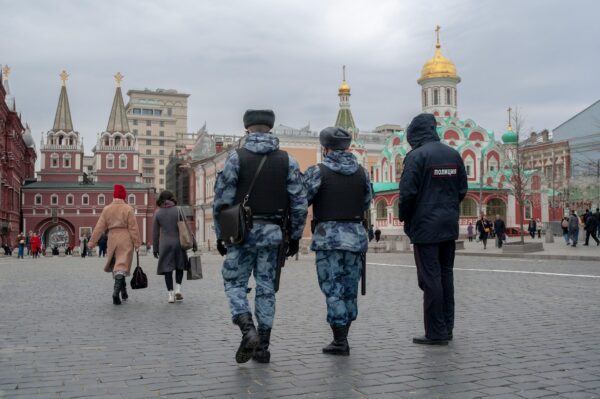
The most important change since the full-scale invasion of Ukraine has been the securitization of migration in Russia. This involves more than simply tightening migration controls; migrants are increasingly treated as objects of national security governance, with migration policy becoming more closely linked to counterterrorism, border control, and internal security.
In addition, Russia has increasingly sought to draw Central Asian migrants into its wartime manpower system, as the prolonged war in Ukraine created sustained demand for military personnel. Since 2022, Russian authorities have offered foreign nationals simplified access to citizenship in exchange for military service, while police raids and other forms of administrative pressure have increasingly been used to identify and recruit migrants and recently naturalized citizens of Central Asian origin.
This has created a striking duality in Russia’s approach to migration: migrants remain economically important because of persistent labor shortages, yet their precarious legal status also makes them a particularly accessible population for military recruitment. In this sense, migration governance has become intertwined not only with border and internal security, but also with the state’s efforts to sustain wartime manpower.
For migrants from Kyrgyzstan the significance of these changes extends beyond the immediate risk of detention or deportation. The rules governing everyday life in Russia have become more complex and restrictive, including requirements relating to registration, documentation, medical examinations, language testing, and other forms of administrative control. Migration is therefore becoming not simply more difficult, but less predictable.
This unpredictability is particularly important because the traditional Russia-Central Asian migration system depended on predictability. Families could plan around seasonal migration, circular movement, and the expectation that migrants would return to Russia after spending time at home. When the rules governing entry, employment, and residence become uncertain, the entire household migration strategy becomes harder to sustain.
A Gendered Transformation of Migration
This ongoing transformation is also likely to change the gender composition of migration. Historically, men dominated migration to Russia, particularly in construction, transport and other physically demanding sectors. The prospect of increasingly restrictive migration controls, detention, military recruitment, and uncertainty over legal status changes the calculation. Women have become a significant part of Kyrgyzstan’s migration system. Kyrgyzstan has historically had a relatively high proportion of female migrants compared with other Central Asian countries and war has accelerated this feminization of migration.
The gender implications of the current transformation require more attention. If young men increasingly avoid Russia while women become more visible in migration corridors, the social organization of migration, and potentially household roles and care responsibilities, will change as well. For women especially, these may include more precarity. Recent research from the International Organization for Migration (IOM) shows that female migrants from Kyrgyzstan continue to experience significant vulnerabilities throughout the migration cycle.
The asymmetric risks facing men in wartime Russia – specifically military mobilization and targeted security sweeps – are accelerating the structural feminization of Kyrgyz migration. This shift changes not only domestic division of labor and remittance flows within households, but also transfers the burden of economic survival onto female workers who navigate highly precarious service sectors.
The Family Implications
One of the most consequential developments is that the new restrictions increasingly affect not only workers but also their families. A particularly important example is education. Since 2024, foreign children seeking admission to Russian schools have been required to demonstrate sufficient knowledge of Russian through testing, alongside requirements concerning their legal status in the country. Children who do not meet the language requirement cannot be enrolled in school. In June 2025, the State Duma approved a bill requiring schools to report information about migrant children and their parents to the Ministry of Internal Affair. In August, a draft amendment to the Law on Education prohibiting free education for migrant children was submitted to the State Duma for discussion.
The significance of this change should not be underestimated. For many migrant families, migration to Russia was not simply an individual labor strategy. It was a family strategy in which children could live with their parents and attend Russian schools. The new rules therefore challenge one of the assumptions on which family migration had been built.
The Kyrgyz government has subsequently had to wrestle with how to provide education and social support to children whose parents work abroad.
In March 2025, the Kyrgyz government established the Tunguch online school as a pilot state institution for 2025–2028. The school provides education for students in grades 5-11 and was explicitly designed to expand access to education for children who cannot attend conventional schools because of geographical distance. By September 2025, the school had 43 classes – 28 in Kyrgyz and 15 in Russian – and children from more than 15 countries were studying through the online school, with Russia housing the largest group.
Tunguch represents an important change in the way the Kyrgyz state approaches migration. For more than two decades, the economic contribution of migrants was treated as a given, while many of the social costs of migrant children left behind, fragmented families, access to education, and reintegration were largely managed by households themselves.
By targeting the educational access and legal standing of migrant dependents, Russian policy has dismantled the “family migration” model. This systemic exclusion has forced the Kyrgyz state to pivot from passive economic beneficiary to active social mediator. Initiatives like the Tunguch online school mark the institutionalization of state-supported transnational living, signaling the state’s growing need to build infrastructure to mitigate its social externalities.
Preparedness for Migrant Reintegration
A potentially more consequential shift in Kyrgyzstan’s migration policy is emerging around the question of what happens when migrants return. On May 14, 2026, the Cabinet of Ministers approved the Program for the Reintegration of Returning Migrants for 2026–2030. This is the first national policy document specifically dedicated to migrant reintegration and signals an important change in how the state is beginning to understand migration: not only as a mechanism for absorbing domestic labor-market pressures and generating remittances, but also as a process that can reshape the country’s labor force, skills base, and economic development.
For much of the post-Soviet period, Kyrgyzstan’s migration policy was largely oriented toward managing outward mobility. Labor migration offered an important pressure valve in an economy with limited employment opportunities, while remittances became a major source of household income and foreign exchange. The policy challenge was therefore primarily how to facilitate migration, protect citizens abroad, and channel its economic benefits home. The new reintegration program suggests a different policy problem is now being centered: how to absorb and make use of the human, professional, and financial capital accumulated through migration when migrants return.
The program includes measures to support employment and self-employment, provide economic assistance, expand vocational retraining, and develop mechanisms for recognizing qualifications acquired abroad. Yet the adoption of the program should not be confused with evidence that Kyrgyzstan is prepared for a large-scale return. A policy framework is a first step; implementation capacity will determine whether reintegration becomes a viable alternative to renewed migration. The more fundamental question is whether the Kyrgyz economy can generate sufficient productive employment, wages, and opportunities for entrepreneurship to make staying economically meaningful for returnees. If these conditions are absent, reintegration programs may end up functioning primarily as short-term assistance schemes while migrants continue to view re-migration as the most viable livelihood strategy.
Diversification Beyond Russia, A Migration Crisis Unlike Any Before
The changing environment in Russia is also pushing Kyrgyzstan to diversify migration destinations. The United Kingdom has become one of the most visible alternatives. Kyrgyzstan began participating in the U.K.’s Seasonal Worker visa program in 2022. The quota available to Kyrgyz citizens increased from around 1,500 places in 2022 to 10,000 in 2025.
South Korea represents another increasingly important destination. Under the Employment Permit System, the quota for Kyrgyz workers increased by approximately 18 percent between 2023 and 2024, reaching more than 3,000 places. At the same time, South Korea has also been accessible through another route: Kyrgyz citizens who acquired Russian citizenship could take advantage of Russia’s visa-free arrangement with South Korea, which allow Russian passport holders to enter the country for short stays without a visa. This created an additional channel of mobility for some Central Asian migrants holding Russian passports, although visa-free entry should not be equated with legal authorization to work. Taken together, these developments illustrate how migration system is becoming more diversified, combining formal labor-migration programs with alternative mobility channels.
The current migration system crisis should therefore not be understood simply as another temporary decline in migration to Russia. The post-2022 crisis is different because it affects the foundations of the system. Russia is not simply becoming a more difficult labor market. It is becoming a more securitized environment in which migrants face greater uncertainty over entry, residence, employment, education for their children and personal security.
This is a profound shift. For more than two decades, Russia occupied a particular place in the social imagination of Kyrgyzstan as the most accessible foreign labor market, a familiar destination connected through networks and post-Soviet institutions, and a place where generations of Kyrgyz citizens had built their livelihoods. That perception is now changing. The significance of this transformation may ultimately extend far beyond migration statistics.