The Federal Reserve‘s July 28-29 policymaking meeting on interest rates was, frankly, expected to be a snooze fest just a few weeks ago.
Now, it’s going to be a humdinger.
Economists, traders, and other Fed watchers were forecasting that the Federal Open Market Committee would vote to hold the benchmark Federal Funds Rate steady. This was due to a stabilizing labor market, a huge slide in oil prices, and a refreshing dip in the June Consumer Price Index, indicating a resilient U.S. economy that could take a beat from hawkish concerns that a tightening of policy was needed ASAP.
Today, we’re looking at a coin toss, folks. Don’t be surprised if there’s a rate hike coming down the pike.
“I can make a good case for either raising rates or not,” William English, a former senior Fed economist now at Yale University, told The Wall Street Journal. “They’re just kind of stuck.”
The recent Iran war military escalation saw energy prices surge once again, along with concerns that the so-called peace accord between the United States and Iran had broken down. Prices rose at gas pumps across the country, while Treasury yields hit new highs.
And the Trump administration on July 24 released new tariffs of between 10% and 12.5% against 60 countries for alleged forced labor practices — a workaround from the Supreme Court ruling earlier this year squashing the “Liberation Day” tariffs.
As Eric Diton, president of The Wealth Alliance, told TheStreet in an email: “Given that the Iran War continues to drag on, and oil prices have spiked once again, combined with a resilient labor market and a shortage of resources due to the AI buildout, plus the tariff uncertainty, the Fed target of 2% inflation seems unattainable in the near-term.
“The 30-year Treasury rate sits around 5.18%, the highest in nearly two decades. The markets now give a 30-40% probability that the Fed will need to hike rates at least once before year-end. I agree that the Fed may have to hike rates given this unusual set of circumstances.”
Warsh commits FOMC rate policy to “price stability“
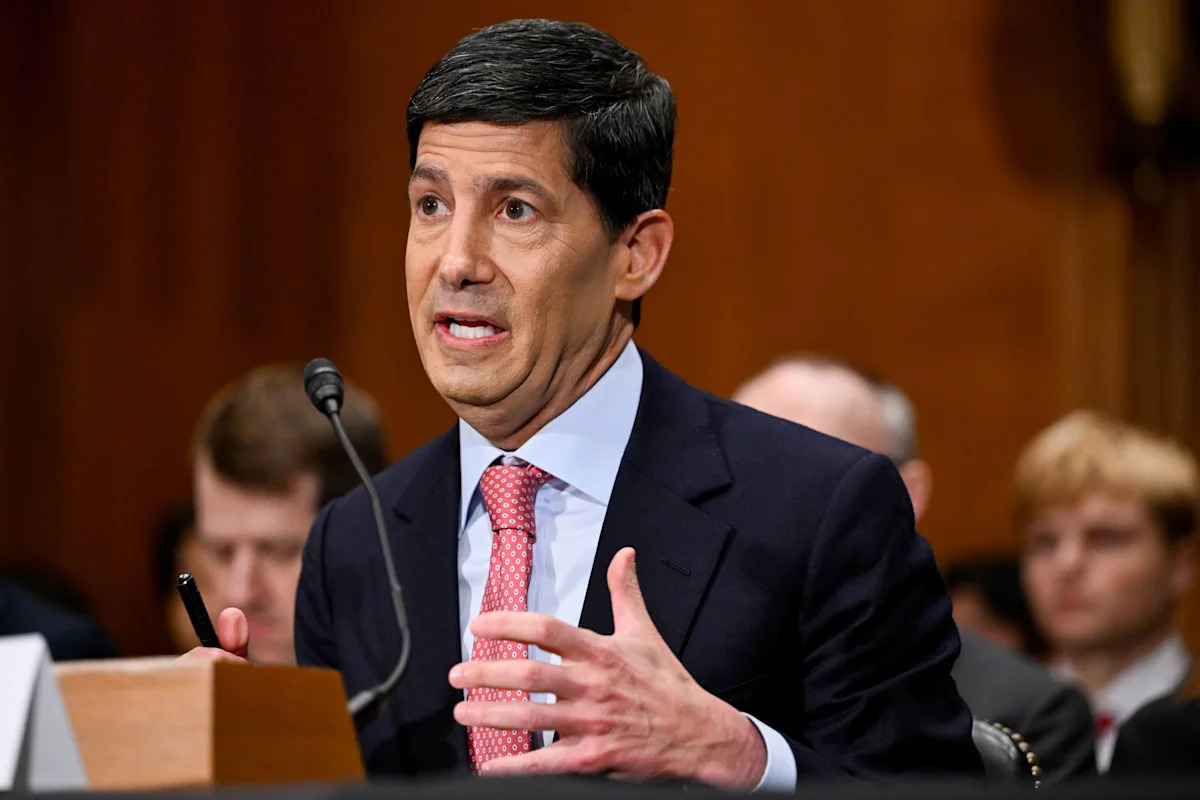
“While monthly price fluctuations are inevitable — especially in an unsettled world — underlying inflation over longer time horizons is determined largely by monetary policy,” Fed Chairman Kevin Warsh said in prepared remarks while delivering the Fed’s twice-yearly Monetary Policy Report to Congress July 14-15.
The report, issued July 10, said the outlook of the future path of interest rates “is subject to considerable uncertainty.” It also described the U.S. economy as overall “expanding at a solid pace despite elevated uncertainty that owes, in part, to the conflict in the Middle East.”
Warsh repeatedly reminded members of both chambers that the Fed is committed to its dual Congressional mandate: Use interest rates and balance-sheet policy to keep prices stable and the labor market at full employment.
That’s tricky.
Lower interest rates support hiring but can fuel inflation. This risks fueling further inflation, potentially leading to an inflationary spiral.
Higher rates cool prices but can weaken the job market. This increases the cost of borrowing and further stifles economic activity.
As I reported, Warsh consistently repeated his pledge that the central bank would work on its “resolute commitment” to restore price stability.
FOMC holds interest rates steady thus far
The rate-setting FOMC voted unanimously in June to hold its benchmark Federal Funds Rate target in a range of 3.5% to 3.75%.
But the minutes of the June FOMC meeting showed policymakers splitting their views on inflation risk and the impact on interest rates with a rising hawkish tinge to the “dot plot.”
Shortly before the cooling June CPI came out, I reported that Fed Governor Christopher Waller issued a stark warning on inflation and its long-term impact on prices.
“No matter how you cut it, or what measure you want to use, inflation is up this year,” Waller said in a July 13 speech. “At this point, I am concerned about the elevated pace of core inflation.”
How the Federal Funds Rate impacts you
The funds rate is the interest rate at which banks lend balances at the Federal Reserve to other banks overnight.
A change in the funds rate triggers moves in borrowing costs ranging from credit cards to auto loans to even longer-term mortgage rates.
Policymakers cut rates by a quarter point at each of its last three meetings of 2025 to shore up the softening labor market.
These “insurance” cuts stopped after the majority of policymakers decided the risk from higher prices was outweighing signs that the jobs market was stabilizing.
Traders shift Fed interest-rate bets
As of July 24, the widely watched CME Group FedWatch Tool shows financial markets are pricing in higher probabilities of interest-rate hikes for the final months of this year, while expecting a 64.2% probability that rates will remain steady and a 35.8% chance of a quarter-point rate hike in July.
This is a marked change from the week before, which saw a near 90% chance of July rates remaining steady.
September shift: Traders now price in a nearly 79% cumulative chance of at least one 25 basis-point rate hike happening by or during the September FOMC meeting.
December tightening: By the end of the year, the CME Group FedWatch Tool leans heavily toward a half-point hike, reflecting sustained inflation concerns.
Warsh, as promised, dropped forward guidance language to markets and consumers in the June statement following his first FOMC meeting as chairman. He and other proponents of Fed reform advocate that the central bank should follow the market, not the other way around.
Forward guidance is when a central bank communicates its future economic outlook and interest-rate plans in advance, instead of surprising markets, in signaling whether rates are likely to rise, fall, or hold.
Advocates of forward guidance say it helps businesses, investors, and consumers make informed financial decisions.
Right now, the Fed’s credibility is at risk, former New York Fed President Bill Dudley said in a Bloomberg Opinion piece. He recommended that the Fed tighten monetary policy to achieve price stability and preserve its independence, as the risks of not doing so exceed the costs of a somewhat tighter policy.
“Inflation has exceeded the central bank’s 2% objective for more than five years. If the Fed dawdles, the risk is that market participants will judge Warsh’s tough talk as “all hat, no cattle,” Dudley wrote.