

South Korean President Yoon Suk-yeol, during his special address to the World Economic Forum (WEF), stated that the “Republic of Korea, which boasts the world’s top-notch production technologies and manufacturing capabilities in semiconductor, rechargeable batteries, steelmaking, and biotechnology, will be a key partner in the global supply chain.” That declaration furthers Yoon’s vision of South Korea as a “global pivotal state” and supplements Seoul’s recently released Indo-Pacific Strategy, which is premised on three principles: inclusiveness, trust, and reciprocity.
The intensification of China-U.S. strategic competition in the Indo-Pacific is diminishing space for cooperation and increasing the risk of confrontation between the two powers. As this competition intensifies, states are increasingly finding their autonomy constrained. Fragmentation of supply chains, trade protectionism, and the securitization of emerging technologies, among other issues, are the primary causes of this polarization. South Korea, one of the key powers of the Indo-Pacific, is caught up in this strategic rivalry and has been forced to rethink its earlier posture of strategic ambiguity. Seoul’s cautious policy of strategic ambiguity, manifested in a way that carefully navigates between Washington and Beijing, is now proving to be futile, and geopolitical tensions are incrementally pushing Seoul toward closer strategic alignment with Washington.
The contest between economic prosperity and security considerations in Seoul’s strategic outlook was a matter of concern even during the Park Geun-hye administration (2013-2017) and became quite prominent during Moon Jae-in presidency (2017-2022), when relations with China turned sour because of the deployment of the Terminal High Altitude Area Defense (THAAD) system in South Korea. But with advanced and critical technologies being a new strategic disruptor in Seoul’s relations with the United States and China, the emerging reality will make it difficult for Seoul to have a policy of strategic clarity in its foreign and trade policy.
What was earlier confined to geopolitical contestation is now getting entangled with geoeconomics. Since critical technologies have emerged as a strong link between geopolitics and geoeconomics, resilient supply chains, trusted sources, and access to rare earth materials are becoming more vital factors in shaping Seoul’s long-term strategic outlook. Therefore, Seoul’s Indo-Pacific strategy also seems to be an endeavor to provide the leadership enough space to pursue selective cooperation with Beijing to avoid an overly adversarial relationship, while also prioritizing closer alignment vis-à-vis Washington.
Critical Technologies and Security Considerations
“The rivalry for technological hegemony and the weakening of the multilateral trade system has led to the weakening of the global supply chains,” Yoon stated during his speech at the WEF, acknowledging the changing nature of strategic alignment, which is premised on international norms, rule of law, trust, and supply chain resilience. As states increasingly adopt measures to securitize the technology sector, information and communications technology, artificial intelligence, 5G, and 6G are seen as strategic assets that must be protected from infiltration by foreign adversaries.
This trend of securitizing strategic assets is not limited to the United States but is proliferating in South Korea, fueled by the technology sector’s linkage with national security considerations. Now reliability, trust, and resilience are national security matters, and not just aspirational values.
South Korea has also tried to realign its strategy and posture vis-à-vis emerging technologies. We can observe an incremental shift from ambiguity to alignment in Seoul’s outlook on critical emerging technologies. This shifting posture can be traced through the South Korea-U.S. joint statements during the Moon and Yoon administration: Under Yoon, the emphasis has been put on working “to prevent the use of advanced technologies to undermine our national and economic security,” moving a step ahead from just “cooperation” during Moon’s administration.
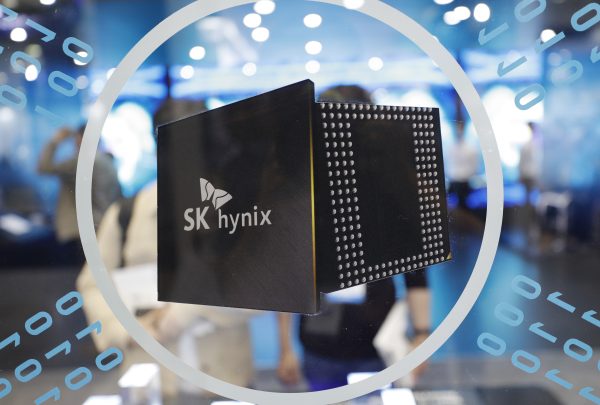
Other key developments that make a case for Seoul’s closer strategic alignment with Washington are South Korea’s semiconductor companies relocation of some investment to the United States; Seoul’s intention to join the strategic CHIP 4 initiative; and South Korea’s participation in the Indo-Pacific Economic Forum (IPEF) and the Washington-led minerals security partnership.
Similarly, Seoul’s Indo-Pacific Strategy has a separate chapter for strengthening cooperation in critical domains of science and technology, which emphasizes “engaging in collaborative networks with the U.S. while expanding technology cooperation with Europe, Canada and Australia.”
For critical and advanced technologies, Seoul also seeks active participation with the Quad. Seoul’s Indo-Pacific strategy has also indicated its desire to gradually expand avenues of cooperation with the Quad. Meanwhile, China is conspicuously absent as a strategic partner.
Beijing perceived Seoul to be taking a more non-aligned posture on the emerging Sino-U.S. technological competition under Moon. However, the U.S. has upped the ante since then – and increased Beijing’s sense of urgency. China has now clearly expressed its opposition to the U.S. CHIPS and Science Act and Inflation Reduction Act (IRA). Chinese media outlets even warned Seoul that it should “independently formulate its own semiconductor industrial strategies,” adding that “whether South Korean chipmakers will expand or lose market share in China now depends on South Korea’s industrial policy for its semiconductor sector.”
South Korean trade is heavily dependent on China, its largest trading partner, with semiconductor exports reaching around $42 billion per year. The frictions may also have implications for China-South Korea FTA negotiations in the service and investment sector, raising the risks for Seoul.
Economic Considerations and Supply Chain Resilience
A closer alignment with the U.S. in the technology domain will not necessarily translate into closer cooperation in trade and commerce. Even if this were to happen, it would either demand structural changes in the way Seoul perceives its relations with Beijing or a likely scenario where Seoul profits from new markets, which might offset the trade costs from dependency on China.
Thus far, South Korea has maintained a balanced trade relationship with China and has benefited from outsourcing manufacturing. With Seoul’s decreasing population, any chances of taking further economic risks would find no unanimous support in either conservative or progressive parties. The need for a bipartisan consensus domestically on how to deal with China vis-à-vis trade persists.
Even as South Korean companies are moving out of China, this does not have to imply decoupling or full alignment with Washington. While Seoul clearly has concerns, such as in supply chain resilience, there is an understanding between Beijing and Seoul on working to resolve these issues bilaterally.
Another factor that creates suspicion in Seoul is the lack of political certainty in the United States and the rise of economic nationalism and trade protectionism. Donald Trump’s presidency (2017-2021), and his prioritization of domestic manufacturing, was symbolic of this changing political environment. President Joe Biden has further continued this legacy with the passage of the IRA, showing that the trend of polarization is still intact. With the 2024 U.S. presidential elections approaching, Seoul will be cautious in taking any drastic steps against Beijing.
However, the question will be how China perceives Seoul’s changing posture. Till now, Beijing has reacted neutrally to Seoul’s growing profile in the region, as China saw the shift as not directed toward itself. So far, Beijing does not see Seoul as joining the “anti-China bloc,” but that could change. Yoon also recognizes this trend, saying in Davos that “cooperation between countries in the realms of security, economy, and advanced technologies has been increasingly regarded as a package deal, giving rise to the trend of bloc-forming among countries.”
Yoon also acknowledged that the “boundaries between security, economic, and cutting-edge scientific technologies are blurring,” putting high-tech exporters like South Korea in a bind.
Defense and Security Considerations: Spoiler in China-South Korea Relations?
Beijing also feels uneasy about the deployment of U.S. regional missile defense systems such as THAAD in South Korea, which undermines China’s nuclear deterrent capabilities. While Beijing has conveyed its concerns directly to Seoul in the past, it also resorted to the use of economic coercion to be more assertive in its approach. As the Yoon administration pursues a policy of strengthening military cooperation within the alliance, it could cause frictions with China.
Seoul and Beijing’s contrasting approaches to responding to nuclear threats from Pyongyang is another point of contention. Earlier, South Korea-U.S. defense cooperation and joint military exercises directed toward North Korea were one factor that irked Beijing, which saw these developments as indirectly targeting China by building Seoul’s defensive capabilities. Those concerns were settled with an agreement on the “Three Nos,” which committed South Korea not to deploy additional THAAD batteries, join a U.S. missile defense network, or sign onto a trilateral military alliance with the U.S. and Japan.
Thus, renewed support in South Korea for the continued deployment of THAAD missiles and calls for building a nuclear arsenal would further strain bilateral relations and will likely impact trade. Based on past precedent, security developments in the Korean Peninsula will overflow into China-South Korea economic relations, and the perception that Seoul seeks to isolate Beijing by restricting exports of critical technologies will further fuel misunderstandings.
Conclusion
Seoul now has to choose between geography and trade, which prioritizes Beijing as the main partner, and defense and security cooperation, which calls for closer strategic alignment with Washington. Since Seoul normalized its relations with Beijing in the early 1990s, increased trade with China and defense relations with the United States did not contradict each other. However, in light of threats emanating from North Korea and the intensifying Sino-U.S. competition over advanced technologies, Seoul is seeking closer alignment with Washington. That said, economic considerations remain an important factor in Seoul’s strategic calculations while deciding its foreign and domestic policy engagements, making it much more difficult to exercise strategic autonomy.
Yoon offered a potential solution to this problem at the WEF, where he called for “the global economic order’s return to the free trade system based on universal norms.” However, he also emphasized a qualifying condition: “We will align and cooperate with mutually trusted countries in full compliance with the universal rules to secure the global supply chain’s stability.” Contradictions in defining “universal norms,” rules, and fairness will pose a test for China-South Korea relations – and South Korea-U.S. relations for that matter.
Amidst this complexity, Seoul will find it difficult to balance its interests going forward. It remains to be seen whether Seoul can avoid participating in bloc formation – and if not, how would it ensure its strengthening alliance with Washington in the tech and defense sectors will not influence its economic relations with China going forward.