

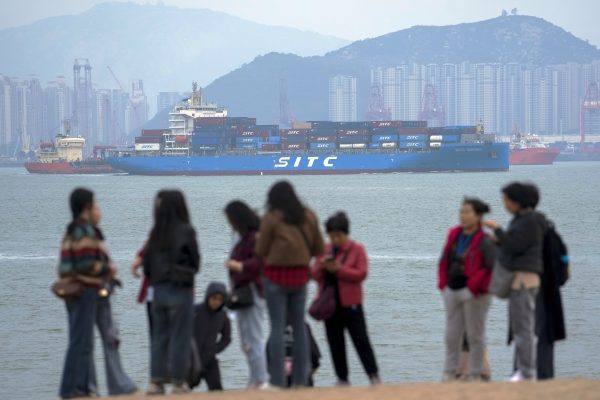
Economic interdependence in the Asia-Pacific and beyond has facilitated China’s use of economic statecraft – the manipulation of trade or investment ties for political purposes. Beijing has become more active at using both coercion and inducements in attempts to shape the actions of governments as well as companies.
While China’s economic statecraft has altered the strategic calculations for many countries and could have far-reaching implications for the trajectory of great power competition, Chinese influence is not a foregone conclusion. Beijing has encountered considerable pushback and often shot itself in the foot, suggesting that U.S. policymakers need not be overly concerned about undue influence. At the same time, the diffuse lure of economic interdependence remains a powerful draw, and one that is hard for Washington to tackle head-on without offering alternative or complementary economic opportunities.
China has met with some successes but also many failures in its attempts at economic influence. In my research, I show that subversive carrot tactics have allowed China to make inroads in places where leaders can act with relative impunity, such as Cambodia, but have backfired in countries where leaders face accountability mechanisms. While seemingly an easy and cheap approach to get immediate payoffs, under-the-table carrots spark public dissatisfaction and elite contestation, with Beijing and Chinese-financed projects often getting entangled in political scandals and election campaign rhetoric.
Additionally, the lack of precise control over economic and political actors, leading to informal or unsanctioned economic activities – especially in the subversive context – has also created negative influence outcomes. On the level of strategic influence, subversive inducement attempts, such as bribing politicians, bypassing regulations, or cutting corners, have had negative effects on China’s global image, which is counterproductive as it tries to position itself as a great power that ostensibly promotes “win-win” cooperation.
Beijing’s economic statecraft has been most effective at achieving short-term transactional goals, such as vetoing a multilateral statement, as with Cambodia’s support within the Association of Southeast Asian Nations (ASEAN) for the Chinese position on the South China Sea.
In other cases, building up pro-China constituencies has successfully created contestation over how to manage economic and security issues with Beijing. In present-day Germany, we see the political influence of business groups invested in continued economic ties with China – such as Volkswagen, BMW, and BASF – alongside internal divisions among politicians and key ministries on national strategy toward China. While this may not ultimately result in a fundamental political realignment toward Beijing, economic statecraft has been able to drive wedges within countries as well as between different countries, thus inhibiting effective China-skeptic coalitions. This is particularly useful for a rising power seeking to reduce opposition as well as alignment with U.S. interests.
In general, China’s economic statecraft has operated more by preference multiplication – empowering groups with overlapping preferences (whether out of self-interest or national interest) to advocate for more cooperative ties with China. Persuading actors to change their policy preferences has been more difficult for Beijing. Legitimate inducements, such as investments that operate by the law, bring economic benefits to the public, and engage a broader range of stakeholders, are more likely to be able to shift attitudes. Much of the time, this has worked diffusely over long periods of time, and often as an outgrowth of broader economic interdependence rather than a deliberate long game.
In Malaysia, despite previous pushback against corruption-tainted Chinese projects, an established record of other economically-beneficial Chinese investments has entrenched national and local politicians’ views of China’s economic importance along with their desire to minimize confrontation over issues such as the South China Sea disputes and the Uyghurs in Xinjiang. German automakers dependent on the Chinese market often lobby for more cooperative policies toward Beijing. In March this year, the CEO of Mercedes-Benz, which sells more than a third of its cars in China, spoke out against a European Union anti-subsidy probe into China’s electric vehicle industry.
In this respect, Beijing appears best able to achieve influence through the diffuse latency of economic interdependence. China as a crucial economic partner remains a compelling narrative and a powerful draw for many countries, and often conditions the attitudes and decisions of many political leaders. Perhaps the deepest economic influence comes paradoxically when Beijing may not have set out to achieve an explicit or immediate political goal, but can subsequently leverage such influence during moments of critical decision-making.
Even as Beijing touts deepening trade and investment ties as part of a “win- win” narrative, it has also sought to weaponize such interdependencies to punish or pressure governments and companies perceived to be attacking Chinese government policies or undermining national sovereignty. In imposing sanctions, China has largely targeted symbolic products with ready substitutes – think Norwegian salmon, Philippine bananas, or South Korean cosmetics – so as to minimize damage to its own economy. Rather than announcing formal sanctions, it often denies political motivations and uses informal measures such as internal government guidelines or selective food safety inspections.
Capitalizing on its market power and established propaganda apparatus, Beijing is mobilizing patriotic consumer boycotts as a more manipulable, more visible, and less costly tool of coercion, especially to target third parties and companies over sensitive issues such as Taiwan and Hong Kong. But Beijing is also taking concrete steps toward increased legalization and institutionalization of retaliatory sanctions (although actual implementation remains limited so far).
Chinese discourse on economic security emphasizes the need for China to capitalize on its position in the global economy to gain maximal leverage to safeguard supply chain resilience and upgrade domestic industry. This points to both an increasing awareness of economic weaponization but also relative emphasis on defensive, rather than offensive, measures.
Thus far, coercion has not really succeeded at getting governments to reverse course, and Beijing has been relatively circumscribed in the scope of its sanctions for fear of hurting its own economy. Certainly, more frequent usage of economic coercion (recent examples include Lithuania, Australia, and South Korea) has undermined the lure of China’s economy – potential rewards are less attractive if there is fear (and a record) of impending punishment – while spurring greater cooperation with Washington and like-minded partners.
At the same time, coercion – especially visceral and visible forms such as patriotic consumer boycotts – can create powerful psychological deterrent effects on companies and other governments, who perceive greater Chinese coercive clout than there actually exists, leading to preemptive self-censorship and policy adjustments.
Finally, in an increasing synergy of economic and informational tools, Beijing actively tries to shape public narratives about China’s economic power and its indispensability. Political elites often hold beliefs that Chinese investment and trade is indispensable and more important than any other economic partner, even if data show otherwise. Over the longer term, this could enhance China’s economic (and political) influence by highlighting (or perhaps exaggerating) the rewards of aligning with Beijing’s interests, alongside the costs of not doing so.
This article is based on a paper presented at a February 2024 conference hosted by the Security and Foreign Policy Initiative at the Global Research Institute, William & Mary.