

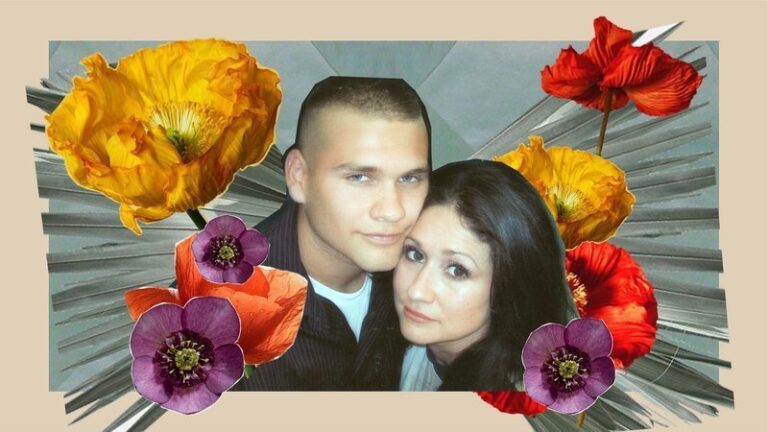
Liz Lozano has been incarcerated since 1995. Having spent over 20 years at the Central California Women’s Facility, the largest women’s prison in the world, she’s a big believer in the importance of mental health for rehabilitation. She also knows what works for her. In addition to talking to a therapist once a month, she jogs in the yard whenever she can. She also loves to garden. “Being out in nature helps me ground myself and find peace,” she said over the phone, her voice calm and measured. “But I can’t garden anymore because of constant lockdowns.”
When the pandemic hit in 2020, health experts quickly raised the alarm about the unique risks the virus would pose for both the physical and mental health of incarcerated people. Many of those fears came to fruition — and research and interviews suggest that the extended lockdowns introduced in the wake of the pandemic continue to take a toll on prisoners’ mental health and well-being.
In STAT’s interviews with more than a half-dozen women who are incarcerated in California, many described the post-pandemic era as their most difficult period of incarceration. Every single woman also said that these lockdowns haven’t let up in the three years since the pandemic started.
“It’s a standing joke that we can’t go 48 hours without some kind of major crisis that locks us down,” said Cecilia Fraher, who used to be incarcerated at Central California Women’s Facility (CCWF) and is now in the California Institution for Women (CIW) in Chino, California. “These crises have nothing to do with the inmates.”
It’s well-documented that long-term lockdowns can increase anxiety and disordered thinking, as well as heighten the risk of suicide or premature death because of the physical effects of stress. The International Journal of Prisoner Health also recently published one of the first pieces of qualitative research that examines the mental health effects of pandemic-era lockdowns on incarcerated populations.
In interviews with 10 incarcerated women in California, participants described being locked in a room with anywhere from one other person to six to eight other people for 23 hours a day or more, for weeks at a time. Overall, the study claims, the extended lockdowns disrupted the resources that help people in prison feel connected to their communities and aggravated the stressors they already experience. Many participants interviewed in the study knew someone inside who died by suicide during the height of the pandemic. “They are completely trapped. And I think that is going to create a lot of trauma,” one physician who worked with incarcerated women told the study’s authors.
Women at both CIW and CCWF claim that they are still experiencing lockdowns up to four times per week. By contrast, they say, lockdowns were rare before the pandemic. “We went from almost no lockdowns to daily lockdowns,” said Fraher. At CIW, where the suicide rate was eight times the national average as of 2016, Fraher remembers getting locked down, pre-pandemic, whenever there was a death in the prison. She also remembers one lockdown due to extreme winds back in 2015. Other than that, she said, this was not a routine protocol.
The California Department of Corrections and Rehabilitation (CDCR) said in a statement that at the institutions it oversees, “it may become necessary to modify programming for multiple reasons to ensure safety and security.” It said that CIW and CCWF have not been under lockdown, defined as restricting “any and all movement in an identified area, facility, or entire prison,” as opposed to modified programs, which “can still allow the population to shower, work, and receive medication, depending on the status of their housing unit.”
“Prisons, for better or worse, are part of our social safety net,” said Jennifer James, an assistant professor at the UCSF Institute for Health & Aging and one of the authors of the study on carceral lockdowns during the pandemic. “But lockdowns are not designed to do public health work, they’re designed to punish, and that’s really debilitating for incarcerated people.”
When prisons like CIW and CCWF go into full lockdown, all of the prisoners are called from their jobs or classes and redirected to their rooms. They’re cut off from access to the yard — their primary space for outdoor time — and the dayroom, an area that has elliptical machines, televisions, a library, pay phones, and stations where they can have video calls with loved ones. They’re also routinely “cell fed,” which means that food and medication are brought to their rooms.
When the prison announces a “modified program” lockdown, people are still locked in their unit, but they’re allowed to leave in order to take a shower, make a phone call, put mail in their mailbox, or do laundry.
During the height of Covid, lockdowns were meant to protect the health of incarcerated people by limiting opportunities for virus transmission. But they had major negative impacts on women’s health in other ways.
Lozano started going through menopause at the same time the pandemic unfolded. When she recalls those months, she remembers hot flashes, headaches, body aches, losing her appetite, and suicidal thoughts brought on by depression. She also remembers taking showers. “Showering is one of my coping skills,” she said. “Whenever I’m feeling something negative, I go into the shower and let the water run over me.” Every night, Lozano’s roommates at CCWF heard her crying. “It helped me release what I was feeling inside,” she said.
In 2020, she said, she was often locked in a cell for 23 hours per day or more, for weeks or months at a time. She had no access to fresh air and would have to wait days to shower. It felt impossible — and terrifying — to cope with both the pandemic and the hormonal changes happening in her body.
Tomiekia Johnson, who is incarcerated at CCWF, said that her period hasn’t stopped for the past two years. A vigorous notetaker, she’s tracking her cycle, along with her other symptoms that have cropped up in the wake of the pandemic, such as insomnia, vertigo, and hair loss. She attributes many of these changes to the stress she’s experienced in the wake of lockdowns.
“When there’s a lockdown, you’re not going to be able to work that day, you’re not going to be able to go to school that day, you’re not going to be able to go to the yard that day,” Johnson said. “I’ve been incarcerated for 12 years and I’ve experienced what it’s like to go to the yard at will, to go to group [programming], to work my job. This has totally changed things, and the quality of my life has diminished significantly.”
Johnson used to work as a fitness instructor at the prison gymnasium, but she hasn’t been able to return to her job because there are still empty beds sitting in the gym — ready to be used in the event of a Covid surge.

Tomiekia’s sister, Terressa Johnson, talks on the phone with Johnson every week. As lockdowns became more prevalent at CCWF, she found that she had to lift Tomiekia’s spirits every time they spoke.
“She’s stressed the majority of the time,” Terressa Johnson said of her sister. “She doesn’t have an outlet because she can’t go to work, or she can’t go to the fitness center, or she can’t take the classes she was taking. The last three years have been the worst for her mental health.”
While lockdowns were mostly used during the start of the Covid-19 outbreak to mitigate the disease’s spread, the protocol is now used for a myriad of reasons. The women interviewed for this story say that sometimes they’re given official reasons for lockdowns, such as officer trainings, drones flying over the facilities, and staff shortages.
Other times, they don’t even know why they’re in a multi-day lockdown. “I feel like the staff will use any excuse to lock us down because it’s obviously a lot less work when we’re locked in our rooms,” Fraher said.
As of last July, incarcerated folks at CIW and CCWF received access to electronic tablets, which allow them to send messages, play games, read books, watch movies, and stream music. “Now that we’ve got tablets, we’re all supposed to just be quiet — you might as well put us in a drawer,” said Fraher. “If we didn’t have to come out and get showered occasionally, [the officers] would never have to do anything.”
For most of the women I spoke with for this story, keeping busy during lockdowns isn’t the hard part. Many of them read, do homework, paint, crochet, or watch movies on their tablets. “We recently got the Calm app, and that’s my new go-to for stress,” Lozano said. Lozano lives in the honor dorm, an incentive unit with extra privileges for people who have demonstrated good behavior.
But lockdowns do take away many of the minimal freedoms incarcerated people rely upon to maintain their physical and mental health. “You’ll hear of all these in-cell fights happening outside [of the honor dorm] when we’re locked down,” Lozano said. “Mental health should be a top priority in here because you could have four people in a room, but maybe there’s really 100 personalities in that room — it makes a huge difference when you have the option to decompress by having yard or dayroom access.”
Inmates say their inability to exercise during lockdowns has also adversely impacted their long-term physical and mental health. Fraher, who is 66, suffers from ongoing heart and lung conditions that make her completely pacemaker-dependent. Her conditions require regular surgery, so she walks at least three hours per day to stay in shape. “The only way to survive is to keep my lungs as strong as possible,” she said. “When we’re locked in, I can’t get out and work out.”
Lozano, who is 48 and also suffers from a heart condition, tries to regularly jog. But as yard time disappeared with more lockdowns, her cholesterol shot up — a change she attributes to the lack of exercise.
The number of incarcerated people in California state prisons with mental health issues has risen over the past 10 years even as the overall population of prisoners has dropped, according to a 2017 Stanford Justice Advocacy Project analysis of data from the CDCR. Lockdowns, of course, compound this issue, further isolating incarcerated populations. “Prison is such a punitive environment to begin with,” said Courtney Hanson, a coordinator at California Coalition for Women Prisoners, an advocacy group. “This type of punishment becomes so cruel for folks who have chronic health conditions and are already vulnerable.”
Today, Lozano is a vocal advocate for more mental health resources at CCWF. She already co-founded the Juvenile Offenders Committee back in 2009, which supports women who were sentenced as adults when they were juveniles with trauma education and substance misuse workshops.
Lozano also wants to work with local animal shelters and bring a cat therapy program to the prison, as she believes that healing can start with nurturing others. She’s currently trying to start a group where incarcerated women can openly talk about going through menopause. But she’s still worried about the future.
“I’m not hopeful because lockdowns seem like our new normal,” she said. “A correctional facility’s objective is to correct — to rehabilitate. Lockdowns prevent rehabilitation because you’re stuck in your cell without fresh air, sunlight, or exercise. It doesn’t allow us to mentally and physically release stress so that we can work our rehabilitation, and ultimately our healing, to eventually be released and become the people we were created to be.”