

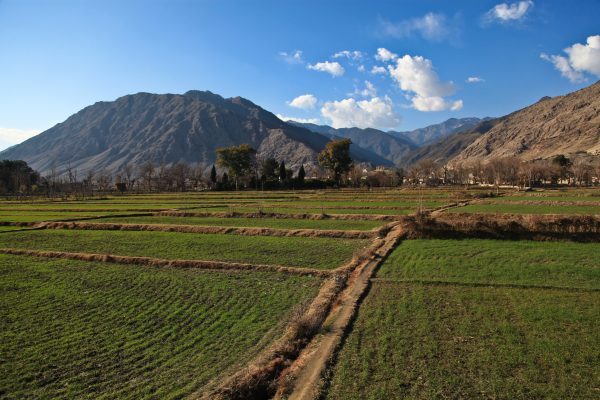
In Afghanistan, a desolate landscape almost entirely secluded from the rest of the world and burdened by starvation and severe climate changes, my father finds comfort in embracing hope.
For my father, an Afghan educator in his 70s, who intermittently engages in bookkeeping and gardening, contingent upon his health, dreary post-retirement mornings commence with switching on the TV with purpose.
What is he watching with such ritual and devotion? The progress of the Qosh Tepa canal.
He began to closely follow its progress when the Taliban started construction of the canal in earnest earlier this year.
As a guardian to seven girls, he grapples with the Taliban’s persistent closure of schools for girls in Afghanistan and the exclusion of women from the workforce – causes he’s ardently championed throughout his life. But there are other pressing issues too: acute hunger that affects millions, disproportionately Afghan children and women, and soaring unemployment.
The Qosh Tepa canal’s potential sparks an otherwise elusive note of optimism.
When finished, the canal may potentially provide enough food for the entire country and create thousands of jobs. The pressing needs for food and employment in Afghanistan are deeply intertwined with the historical and nationalistic significance of the project for individuals like my father.
The project is a strong reminder of the Soviet invasion of Afghanistan, which was both violent and unforgettable. And it invokes the legacy of Afghanistan’s first president, Mohammad Daud. Renowned for his progressive policies, notably agriculture plans and various economic modernization endeavors, Daud crafted the Qosh Tepa canal project shortly after assuming power through a bloodless coup, marking the end of the monarchy and propelling him to become Afghanistan’s first president in 1973.
A statement credited to him – “I feel happiest when I can light my American cigarettes with Soviet matches” – provides insight into Afghanistan’s nuanced stance during the Cold War in the 1970s.
The Qosh Tepa canal aimed to annually extract 10 billion cubic meters of water from the Amu Darya River. The Amu Darya, historically known as the Oxus, stands as Central Asia’s longest river, carrying 80 percent of the region’s water resources. It originates in Afghanistan’s Hindu Kush and Wakhan in the Pamir Highlands, delineating much of the 1,120-mile frontier between Afghanistan and its northern neighboring countries – Tajikistan, Uzbekistan, and Turkmenistan.
Afghanistan was granted an annual allocation of 9 cubic km from the Amu Darya through an agreement with the former Soviet Union, an agreement that remains binding to this day. However, in practical terms, the country couldn’t utilize a third of its allocation. In 1977, Daud successfully persuaded the Soviets to agree on allocating a minimum of 6 cubic km of water to Afghanistan rather than the initially requested 9 cubic km. This event marked the inception of the canal project, but Daud’s assassination in 1978 during a violent coup orchestrated by the pro-Soviet People’s Democratic Party of Afghanistan (PDPA) disrupted the plan.
This tragic event set the stage for the Soviet Union’s invasion of Afghanistan, and the country, constrained by its circumstances, could only utilize 2.1 cubic km of water from the Amu Darya by the late 1980s. In 1987, the Soviet Union divided the river’s flow — 61.5 cubic km — between the Soviet republics of Tajikistan, Uzbekistan, Turkmenistan, and Kazakhstan. Afghanistan, still subject to at the time to Soviet invasion, was effectively cut off from the discussion.
Jump ahead 36 years, and the ambitious $684 million Qosh Tepa canal project, currently led by the Afghanistan National Construction Company, has sparked alarm among Afghanistan’s northern neighbors. Central Asian concerns about the dwindling water resources in the Amu Darya are valid, yet Afghanistan borders the river too and has long been deprived of the right and opportunity to utilize its bounty.
At the same time, completing the canal is a massive endeavor, with its progress affected by prevailing economic circumstances, the Taliban’s global standing, internal politics, as well as its intricate relationships with Afghanistan’s northern neighbors.
Tajikistan is not directly impacted by the canal project, but has apprehensions regarding initiatives that would foster stability for the Taliban regime in Afghanistan. Dushanbe has long had traditional alliances with ethnically Tajik armed groups in Afghanistan, and provided refuge to key political opposition figures following the Taliban’s seizure of power in August 2021. Compared to Uzbekistan and Turkmenistan, Tajikistan stands out in Central Asia for having the most strained relationship with the Taliban. The former two have managed to maintain somewhat amicable relations.
The canal project holds economic significance for Uzbekistan, which uses the Amu Darya’s waters to irrigate 2.3 million hectares of land, and Turkmenistan, which irrigates 1.7 million hectares with its water. The two could suffer a loss of up to 15 percent of the current water flow from the Amu Darya into their territories because of the canal project. As such, both nations harbor deep concerns about the implications of reduced water flow, especially regarding their highly lucrative cotton fields.
Climate change is already affecting Central Asia; the region has experienced record temperatures in the past three summers, accompanied by decreasing precipitation and melting of glaciers in the eastern mountains. Unfortunately, Afghanistan remains in the direst, and most vulnerable position in the region.
According to some reports, over the last 70 years, Afghanistan has experienced an alarming increase of 1.8 degrees Celsius in average temperatures, a rate double that of the global average. As per a recent assessment by Crisis Group, Afghanistan is identified as the seventh-most susceptible nation to the effects of climate change globally. The country is already grappling with challenges such as droughts, floods, and other natural disasters, with forecasts indicating a significant surge in temperatures in the coming decades. Moreover, the report highlights projections suggesting that Afghanistan’s surface temperature will escalate at a faster rate compared to the global average.
According to Crisis Group, the exclusion of Afghanistan from global climate change discussions, a consequence of global sanctions and the international community’s non-recognition of the Taliban government, partly due to its oppressive policies against women and suppression of civil liberties, severely impedes the country’s involvement in critical global dialogues addressing urgent climate concerns. Crisis Group urged in its report that Afghanistan be brought back into the discussion.
This vulnerability to a changing climate also underscores the importance of the canal project. Once completed, the canal is projected to irrigate approximately 550,000 hectares of arid and desolate land, providing a vital resource for thousands of Afghan farmers grappling with poverty and prolonged drought.
These farmers traditionally depended on rainwater stored in wells that often dry up after the rainy season ends. Natural canals that once brimmed with melted snow from the Hindu Kush now run dry by spring. There is some access to groundwater via pumps, but these systems are inadequate and very expensive for struggling farmers.
The canal’s potential impact is nowhere more evident than it is in the Kaldar District of Afghanistan’s Balkh province, where the project starts. The area is haunted by stories of impoverished families resorting to desperate measures. In many villages, small children, particularly girls, are forced into the harsh labor of carpet weaving, not only robbing them of their childhoods but also subjecting them to the risk of developing severe respiratory illnesses due to prolonged exposure to dust while toiling for hours on end.
The prevalent use of opium and other locally produced drugs to sedate infants for prolonged periods, enabling mothers to weave carpets, has led to widespread addiction among young women and girls engaged in the carpet weaving traditions of northern Afghanistan.
This is where my father’s hope is most desperate.
If successful, the Qosh Tepa canal could free thousands of children from labor-intensive occupations such as carpet weaving by providing alternative livelihood possibilities, through improved agriculture in particular. It is anticipated that industries related to the canal will be able to employ over 250,000 people in the area.
These improvements – in agriculture and employment – will reverberate, having an impact on a whole range of societal challenges, such as labor exploitation, drug addiction, forced marriages, child abuse, and the distressing prevalence of child marriages, all primarily triggered by the extremities of persistent poverty.
Amid pervasive corruption that diverted millions of U.S. taxpayer dollars meant for Afghanistan’s reconstruction and escalating daily violence, the former Afghan government purportedly initiated the canal project in 2021. But by then, the country’s security and political circumstances had reached a critical point, rendering the effort belated, and effectively abandoned as the government collapsed.
After assuming power in August 2021, Afghanistan’s new rulers promptly acknowledged the immense significance of undertaking the ambitious project. The Taliban believe that completing the project will enhance their public support while dealing a substantial blow to their political adversaries and critics, who are able to cite issues like starvation and unemployment as marks of the Taliban’s governing ineptitude.
The first phase of the Qosh Tepa canal has already been completed, at a reported cost of roughly $100 million. The project is expected to take two years to complete in full. Taliban officials claim the project’s funding is sourced from tax revenue, coal mines, and other local resources; this self-sufficiency in undertaking a significant project without international aid has already garnered appreciation from many Afghans, but that is also considered to be a main challenge.
The absence of recognition from the international community, combined with economic sanctions, frozen central bank assets, and natural disasters, places significant economic strain on the Taliban’s ambitions. Reportedly, due to cost-saving measures, the canal bed lacks a cement lining, raising concerns about saltwater infiltration from groundwater, contaminating the freshwater designated for irrigation. The reported shortage of skilled personnel and adequate machinery could pose a significant long-term challenge to the project’s success as well.
However, amidst these challenges, Taliban authorities actively share project updates through social media platforms. Local reporters and enthusiastic Afghan YouTubers frequently post videos and discussions, fostering a sense of anticipation and excitement within the local population about the canal and the future.
This hope and anticipation within the war-exhausted community resonate deeply with my father, mirroring the remarkable and unparalleled transformation unfolding in Afghanistan – the cessation of nearly five decades of conflict. The possibility of economic stability, my father believes could bring with it the potential for peace.
“While there’s life, there’s hope,” he says. “Finally, the war is over.”
His unwavering resolve is crystal clear: “I choose not to relinquish hope.”