

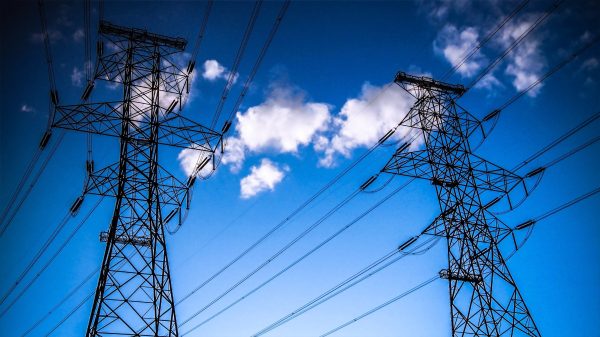
For years, the race for artificial intelligence leadership has been framed as a contest over advanced semiconductors. But the decisive advantage may belong not to the country that manufactures the best chips, but to the one that can deploy the most computing power across its economy. In the AI era, nanometers still matter. Yet increasingly, so do gigawatts.
China’s emerging strategy, including plans to connect AI data centers via a national computing network and expand supporting energy infrastructure, reflects a broader belief that AI leadership will be determined by large-scale deployment. Governments focusing mainly on semiconductor fabrication may be chasing past advantages instead of future ones. China’s reported plan to invest roughly 2 trillion yuan (i.e., $295 billion) over five years in a nationwide network of interconnected AI data centers underscores the scale of this strategic shift.
We can compare the global data center expansion trajectory. For the United States, McKinsey’s latest analysis puts U.S. data-center power capacity at 30-plus GW in 2025, rising to 90-plus GW by 2030. For China, Rystad estimates China’s total data-center capacity will rise from 32 GW at the end of 2025 to more than 60 GW in 2030. AI facilities are expected to increase from 39 percent of capacity in 2026 to 48 percent in 2030, implying roughly 29 GW by 2030. In the same study, it was estimated that global capacity would reach 155 GW, meaning the United States and China combined would account for roughly 77 percent of global AI capacity.
The computing landscape has evolved, with smaller transistors giving countries with advanced fabrication technologies a competitive edge. The U.S. and allies have traditionally led in semiconductor manufacturing, while China is increasing its own capabilities to reduce reliance on foreign technology. As new generations of semiconductors emerge, significant investment and innovation are needed to optimize the integration of processors, memory, data centers, and communication networks – particularly as artificial intelligence drives demand.
Nvidia exemplifies this shift in the AI-driven economy. The U.S. firm is thriving not just through powerful processors but also by creating a robust ecosystem of networking technologies and software solutions. Analysts estimate Nvidia controls roughly 70 percent to 80 percent of the AI accelerator market, illustrating the value of ecosystem integration beyond chip design alone.
Chinese policymakers may have concluded that matching the United States at the frontier of semiconductor fabrication would be costly and time-consuming. Rather than waiting to close every technology gap, Beijing appears focused on building the infrastructure necessary to deploy AI widely using available hardware. The reported AI blueprint would connect computing hubs nationwide and rely heavily on domestic suppliers, reflecting a strategy centered on scale, coordination, and deployment.
In practical terms, China is attempting to industrialize artificial intelligence before it perfects it. History suggests that invention and large-scale economic adoption are often separate achievements. Transformative technologies generate their greatest impact when they become embedded throughout production systems, institutions, supply chains, and everyday economic activity.
Another difference is that data center ownership and compute infrastructure in the U.S. are highly concentrated among the five hyperscalers (Amazon, Google, Microsoft, Meta, and Oracle) and fewer than 10 neocloud providers (CoreWeave as the leading one). Unlike the United States, where AI infrastructure is the purview of a handful of hyperscale providers, China’s computing ecosystem involves a broader mix of state-owned telecom operators, cloud providers, and technology firms. State-owned telecom companies and many technology companies own data centers. Again, the line between state-led AI infrastructure development and private company-led ones is blurred.
Various initiatives in the U.S. encourage AI data center development in some states. There are also notable setbacks; for example, New York State announced a one-year moratorium on hyperscaler data center construction. In China, private companies are trying to catch up with new data center construction. For example, Tencent announced a huge increase in capital investment in data centers.
Despite U.S. advantages, including Nvidia’s dominance in AI accelerators and export controls on critical technologies for China, the real challenge may be building the infrastructure needed to deploy these chips. Countries with top-tier semiconductors can still face limitations without adequate electricity, grid connections, or packaging capacity. The energy demand is significant, with the International Energy Agency projecting global data-center electricity consumption could nearly double from 415 terawatt-hours in 2024 to about 945 terawatt-hours by 2030, largely driven by AI workloads.
Semiconductor leadership remains strategically important, but deployment leadership may become equally important. Advanced packaging capacity remains constrained, high-bandwidth-memory supply chains are concentrated, and electrical infrastructure is increasingly emerging as a competitive variable. In many parts of the United States, new data center projects face delays due to power availability and grid access.
The United States’ electrical infrastructure is already under strain. According to Lawrence Berkeley National Laboratory, more than 2,000 gigawatts of generation and storage capacity were seeking grid interconnection at the end of 2025. Projects that ultimately reached operation in 2025 typically spent more than five years navigating the interconnection process, while only about 13 percent of projects entering interconnection queues between 2000 and 2020 had reached commercial operation by the end of 2025.
Semiconductor leadership will remain strategically important. Yet the next phase of competition may be defined less by breakthroughs inside fabrication plants than by the ability to combine chips, energy, networks, memory, software, cloud platforms, and industrial adoption into a coherent ecosystem. The economic value of artificial intelligence will ultimately depend not on how much computing power exists, but on how effectively that computing power is deployed throughout the economy.
By 2030, today’s debate over semiconductor supremacy may appear incomplete. The country that prevails in artificial intelligence will not necessarily be the one that produces the smallest transistor or the most advanced chip. It may be the one that builds the infrastructure, institutions, and deployment capacity needed to turn computing power into national productivity at scale. The AI race, in other words, may be won not in the chip foundry, but in the ecosystem surrounding it.