

From the moment the United States launched its bid to co-host the 2026 World Cup, the games were pitched as a way to elevate and promote North America’s most distinctive and glamorous cities.
There was Miami, with its fabulous beachfront hotels, described in the so-called bid book as the United States’ “gateway to the world.” San Francisco put forth a vision of fans flooding Mission Dolores Park, reveling in the city’s “iconic skyline” and its mythical bridge on the edge of the continent. Boston, one of America’s “most historic” cities, would greet the World Cup with an “elegant simplicity with distinctive New England flair.”
The members of soccer governing body FIFA bought it, and in 2018 chose the United States, Mexico and Canada. But the tournament itself was never intended to be played in many of the cities lovingly described by the bid book. Instead, in a quirk of political geography distinctive to the United States, matches would often land instead in much smaller, less wealthy outlying municipalities known to sports fans and illegible to everyone else.
“When I tell people I’m the mayor of East Rutherford, they’re like, where’s that?” said Jeffrey Lahullier, the elected leader of a New Jersey town of 10,000 hosting this weekend’s final match. “I say, do you know where the World Cup’s being played?”
It’s an inversion of American political power laid bare by the World Cup, where global events are often staged in municipalities with sometimes only a few thousand residents, forcing local officials to negotiate with billion-dollar franchises, international governing bodies and visiting heads of state.
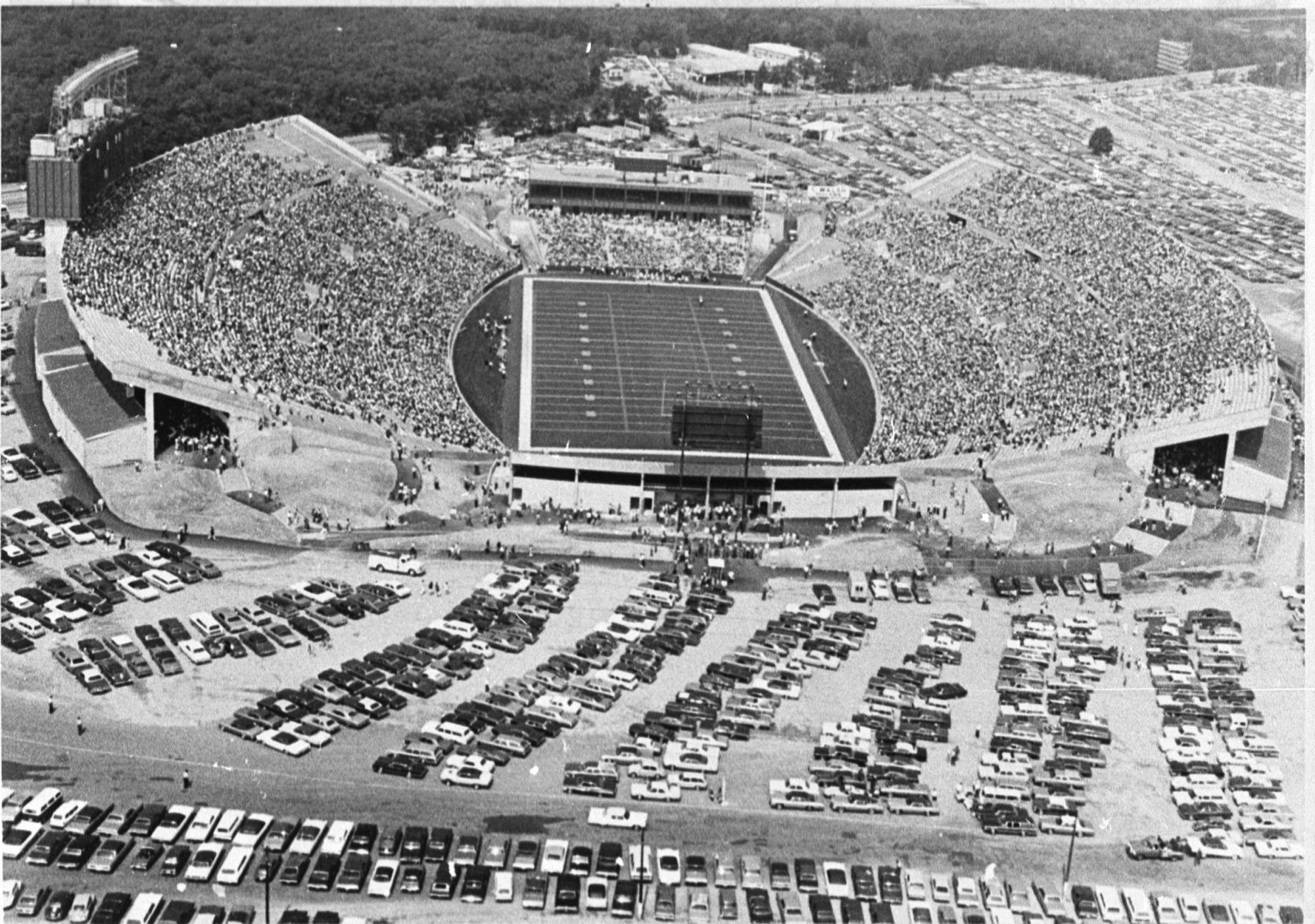
For decades, such suburban stadium cities — often considered little more than a landing pad for enormous, polygonal sports spaceships — have existed in a strange political limbo. They find themselves alternatingly privileged and bullied from the athletic behemoths in their backyards, which come with promising financial impact but deliver it only inconsistently. With the World Cup, what was often a source of local friction between local politicians and their most famous corporate citizens moved onto the global stage.
Santa Clara, California, Mayor Lisa Gillmor welcomed Jordan’s King Abdullah II upon his arrival at the nearby airport, and Arlington, Texas, Mayor Jim Ross greeted Japan’s Princess Takamado. In Foxborough, Massachusetts, the five part-time members of a town’s select board found themselves in a staredown with what might be the world’s most famous nonprofit. In Inglewood, abutting Los Angeles, Mayor James Butts saw a labor fight with a stadium-workers union become intertwined with federal immigration debates after workers said they were fearful of being “kidnapped by ICE” agents assigned to games.
As presidents, prime ministers and kings from across at least three continents meet in East Rutherford, Lahullier’s mind will be focused less on the World Cup final taking place than on how to find room in a $34 million municipal budget to cover a $100,000-plus police overtime bill.
“It was described to me like I’m hosting eight Super Bowls,” Lahullier said of the challenges posed by the World Cup. “But it’s not a money-maker — you’re laying out money you hope you’re going to recoup.”
Long before they were massive monuments to American sports culture, the sites of suburban stadiums were racetracks, swamps, low-income neighborhoods and sandy expanses of land where locals took weekend dirtbike joyrides and came to dump their trash.
Through much of the 20th century, sports were synonymous with the hub and thrum of the city itself. Fans would walk from workplaces and homes to arenas that were centers of civic pride, their cheers and roars knit into the urban soundscape, players and coaches an extension of a city’s character.
That started to change in the 1960s, and teams began to move away from the places and names they bore on the front of their jerseys. Although the rise of the automobile and a population shift into the suburbs guided their destinations, departure was usually precipitated by conflict with local political leadership. In 1971, the Boston Patriots left their hometown after struggling to find space for a permanent stadium that could house the National Football League franchise. They found the land about an hour’s drive away along Route 1, in a small town that would not fund the stadium, but welcomed the project. In recognition of their new Foxborough home — much closer to Rhode Island than Boston’s city hall — the team renamed itself the New England Patriots.
Wellington Mara, the owner of the New York Giants, announced that same year that he would move his team from Yankee Stadium to a swampy New Jersey tideland after growing discontented with the city’s unwillingness to build them their own stadium. (“Every family dreams of moving into its own house and to get away from its in‐laws,” Mara said at the time.) After the announcement, then-New York Mayor John Lindsay called Mara “selfish, callous and ungrateful,” threatening to sue in an effort to force the team to drop New York from its name.
The Miami Dolphins decided to leave the Orange Bowl, in the city’s Little Havana neighborhood, in 1984 after Miami demanded a rent increase. Team owner Joe Robbie signed a 99-year lease with Dade County for a site in a low-income, rural, and then-unincorporated patch of land about 15 miles northwest of downtown Miami.
At the time, the populace of what was then called Lake Lucerne was little enthused about making room for a $100 million professional sports stadium. Local homeowners, many of them Black, mounted lawsuits on both land-use and civil-rights grounds to block development, but found themselves thwarted by maneuvering from the county and state agencies. Even the discovery of a Native American burial ground on the site was not enough to stop Joe Robbie Stadium from opening to the public in 1987.
Similar scenes played out across the country in the decades that followed. The Dallas Cowboys left downtown Dallas for Irving in 1971, then moved deeper into the suburbs to Arlington in 2009, having failed to convince either of its previous two homes to build a taxpayer-funded stadium. The 49ers left San Francisco’s Candlestick Point in 2013 for the warmer, less windy and more financially welcoming city of Santa Clara 40 miles down the San Francisco Bay Peninsula. In Southern California, Inglewood won out over competing sites as the home for the Rams when the football team returned to the city in 2020.
Each transformed a small municipality into a development and entertainment destination whose population could balloon by more than 800 percent on game days or concert nights. That offered an appealing new tax base along with vexing new public-safety and transportation challenges, and tricky politics surrounding it all.
As Foxborough transformed from isolated farm town into a regional destination surrounded by malls, the city wrangled with the Patriots over fan behavior, traffic concerns and their understaffed local police. In Inglewood, the arrival of a stadium led to luxury mixed-use housing developments and new hotels with yoga decks, but also significant displacement of an overwhelmingly non-white community.
Rutherford, New Jersey, is a charming borough whose compact, “20th century quaint” walkable center Forbes once described as fit for a Norman Rockwell painting. The town to its east, however, is little more than a farrago of parking lots surrounding MetLife Stadium (home to football’s Jets and Giants), Meadowlands Racetrack (thoroughbreds, harness horses) and the American Dream mega-mall (Abercrombie & Fitch, Cinnabon). It has since become the smallest city ever to host a Super Bowl.
Leaving San Francisco, the 49ers in 2010 asked voters in Santa Clara — a quiet Silicon valley suburb then best known as the home of Intel and Nvidia — to contribute to $937 million in total spending on a new stadium. Under the terms of the arrangement, a public authority would own the building and the 49ers would act as the manager of day-to-day operations, sharing revenue from non-NFL events with the city.
“The economy wasn’t great, the team was losing, there was a lot of distrust in politics at the time,” said Lisa Gillmor, a former city council member who helped run the pro-stadium ballot campaign. “We worked really hard and convinced our community that it wasn’t going to cost the city any money to build the stadium.”

By the time Gillmor returned to city government in 2016, she said Santa Clara’s relationship with the team had begun to deteriorate. A nearby youth soccer park became a flashpoint as the 49ers considered turning into parking lots, and a popular multi-use trail was diverted on game days. (A 49ers spokesperson said that the field was untouched and that the franchise now provides funding for youth teams that use it.) Most significantly, Gillmor said that money that the city was expected to receive from stadium concert revenues soon fell to near-zero, as the team claimed its security costs had increased, although the team maintains that total revenue from the general fund has outpaced initial projects.
Things turned adversarial enough that Gillmor and the city voted to remove the 49ers as managers of the stadium in 2019, prompting a lawsuit from the team. The 49ers later launched a campaign to unseat her, and in 2022, a team-backed challenger came just 700 votes short of doing so. (The city and the team later settled their lawsuit, leaving the 49ers with management of the stadium.)
Ellie Caple, the 49ers vice president of corporate communications and public affairs, said that the World Cup has been a “tremendous success with no financial risk to the city” and that the 49ers remain committed to investing in the community. Gillmor, for her part, has gone from ally of a San Francisco-based team to a leading antagonist of Santa Clara’s most famous resident.
“They were very hospitable during the election,” said Gillmor. “Then after the votes, things changed, they rolled back up the red carpet.”
A global mega-event like the World Cup is always framed in the bright terms of shared humanity and common purpose, a chance to “embrace the concept of global unity” and “the power of football to meaningfully impact the world,” as the United States’ pitch deck once put it. Still, the relationship between a host city and FIFA is also decidedly transactional in nature.
FIFA, soccer’s governing body, requires locales to sign a hosting agreement requiring cities to cover significant operational costs of matches like security and expanded transportation services, which can run to up to$150 million per city. In return, the host city is promised publicity and an economic infusion from the games, plus reimbursements from state host committees. In the United States, many cities recoiled at those terms, including Chicago, Minneapolis and Detroit, which removed themselves from host consideration in the run-up to the World Cup, citing FIFA’s demands and financial expectations.
“The big problem I had was, they wanted to treat taxpayers as dumb money at the table, and I was not gonna let that happen,” former Chicago Mayor Rahm Emanuel said in an interview with POLITICO in June, looking back on Chicago’s decision not to host World Cup matches. “I know a bad deal when I see one.”
For the cities that did end up with the games, the welcome wasn’t particularly warm. New York and New Jersey politicians have engaged in a bruising, very public argument with FIFA over its unwillingness to help pay for fan transportation, which World Cup host countries have been on the hook for in the past. New York City Mayor Zohran Mamdani, meanwhile, successfully negotiated with FIFA for $50 tickets and free transportation for 1,000 New Yorkers, and pushed the soccer giant to retreat from a ban on spectators bringing water bottles into stadiums. (FIFA President Gianni Infantino also arranged a call between Mamdani and Arsène Wenger, the legendary manager of Mamdani’s beloved club Arsenal, in an effort to build goodwill.)

Outrage from New Jersey Gov. Mikie Sherrill over FIFA’s plans to sell stadium grass as a collectible drove the organization to reverse itself and agree to return some proceeds to local organizers. (FIFA did not respond to a request for comment.)
But small-town mayors were not always able to capture the same public attention when pushing back against the Zurich-based nonprofit, and were forced to seek leverage elsewhere. The select board of 19,000-person Foxborough withheld a basic event permit for the seven World Cup matches scheduled for Gillette Stadium to extract reimbursement for an estimated $7.8 million in security costs. Less than three months before the World Cup was scheduled to begin, Patriots owner Robert Kraft delivered the money.
“The concessions are small and meaningless, they can say they’ve extracted this, but it doesn’t really matter,” said J.C. Bradbury, a sports business professor at Kennesaw State University and the author of a forthcoming book about how stadiums transformed into “billion-dollar play-palaces for the rich-built increasingly on the backs of taxpayers.”
The settlement between Foxborough and Kraft’s companies allowed the World Cup to proceed in Massachusetts even as the two entities moved their battle to court. In mid-June, Kraft Sports & Entertainment sued the town for “repeatedly misusing its state-granted licensing authority unlawfully to extract funds.” In early July, even before the final match was played there, Foxborough filed a counterclaim that asked a judge to dismiss Kraft’s suit.
“While the plaintiffs, a collection of multibillion-dollar corporations, would prefer to have Foxborough taxpayers bear these expenses, they are contractually bound to pay for the public safety services that are necessary to ensure safe and efficient events at their private venue,” the town wrote in a brief.
Kraft’s New England Revolution professional soccer franchise plays its next match in Foxborough on Thursday.
When the summer Olympics concluded in August 2024, it was Los Angeles Mayor Karen Bass who inherited the games’ flame, which she passed to a motorcycling Tom Cruise for an action hero’s escape to California. But the bulk of the ceremony that opens the Olympics in July 2028 will not take place within the city that Bass governs.
Instead it will occur at Inglewood’s SoFi Stadium, which had not been built when the World Cup and Olympic bids were formulated but is now regarded as one of the world’s preeminent sporting arenas and will be converted into a swimming venue in 2028.
Mayor James Butts credits his city’s dramatic change in financial fortunes over the last few decades to the arrival of sports teams and stadiums, along with related businesses like the National Football League, which set its West Coast headquarters and media center there. Once the home of the Los Angeles Lakers, the city’s team bucked the suburban trend by leaving Inglewood’s Great Western Forum for a stadium in downtown Los Angeles in 1999. In the decade that followed, the city struggled with crime, high unemployment rates and a $17 million budget deficit. But its fortunes began to change when the Forum reopened and sports investor Stan Kroenke bought the city’s old racetrack, which later became the site of SoFi stadium and the home of the Rams.
Butts estimates that his city now hosts 400 events a year and welcomes a half-million people, requiring “very robust” traffic management and safety resources, insisting that the city-stadium dynamic is “very healthy.”

But that relationship has also been tested by numerous disputes, including a long running legal dispute between the city and Kroenke, who owns both SoFi and the Rams. Inglewood receives millions each year from an admission tax on ticket events, amounting to nearly 10 percent of the city’s general fund revenues.
“We went from BBB- bond ratings to AA+. Median value for a home was $225,000 when I took office, it’s $850,000 now,” said Butts. “Right now we have more in reserves than any city in the county.”
Butts is not alone among local politicians to believe that having one’s city defined by a stadium is worth the hassle and financial burden, and that being too easily confused with its much bigger neighbor can bring its own benefits. In a promotional video for the World Cup, Mayor Rodney Harris of Miami Gardens — where today’s third-place match between France and England will be played — said that the tournament gives “an opportunity to sell our story” in a way that could help lure future businesses.
Ultimately, for these mayors, the moments of pageantry are few and far between. Lahullier attended the tournament’s first match at MetLife, between Morocco and Brazil, in a luxury-box row of government officials. “I wish I could tell you that I follow soccer, but I do not,” he said.
But when broadcasters grabbed shots of local politicians, it was always Mamdani — the camera cutting out the actual mayor sitting to his right. Even when the world is looking on, a small-city mayor can recede into the backdrop.
“I’ve been mayor now for seven years,” Lahullier said. “If I twisted arms I could probably get a signed football or a signed jersey.”