

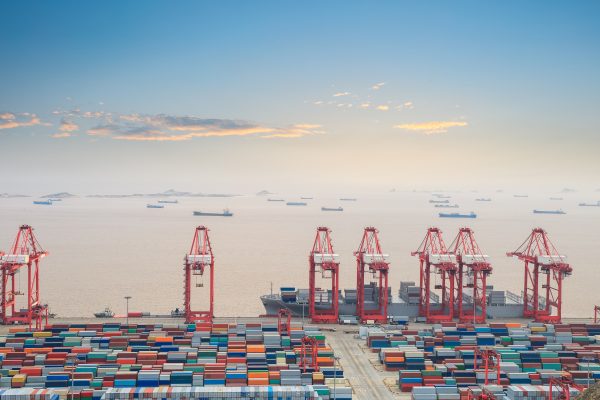
In July 2023, data showed exports from China falling by an unprecedented 14.5 percent year-on-year, while imports fell 12.4 percent, the worst performance since February 2020. That bad news was followed by a worse-than-expected performance for Chinese industrial production, which increased only 3.7 percent in July over the prior year, as well as by the retail sector, which expanded by a lackluster 2.5 percent, the smallest increase since December 2022.
Meanwhile, Chinese youth unemployment, estimated at 21.3 percent, was such a concerning statistic that the government found a “methodological” reason not to publish the number. Reflecting the run of bad news, Hong Kong’s Hang Seng stock market index is down 20 percent from January.
Even more concerning, China’s housing market is showing signs of stagnation, with major companies in the sector including real-estate developer Country Garden and shadow banking giant Zhongrong missing payments. On August 18, major China-based developer Evergrande, whose own troubles have been playing out over the past year, formally filed for bankruptcy in New York.
A key factor is each of these distressed Chinese behemoths is the deflation of the country’s real estate bubble, which not only gravely impacts big firms, but also puts a damper on consumer spending. An estimated 70 percent-80 percent of the household wealth of ordinary Chinese is tied up in real estate, meaning falling values have severe ripple effects on the willingness of Chinese consumers, already traumatized by three years of “zero COVID” policies, to spend money.
As a complement to the situation of Chinese consumers, local governments across the country are in profound states of financial crisis, having borrowed excessively and incurred questionable financial holdings even prior to the pandemic. Local governments now saddled with an estimated $10 trillion in debt. Overall Chinese debt now exceeds 300 percent of its GDP, 15 percent of all debt globally.
The People’s Bank of China initially responded to the mounting economic bad news with a modest 10-basis point reduction to 3.55 percent in its one-year prime interest rate, expected by many to be insufficient to turn the tide. In the context of such mutually reinforcing woes, many Western analysts do not expect China to meet its already modest 5.5 percent growth target for 2023, with the respected firm Barclays forecasting a growth rate of only 4.5 percent. Even such a lackluster performance would be better than the 3 percent growth rate in 2022, due largely to the Chinese government’s harsh COVID-19 lockdown.
Although the situation in China invites parallels to the global financial crisis triggered by the collapse of the U.S. real estate market in 2007, China is probably not on the verge of an economic meltdown. Although as noted previously, its banks and provincial and local governments are enormously indebted, most debt is domestically held. China’s government has multiple instruments not available in the West, to both protect its state-run banks and ensure that individual Chinese savers do not engage in mass runs on banks.
Moreover, as demonstrated by the Xi government’s sustained enforcement of its zero COVID policies despite enormous hardship inflicted on the Chinese population, state information control and coercive capacity, which penetrates every level of government, economy, and society, makes it unlikely that deepening economic pain to Chinese consumers metamorphosizes into a political crisis.
Impediments to China’s Policy Response
While China’s economy is not on the verge of collapse, the state has far more limited options in facing the current economic storm than it had in weathering the 2008 global economic crisis. As a result, China may enter an extended period of laggard economic performance, with implications for the rest of the world, and correspondingly, for China’s global engagement, including with Latin America and the Caribbean.
The impediments to an effective Chinese government response to the current crisis are four-fold: (1) challenges in the external environment, (2) constraints in the effective use of monetary policy to stimulate the economy, (3) limits in the effective use of fiscal policy, and (4) problems in boosting domestic spending.
China’s export-oriented economy faces soft global demand in a world still recovering from the structural economic effects of COVID-19, compounded by the inflationary effects of Russia’s invasion of Ukraine. The World Economic Forum predicts that global GDP will grow by only 2.7 percent in 2023, and only 2.9 percent in 2024. Expanding efforts by the Biden administration in the United States to “de-risk” the U.S. economy by sidelining China in strategic sectors like semiconductors and laggard but growing European responses to China as a competitor, even while a key business partner, will increasingly limit Chinese access to its core traditional developed nation markets.
With respect to the limits of monetary and fiscal policy, interest rates in China are already much lower than in the West. China-based banks are not well positioned financially to issue significant new credit to corporate clients, and as noted previously, deeply indebted localities are not in a good position to borrow more. Moreover, because of China’s previous intensive infrastructure spending, the economic return of still more infrastructure spending in stimulating the Chinese economy is lower than in the West and falling.
Meanwhile, PRC loosening of monetary policy, even with strong state currency and capital market controls, would reinforce concerns among Chinese and foreign economic actors over the country’s economic future. Worrying signals from the central bank would dovetail with discomfort about the authoritarian nature of Xi’s regime, strongly increasing downward pressure on the Chinese currency and accelerating capital flight, including through black market currency trading.
Finally, over the long term, an effective policy response requires a significant increase in consumer spending to drive the economy forward. Yet ordinary Chinese, traumatized by three years of COVID-19 lockdowns, and left to fend for themselves during the pandemic without the level of compensatory subsidies provided by Western governments, are still financially recovering from the pandemic. Many are motivated by the current crisis to continue saving for more hard times to come. Deflation in housing prices, the basis of Chinese wealth, and high-profile financial problems with well known actors in the sector such as China Garden, Evergrande, and Zhongrong, only reinforce consumer caution.
Implications Beyond China
China’s deepening economic weakness will likely impact the global economy through reinforcing trade, financial market, and other effects.
As in the past, Latin America – dependent on commodity exports, with less access to financial markets than higher-income countries, and impeded by insecurity, weak institutions, selective rule of law, and political uncertainty – will likely be among the regions most harmed by a protracted downturn in China’s economy.
A fall in commodity prices in the region, as occurred in 2015, would adversely impact commodity exporters such as Chile, Peru, Brazil, and Argentina, where the policies of left-oriented governments and political uncertainty have already dampened GDP growth as investors adopt a “wait-and-see” approach to conditions and the direction of governments there.
Financial weakness among Chinese state-owned enterprises and partner banks may slow loans and major investment commitments abroad, including major transportation infrastructure projects, although resources will likely continue to flow in high-priority sectors such as telecommunications, renewable energy generation and transmission, electric vehicles, lithium supply chains, and other strategic sectors that the China has publicly prioritized. China’s government will also likely continue to channel limited amounts of money to countries that Beijing seeks to reward for switching recognition from Taiwan to China, including El Salvador, Nicaragua, and Honduras, in order to attract others to do so as well.
To the extent the Chinese government allows the yuan to depreciate against the dollar, it will also harm populist regimes such as those in Argentina, Brazil, and Venezuela who have promoted the use of the yuan in commodities and other contracts, while disincentivizing others from following the practice.
Overall, the combination of decreased revenues from commodities and foodstuffs shipped to China, decreased loans and investments from Chinese firms, and possible costs of expanded use of the yuan will likely diminish enthusiasm in Latin America for doing business with China. At the same time, the increasingly perilous financial situation of left-oriented governments in the region will increase their need to turn to Chinese purchases of their goods, loans, and investments, albeit receiving less attractive terms for doing so.
Finally, a deepening Chinese economic crisis could increase pressures on the Xi regime to proceed forward with ambitions to forcibly seize Taiwan, potentially unleashing a conflict with dramatic global economic and other repercussions. If that happens, Latin America would be far from alone in experiencing major economic disruptions.