

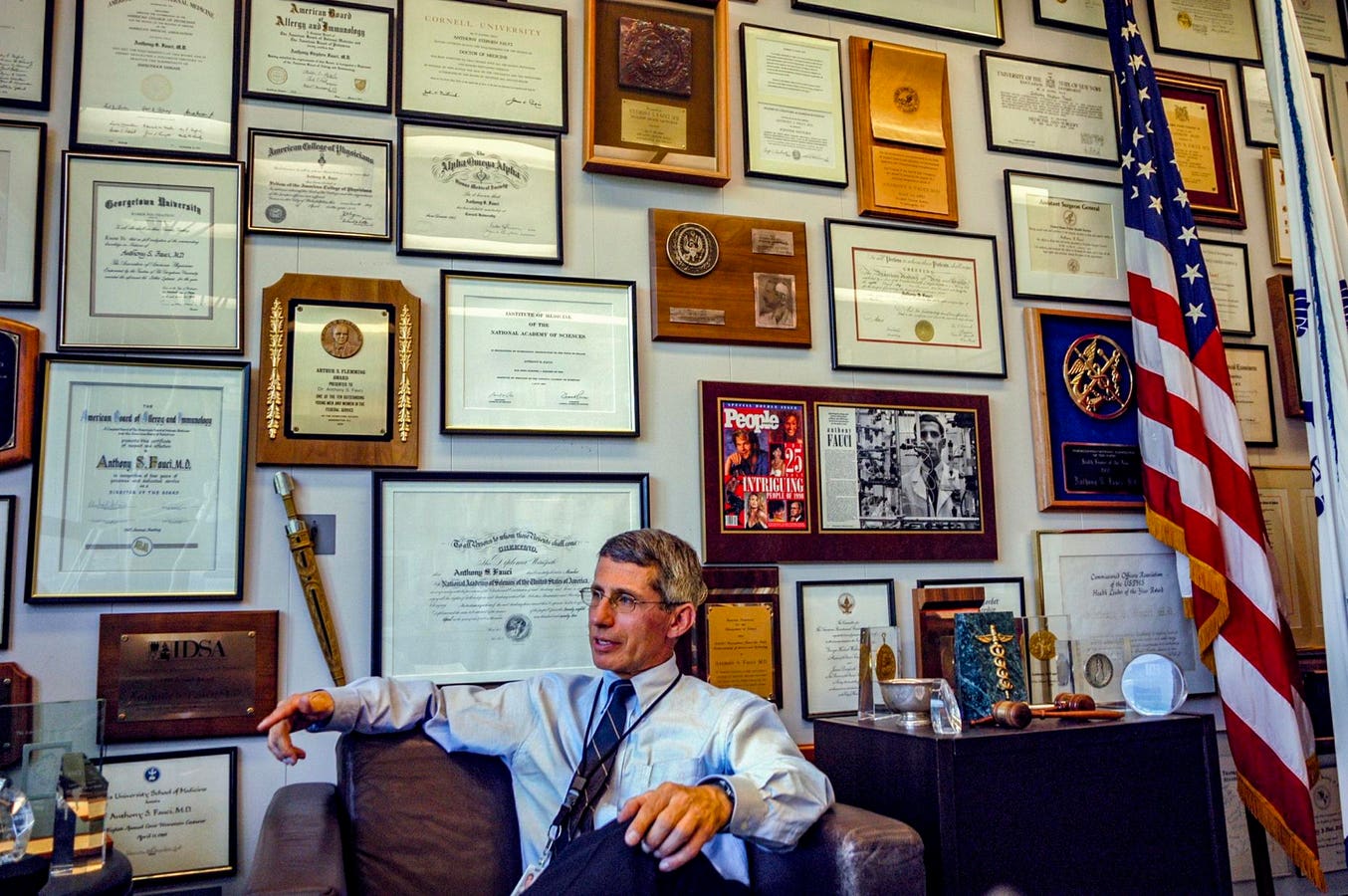
View of American scientist & physician Dr Anthony Fauci, Director of the National Institute of Allergy and Infectious Diseases of the National Institutes of Health (NIH), in an armchair in his office, Bethesda, Maryland, 2003. (Photo by Michael Geissinger/LOC/PhotoQuest/Getty Images)
Getty Images
Dr. Anthony Fauci invoked his Fifth Amendment rights at a Senate committee hearing Wednesday, days after Sen. Rand Paul, R-Ky., released entries from Fauci’s diaries.
Fauci’s decision to not fully participate in the Senate full committee hearing speaks volumes, while critics have pointed to his diaries, where he seemed to boast of the fame and recognition he received during the COVID-19 pandemic.
His comments may have been ill-considered since notoriety doesn’t come solely through laudable actions; Fauci faced plenty of criticism. And there were plenty of heroic acts by thousands of health care workers who toiled tirelessly, risking their own lives to care for those who had fallen ill during the pandemic.
Fauci’s true legacy is still up for debate, and it may ultimately have more to do with his almost 40-year tenure as Director of the National Institute of Allergy and Infectious Diseases.
Fauci’s currency was influence, as manifested by his ability to direct scientific agendas, shape federal research priorities and be one of the first voices presidents, pharmaceutical executives, biotechnology companies and academic leaders turn to during infectious disease crisis.
His role in increasing the NIAID budget 20-fold, influencing the direction of corporate healthcare, biomedical research and the allocation of billions of federal research dollars, made NIAID the indispensable hub of America’s infectious disease enterprise.
Why Did His Role In The Media Matter? Credibility
Science is not a collection of immutable truths. It is a process of continuous testing, revision and self-correction. Often, Fauci’s communication strategy during the pandemic seemed to project confidence first and nuance second, and a 2020 KFF poll found that trust in Fauci declined 10 percentage points between April and September 2020. Criticism, misinformation, disinformation, political fighting and the overall U.S. approach may have compromised a more effective and efficient response to the pandemic. It also shook the country’s confidence in science and governmental health care oversight.
This distinction matters because public trust is itself a public health asset. Vaccination campaigns, emergency guidance, outbreak responses and clinical recommendations all depend on citizens believing that government experts are acting in their best interests with openness and intellectual honesty. Once that trust deteriorates, rebuilding it takes years.
Polling throughout and after the pandemic reflected a significant decline in the public’s confidence in federal public health agencies. An analysis of four surveys between 2020 and 2024, published by PLOS Global Public Health, noted a 26% decline in trust in the CDC from February 2020 to June 2022 alongside smaller declines for other agencies. That trend, despite marginal recovery, may persist for some time regardless of who occupies leadership positions.
Fauci and other public health officials — and politicians — gave confusing and sometimes contradictory guidance. This convinced many Americans that public health officials may have been withholding part of the truth or didn’t fully grasp the complexities.
How COVID-19 Impacts Fauci’s Legacy
What is the standard by which public servants should ultimately be judged? Budgets may grow. Research portfolios may expand. Media profiles may flourish. Despite these increases, if the public emerges from a national crisis with diminished confidence in the institutions charged with protecting its health, then even the most remarkable scientific accomplishments become part of a more complicated heritage.
It’s easy to say that Fauci’s tenure as Director of the NIAID helped define modern American and even global public health, but what must also be assessed is public health leadership and it exposed weaknesses in the nation’s biomedical enterprise. If the next generation of public health leaders learns from both, Fauci’s most important legacy may ultimately be the reforms his tenure inspired.