

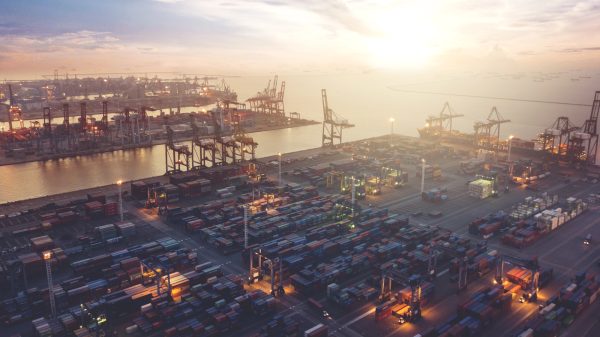
On May 20, Indonesian President Prabowo Subianto announced the establishment of PT Danantara Sumberdaya Indonesia (DSI), a new state entity under the Danantara sovereign wealth fund tasked with overseeing selected strategic commodity exports, initially focused on palm oil, coal, and ferro-alloys. The move reflects a broader government effort to strengthen oversight across Indonesia’s commodity sector and address practices estimated to contribute to billions of dollars in annual revenue leakage.
It has also prompted market concerns over potential regulatory bottlenecks, payment delays, and uncertainty surrounding how the new institution would function in practice. Because Indonesia increasingly sits at the center of global supply chains for energy, food, and critical minerals, the implications extend beyond domestic revenue collection to questions of trade reliability, industrial policy, and geopolitical influence.
The core mandate of DSI is to function primarily as a transparency, documentation, and monitoring platform rather than a profit-seeking intermediary, with officials emphasizing that the entity will not take margins or commissions from exporters. However, important uncertainties remain. Public communications surrounding the proposal have at times appeared internally inconsistent. Some elements of the proposed framework suggest a centralized monitoring and audit platform, while others imply a more interventionist role in export execution, a distinction with materially different implications for exporters and markets. A platform designed to improve visibility over contracts, pricing, and export proceeds carries very different implications from a centralized state trading intermediary.
At the time of writing, the implementing regulation was not available, leaving the final institutional design unclear. However, Indonesia is not approaching commodity oversight from a blank slate. Existing inter-agency digital systems already provide part of the institutional foundation on which DSI may build.
Despite these uncertainties, current indications suggest implementation will occur in phases, reflecting an apparent effort to balance stronger oversight with commercial continuity.
Phase 1 will take place from June 1 to August 31. During this transition period, private exporters would transfer export-import trade transactions with overseas buyers to a designated state-owned enterprise, widely understood to be DSI. Core clearance functions appear likely to shift to the entity, while pre-clearance and post-clearance responsibilities remain partially managed at the corporate level as part of a transitional arrangement. Based on currently available guidance, exporters would also begin rerouting contracts and transaction management with foreign buyers through DSI, signaling a gradual shift toward more centralized oversight of export execution.
Phase 2 of the scheme will begin on September 1. A substantially deeper level of integration appears likely under this phase, potentially expanding the role of DSI across pre-clearance, clearance, and post-clearance functions. Based on available materials, export-import transactions, contractual relationships with overseas buyers, and broader responsibility for export administration may increasingly shift to DSI. Whether this ultimately amounts to a monitoring system designed to enhance transaction visibility or a more interventionist export mechanism involving operational intermediation remains an important unresolved question and will depend heavily on the final implementing regulation.
The scope of this proposed oversight is significant because it reflects a growing recognition inside government that commodity leakage is often structural, shaped by fragmented oversight systems that limit visibility across the commodity chain.
Why Commodity Leakage Persists
The rationale becomes clearer when examining how Indonesia’s commodity leakage problem actually functions. The issue is often viewed through the lens of corruption, smuggling, or customs failures. When headlines emerge involving illegal mining, questionable export permits, missing royalties, or commodity under-invoicing, the instinctive explanation is to blame corruption. Corruption undoubtedly exists and remains a meaningful concern. But the root problem is a fragmented oversight system in which different agencies oversee different parts of the commodity chain, creating gaps that can unintentionally facilitate corrupt practices.
Indonesia currently possesses one of the most extensive commodity oversight systems in the developing world. Coal, palm oil, nickel, tin, and bauxite exports move through a dense network of ministries, regulators, surveyors, financial authorities, logistics operators, regional governments, customs agencies, tax officials, and law enforcement institutions. In practice, however, fragmentation between these institutions has historically created blind spots in which corrupt practices like under-reporting, offshore profit shifting, false grading, permit manipulation, commodity blending to to misstate quality or obscure origin, and regulatory arbitrage can occur.
The Problem of Fragmented Oversight
Indonesia’s commodity supply chain begins at the point of extraction or cultivation. For coal, nickel, tin, and bauxite, the Ministry of Energy and Mineral Resources (MEMR) regulates mining permits, production plans, reserves reporting, inspections, domestic market obligations, and export eligibility. In the palm oil sector, the Ministry of Agriculture plays an important role in plantation oversight, while trade authorities shape export policy and domestic market obligations.
Commodity oversight begins with production reporting, an area where regulators often rely on company disclosures and local verification systems. This creates opportunities for under-reporting or manipulation before commodities even leave a site.
A coal producer, for example, may extract more than is officially reported, while in nickel and bauxite, understated ore grades can reduce royalty obligations and taxable values.
These vulnerabilities are not always the product of outright criminality. They often emerge because institutions responsible for oversight do not always have full visibility into the commercial chain after extraction. MEMR may monitor production activity without always maintaining full visibility into logistics, offshore sales arrangements, or final payment structures.
From there, the process moves into permits and trade approvals.
The Ministry of Trade oversees export licensing, trade restrictions, and export documentation, but frequently depends on upstream information generated elsewhere, including company disclosures and third-party certifications.
Oversight is further complicated by overlapping mandates across ministries, particularly where coordinating agencies seek to bridge trade, fiscal, and sector priorities. In practice, these overlaps can create room for regulatory arbitrage.
Nickel illustrates the problem clearly. Restrictions on unprocessed ore exports, designed to encourage domestic refining, have also created incentives to exploit ambiguities around processing and product classification, particularly in a fragmented system where no single institution oversees the full commodity chain.
Palm oil has experienced similar vulnerabilities, particularly during the 2022 cooking oil crisis, when export permit allocations highlighted how fragmented systems and discretionary authority can create opportunities for manipulation.
The next vulnerability often emerges during verification and logistics.
Surveyors, laboratories, and logistics firms play an important role in verifying commodity quality and quantity, assessments that directly affect taxation and royalties. Across commodities such as tin, coal, and nickel, discrepancies in quality, shipment volumes, or processing claims can materially affect taxation and export eligibility. The challenge is less the integrity of these actors than the limited integration of third-party verification systems across agencies.
Port authorities and logistics actors introduce another layer of complexity. Managing commodity flows across Indonesia’s dispersed island geography creates logistical difficulties uncommon in many competing jurisdictions. Formal ports may coexist with informal shipping channels. Illegal coal and tin shipments have historically moved through smaller ports, bypassing official systems. Double manifest arrangements have occasionally been alleged in various sectors.
The Directorate General of Customs and Excise occupies a critical position within this broader oversight system. It serves as an essential checkpoint in the commodity chain, verifying export declarations, shipment values, and supporting documentation while identifying pricing anomalies. As a result, customs ultimately depends on information generated elsewhere in the commodity chain, meaning formally compliant declarations may still conceal broader economic leakage.
Coal provides a useful example. A producer may sell to an affiliated trading company at below-market prices, allowing profits to accumulate offshore even while export declarations remain technically compliant.
Transfer pricing remains one of Indonesia’s largest potential sources of commodity leakage, making the Directorate General of Taxes particularly important, as tax reviews often occur long after transactions have been executed, sometimes more than a year later, making disputes technically complex and slow to resolve.
Bank Indonesia increasingly monitors export proceeds because commodity leakage also affects foreign exchange inflows and reserve accumulation. When export values are understated, proceeds may remain offshore rather than entering the domestic financial system, reducing tax revenues, royalties, and potentially foreign exchange reserves.
Law enforcement institutions remain important, though their role is often reactive rather than preventative, with investigations frequently occurring after state losses have already materialized.
This broader context helps explain Indonesia’s growing focus on institutional integration.
Indonesia was not operating without safeguards. Licensing systems, customs audits, benchmark pricing, tax enforcement, and export proceeds regulations were already in place. The challenge was the limited interoperability between them, leaving institutions with only fragmented visibility across the commodity chain.
Viewed through this lens, DSI may be less an attempt to replace existing oversight mechanisms than to build upon them.
One of the most significant existing initiatives has been the Sistem Informasi Mineral dan Batubara Antar Kementerian/Lembaga (SIMBARA), an inter-ministerial digital traceability platform introduced under the leadership of the Ministry of Finance to integrate data across government institutions. SIMBARA seeks to address the very problem DSI is designed to solve: fragmented oversight. By linking production reporting, transportation permits, shipping manifests, royalty obligations, taxation, and export activity into a shared digital ecosystem, it effectively creates a chain-of-custody system for coal and minerals from extraction to export.
SIMBARA, however, functions primarily as a transaction visibility and traceability platform, and does not necessarily provide real-time oversight of affiliated-party pricing, offshore contract structures, export proceeds, or cross-commodity monitoring.
DSI’s value may ultimately lie in whether it strengthens coordination across these systems rather than duplicates them. Properly designed, it could complement SIMBARA through greater visibility over contracts, pricing, export proceeds, and transfer-pricing risks. If DSI adds another layer of institutional fragmentation rather than improving coordination, it risks weakening the very rationale for its creation.
Integration or Centralization?
The more important question is not whether Indonesia needs stronger oversight, but whether it deepens integration within its existing system or builds a more centralized model around DSI.
One path would involve building upon what already exists. Under this approach, SIMBARA would remain the operational backbone for production, transportation, customs declarations, and fiscal reporting, while DSI functions as an oversight layer focused on contract visibility, affiliated-party pricing, export proceeds data integration, and cross-agency anomaly detection. Properly executed, such a model could strengthen transparency while minimizing disruption to commercial activity.
The alternative would be more ambitious: a more centralized commodity oversight system in which DSI assumes a much deeper role in oversight and execution. While potentially more transformative, such an approach would also carry greater implementation risks, including bureaucratic duplication, operational bottlenecks, market uncertainty, and resistance from exporters and overseas buyers. Much would depend on whether DSI functions primarily as a transparency and oversight platform or evolves into a more interventionist intermediary in export execution.
In the former case, disruption may prove limited and concentrated in areas such as under-invoicing, transfer pricing, and other leakage channels. In the latter, transition costs for major commodity exporters could prove significantly greater. Success under either model would likely depend on whether DSI functions less as a traditional state intermediary and more as a digitally integrated oversight platform capable of improving transparency without slowing trade.
Institutional positioning may prove critical to DSI’s effectiveness. Positioned under the Danantara sovereign wealth fund rather than a traditional line ministry, DSI occupies an institutional space closer to a commercial holding entity than a conventional regulator, potentially enabling stronger operational discipline and institutional accountability.
Comparable international experience suggests such integration is achievable. Singapore’s Networked Trade Platform illustrates how trade documentation, customs processes, financial institutions, and logistics systems can be digitally integrated without undermining commercial velocity. In Indonesia’s case, this could involve using artificial intelligence tools to compare affiliated-party commodity sales against benchmark indices such as Argus or Platts for coal and crude palm oil, allowing pricing anomalies to be flagged for post-clearance review without disrupting active shipments.
The challenge for Indonesia will be ensuring that DSI develops sufficient legal, trade, and data analytics capabilities to function as a credible coordinating institution rather than another bureaucratic checkpoint. Indonesia does not suffer from a shortage of oversight. It suffers from oversight that rarely sees the whole picture. DSI will succeed only if it closes those gaps rather than adds to them.