

The Biden administration’s decision to impose up to 100 percent tariffs on Chinese electric vehicles (EVs) signals a pivotal moment in China-U.S. trade relations. This maneuver aims to protect the United States’ fledgling EV industry from the influx of cheaper Chinese imports, a stance that resonates strongly with the electorate in an election year. Nevertheless, the immediate economic impact of these tariffs may be limited.
Chinese EVs currently account for less than 2 percent of the U.S. market, a figure suppressed by existing tariffs and stringent regulatory barriers. Moreover, many Chinese firms have circumvented these obstacles by shifting production to Southeast Asia, thereby diluting the effectiveness of the new tariffs. This underscores the largely symbolic direct effect of these measures.
Although tariffs can offer temporary respite by shielding domestic industries from foreign competition, they fail to address the deeper structural issues that undermine long-term competitiveness. The Biden administration’s objective is clear: to grant the U.S. EV industry a reprieve from lower-priced imports, affording American manufacturers the opportunity to scale up, innovate, and reduce costs. However, a strategy reliant solely on tariffs is fundamentally insufficient.
To genuinely compete with China, the United States must stop hiding behind the flimsy excuse of China violating trade rules by dumping cheap products or exporting overcapacity. Instead, Washington should acknowledge that Beijing’s long-term industrial policies aimed at nurturing nascent, strategically important technology offer valuable lessons. By scrutinizing China’s approach, the U.S. can emulate its triumphs while avoiding its missteps. Leveraging its own technological and financial strengths, the U.S. can not only match but surpass China’s success.
Contrary to the notion that China inundates the market with artificially low-priced EVs, its price advantage stems from genuine competitiveness. This is the result of a meticulously crafted industrial strategy that fuses protectionism, substantial government investment in research and development, and robust supply chains. Moreover, China promotes fierce competition among provincial and local governments and businesses and places a strong emphasis on STEM education to cultivate the talent necessary for industrial upgrading.
A pivotal element of China’s success is its coherent, forward-looking industrial policy, which the United States has largely neglected in recent decades. The Chinese government heavily subsidizes both the supply and demand sides of the EV market, making it financially attractive for consumers to purchase EVs while supporting manufacturers in scaling production. These subsidies are bolstered by stringent regulations favoring domestic production, ensuring that domestic manufacturers benefit from reduced competition with foreign firms. This comprehensive policy framework has propelled China’s rapid growth in the EV sector, but it is only one aspect of China’s success.
Perhaps more crucially, China has fostered fierce internal competition among its EV manufacturers. Companies are incentivized to out-innovate and outperform each other, leading to rapid advancements in EV technology and significant cost reductions. Additionally, the government’s focus on the production ecosystem, rather than just the final EV product, has resulted in the strategic development of a robust domestic supply chain. This ensures that critical components like batteries and electronic systems are produced locally, reducing dependency on foreign suppliers and cutting costs. This internal competition, coupled with comprehensive government support, has elevated China to become the world’s largest EV market and a leader in EV-adjacent technology.
However, the United States must also heed China’s errors. Aggressive competition through price-cutting in China has led to thin profit margins, creating a highly competitive but financially strained industry. Moreover, the anemic domestic consumption and the resultant export surge of Chinese EVs have sparked trade frictions and political vulnerability. Generous long-term subsidies without a clear exit strategy have distorted market incentives, leading to inefficiencies and unsustainable reliance on government support.
To emulate China’s success while avoiding its pitfalls, the United States must adopt a similarly comprehensive strategy that extends beyond tariffs. This strategy should encompass substantial government funding for research and development in key areas such as battery technology, electric powertrains, and lightweight materials. By fostering innovation in these critical sectors, the U.S. can gain the technological edge necessary for global competitiveness. However, unlike China, U.S. subsidies should be carefully calibrated and gradually phased out to prevent market distortions and over-reliance on government support. Building a self-sustaining market through smart incentives will ensure long-term viability.
Financial incentives for both manufacturers and consumers are essential. Expanding tax credits and subsidies for companies investing in EV technologies will stimulate domestic production. Enhanced consumer incentives, such as tax rebates for EV purchases, will drive demand and create a robust domestic market. This dual approach ensures that supply and demand grow in tandem, fostering a sustainable market ecosystem. By designing these incentives to gradually decrease as the market matures, the United States can avoid the inefficiencies seen in China’s subsidy-dependent model.
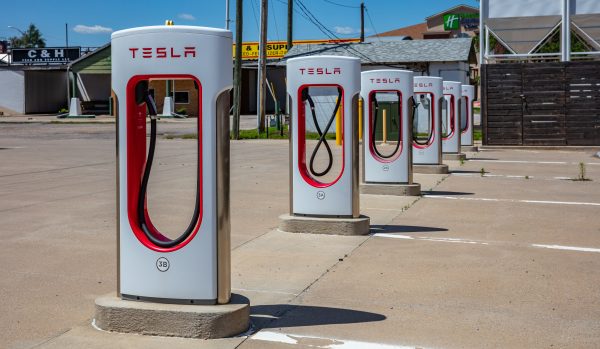
Infrastructure investment is another crucial pillar. The United States must commit to building a comprehensive network of EV charging stations to address one of the primary barriers to widespread EV adoption: range anxiety. Standardizing this infrastructure to ensure compatibility across different EV models will further facilitate adoption and support industry growth. This development should be paralleled by regulatory reforms aimed at reducing barriers to entry for new players, particularly in the automotive sector. Revising outdated dealer franchise laws that restrict the direct sale of vehicles to consumers can encourage competition and innovation.
In addition to these foundational strategies, fostering joint ventures with international companies can accelerate technology transfer and innovation, allowing U.S. firms to leverage cutting-edge expertise and integrate global best practices. Simultaneously, renewing immigration programs to attract top STEM talent will ensure a steady influx of fresh ideas and skills, strengthening both the EV sector and the broader technology landscape. Additionally, innovative financing mechanisms like green bonds and public-private partnerships can fund large-scale infrastructure projects and R&D initiatives, mobilizing private capital for public benefit and encouraging venture capital and private equity investments to bring new technologies to market.
Despite these challenges, the United States possesses unique strengths that position it well to lead in the global EV market. The country’s technological frontier is unparalleled, with Silicon Valley serving as a hub for cutting-edge innovation. The U.S. also benefits from deep capital markets capable of providing the necessary funding to scale new technologies and industries. Furthermore, the United States’ car culture, characterized by a long-standing love affair with the automobile, provides a receptive market for automotive innovation. The spirit of free-market capitalism encourages entrepreneurial ventures and competition, driving continuous improvement and efficiency. These strengths, if leveraged effectively, can propel the U.S. to the forefront of the EV revolution.