

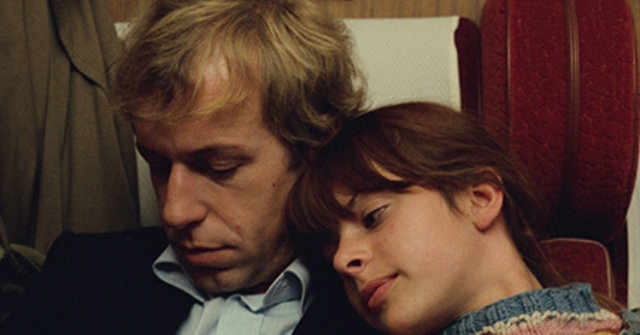
Legendary German filmmaker Wim Wenders has agreed to pull his 1975 classic Wrong Move “from all current forms of distribution and exhibition” due to complaints from actress Nastassja Kinski over her topless nude scene, which was filmed when she was only 13.
“Streaming services, television broadcasters, and distribution partners will be instructed to cease public access to the film,” reads the statement.
“That was my first film, he was my first director, and he didn’t protect me,” Kinski recently told a German newspaper. Kinski, who is now 65, has been asking for the movie to be pulled since 2011. In 1997, she told W Magazine, “If I had had somebody to protect me or if I had felt more secure about myself, I would not have accepted certain things. Nudity things.”
“I recognize that Nastassja Kinski should have been better protected back then,” Wenders responded. “For that, I apologize to you, Nastassja, unreservedly, no ifs and buts.”
“It is necessary for our society to find appropriate ways of dealing with controversial film works from the 20th Century and to face new learning processes and inclusive perspectives regarding cinema,” added Wenders. “As part of this important debate, we will seek a broad dialogue — with the German Film Academy, the DFF — Deutsches Filminstitut & Filmmuseum, other film heritage institutions and intergenerational groups.”
Wenders promised that this “broad dialogue” will “include Nastassja Kinski” and only after an agreement has been reached that makes everyone happy will “we make the film available again.”
It is not a contradiction for me to say 1) I am totally opposed to filming underage girls naked and 2) I am totally opposed to censoring art in any way.
By all means, Wrong Move should be debated and discussed by our current standards.
By all means, it is a very good thing that filming a 13-year-old girl topless would never be allowed today.
But it is going too far when you desecrate and censor a piece of art to meet a modern standard.
Wrong Move is not some cheap piece of ‘70s exploitation. It’s also not the first or only respected movie from that era to utilize underage nudity. Franco Zeffirelli’s Romeo and Juliet (1968) and Louis Malle’s Pretty Baby (1978) did the same, while movies like The Blue Lagoon (1980) and The Little Girl Who Lives Down the Lane (1976) used appropriate-aged body doubles to make audiences believe they were seeing underage Brooke Shields and Jodie Foster naked.
Pretty Baby is hard to watch, but that’s the point. It’s supposed to be hard to watch because an 11-year-old Brooke Shields is about to lose her virginity to a 29-year-old Keith Carradine while a brothel full of whores and johns cheer it all on.
Wrong Move is quite different. Having seen it before learning of the controversy, I assumed Kinski was 16 or 17 at the time. I’ve read that Wenders’ then-wife discovered Kinski in a Munich disco, which likely had an age restriction. She looked nothing like a little girl.
Nevertheless, the scene has a deliberate erotic charge; it’s a piece of wish-fulfillment because you have a stunningly beautiful young girl (who already has the body of a woman) attempt to trick an older man (33-year-old Rüdiger Vogler) into sleeping with her. Whether he does or not after discovering the ruse is never answered. Personally, I think he does.
In the Criterion Blu-ray’s director’s commentary, Wenders’ only comment about the short scene is remembering how they barely got through it because Kinski could not stop giggling, which gave everyone else the giggles. Obviously, she was pretty uncomfortable being exposed like that.
Is the scene defensible?
Wrong Move is part of Wenders’ famous Road Trilogy, which also includes Alice in the Cities (1974) and Kings of the Road (1976), all three starring Vogler. The Wrong Move is my least favorite (and least accessible) of the three, although Kinski’s mute Mignon is the best thing in it. It was already apparent, even at that young age, that Kinski had the makings of an international star — a beguiling presence, loads of charisma, and a stare that unwinds you. The story revolves around Wilhelm Meister (Vogler), a man cast adrift who decides to become a writer and then leaves his old life behind to seek the necessary experiences, only to become disillusioned by his own inadequacies and those of the people he meets and travels with.
In other words, it’s not about a child molester getting what he wants, nor does the scene in question seek to exploit a child’s body. As I said, I had always assumed Kinski was of age.
No one can blame Kinski for regretting baring herself in Wrong Move or even regretting the myriad of other movies she did as a young adult that exploited her otherworldly sensuality. We all look back with regret about our decisions and actions, but ours are not captured forever on film and distributed worldwide on streaming services. My sympathy is with her, no question.
The answer, though, should never be censorship or altering a piece of art, and Wrong Move is legitimate art created by one of our great humanist directors (see: Wings of Desire [1987], Paris, Texas [1984], and 2023’s Perfect Days).
Knowing now that Kinski was only 13 certainly made rewatching the movie again last night a different experience, and an uncomfortable one. It also changed how I viewed the Wilhelm character, although that might not be fair because his character might not have known she was underage.
Whatever the solution is to return Wrong Move to circulation, a moment captured in time will be lost, a piece of art will be altered, and that’s not how it’s supposed to work.