

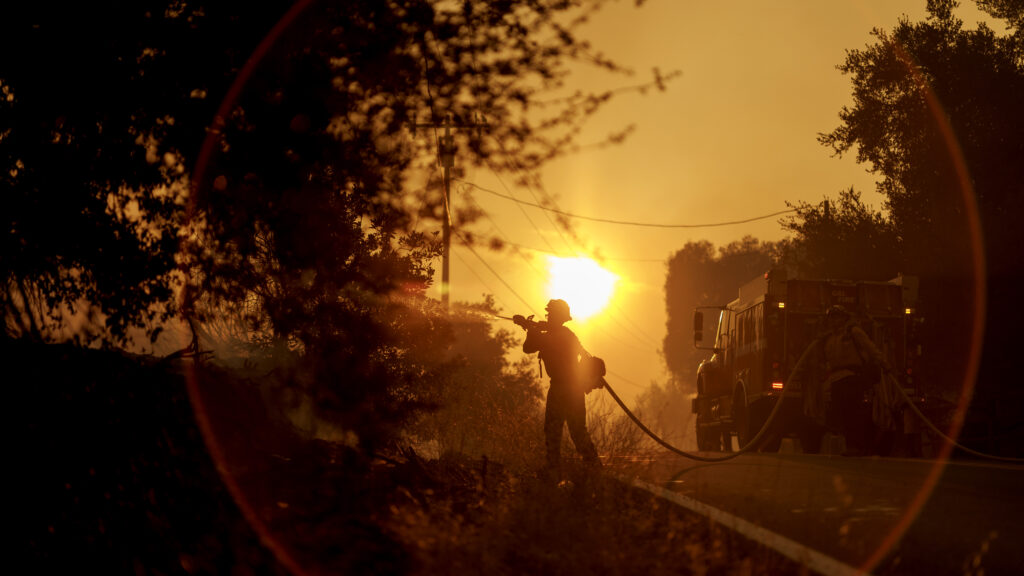
Tactical athletes may be the most important professionals you’ve never heard of.
They are not famous and they do not play in professional leagues. What sets these EMTs, firefighters, police officers, Marine pilots, Navy SEALs, Army engineers, and astronauts apart from competitive athletes is who they’re playing for: not for themselves, not for a team, but for their community.
Tactical athletes, a category of people first recognized in the early 2000s, also need distinct kinds of health care, particularly given that their health or illness can mean life or death for those they serve or serve with.
Toward that end, the American College of Cardiology and the American Heart Association on Thursday released new cardiovascular guidance for clinicians caring for tactical athletes.
Given the varied claims placed on the bodies of tactical athletes over their careers, it may not be surprising that the top duty-related cause of death in this population is cardiovascular disease. The clinical recommendations, published in JACC and Circulation, cover how to evaluate these athletes — those with cardiovascular disease or at risk for developing one — in light of their duties. The authors, some of whom have been involved in developing guidance for competitive athletes since their introduction in the 1980s, estimate that 4 million Americans fill these roles.
“One of the unique aspects of the tactical demands is that often you don’t get to warm up. You don’t get to prepare for a few weeks,” Benjamin Levine, director of the Institute for Exercise and Environmental Medicine at Texas Health Presbyterian Dallas, told STAT. He is vice chair of the group that wrote the guidance. “In many cases it’s an emergency, you’re called out, and boom, you’ve got to be at high performance, at a high level immediately, and frankly, the risk of death is not insignificant. Someone may be shooting at you. You may go into a burning building.”
Going from a high-alert state at rest to highly intense physical activity with the imminent threat of harm, including death, changes the nature of risk. And then there are the other pressures. “If I’m with a buddy in a fire and that buddy goes down, and now I’m alone in the burning building, that’s really different,” Levine said. “That athlete’s incapacitation has affected not just my life but the people we’re trying to rescue.”
In addition to his role as a professor of medicine and cardiology at the University of Texas Southwestern Medical Center, Levine is also the cardiologist for “virtually every athletic team in North Texas.” He’s NASA’s top consulting cardiologist, and he studies gravity disease, which includes POTS, or postural orthostatic tachycardia syndrome. Having worked on the competitive sports guidance and its updates since the 1990s, he saw a hole when it came to highly elite athletes working not in the context of competition, but in the context of service.
As it happens, Levine told STAT, the AHA’s national headquarters are next door to his institute. So he walked in, talked to the leadership there, and convinced them the time had come to address the tactical athlete. Sports cardiologists told STAT they welcome the new framework.
How are tactical athletes different?
It’s not just the heavy equipment they carry, the stress they feel, or the extreme heat, cold, deep water, or high altitude they confront. It’s also more common cardiovascular risk factors, including high blood pressure, high cholesterol, obesity, type 2 diabetes, and smoking. Their longer careers make them more like masters athletes, defined as age 40 and older, whose cardiovascular risk rises with age, like their nonathletic peers.
The special hazards for tactical athletes reflect where they work. Rates of sudden cardiac arrest or death are low, the guidance says, but the risk does climb during recruit training. For firefighters, the danger sets in right when the alarm first goes off and continues as they put out a blaze.
“It’s a very stressful physical environment, but it’s also very stressful emotionally,” said Lili Barouch, director of sports cardiology at Johns Hopkins Medicine. She was not involved in preparing the guidance. “The event rate starts to go up as soon as the fire department alarm goes off. If you look at the timing of when firefighters have cardiac events, even before they get to the burning building, then you know the stress level goes through the roof.”
For astronauts, researchers hypothesize that increased radiation exposure during spaceflight speeds up atherosclerosis, the narrowing of arteries implicated in heart attacks and strokes. For active-duty service members, 18% had at least one cardiovascular risk factor among these five: high cholesterol, high blood pressure, hypertension, diabetes, prediabetes, or obesity; 24% were active smokers. Firefighters with a previous diagnosis of cardiovascular disease, hypertension, or smoking were more likely to have a fatal cardiovascular event, the guidance says.
“The conditions in which tactical athletes are performing their professional duties are widely varied and can be extreme on many dimensions, and that can certainly pose significant stresses on the cardiovascular system and on other organ systems,” said Tim Churchill, a member of the Cardiovascular Performance Program at Mass General Brigham Heart and Vascular Institute. With the exception of some unique exposures tactical athletes may face, “I wouldn’t say these jobs are increasing risk for cardiovascular disease, but they’re situations that can potentially exacerbate underlying problems.”
How do tactical athletes’ risks shift over their careers?
Cardiovascular fitness may change with age. The person who passed screening tests as a recruit may not do as well at a later career stage, despite opportunities provided in the military, firefighting, or other settings for continued training and evaluations. That person might be a candidate for a different job at the outset of a career or a job adjustment later, Brian Becerra, a cardiologist and director of sports cardiology at UC Irvine, told STAT. The physical performance needs of a police officer on a SWAT team may be different from a patrol officer on the beat — although not always.
“We want to make sure that they can do the most extreme part of their job,” he said. “Just because they don’t have the cardiovascular capacity for one type of job in that profession doesn’t mean that they can’t do something else.”
Context counts, Levine said.
“You might not send a special forces guy out into Afghanistan with a high coronary calcium aortic stenosis,” he said. “But if they had a bicuspid valve and developed aortic stenosis over their career, when they reach age 60, you might not send them to the field, but you might put them in a tactical planning environment.”
How are medical decisions different?
In a major shift, the most recent guidance for sports athletes emphasized shared decision-making between doctor and patient over a previous model of the doctor deciding whether a competitive athlete could play or return to play. That’s not the rule for tactical athletes, the new guidance says.
The tactical athlete has the same basic rights to medical care, and best clinical practices still guide the doctor’s assessment and treatment of the athlete, Levine said. Because the outcome affects many others, those stakeholders — officers in the command structure within the military, for example — do get a bigger say in what happens to the individual tactical athlete.
Levine hopes the guidance will help tactical athletes and the doctors who take care of them to better understand the unique demands placed on these patients and then apply appropriate strategies to take care of such patients.
“They need it, they deserve it,” Barouch said about attention to their specific needs. “I mean, these are the people that are protecting our communities.”
STAT’s coverage of chronic health issues is supported by a grant from Bloomberg Philanthropies. Our financial supporters are not involved in any decisions about our journalism.