

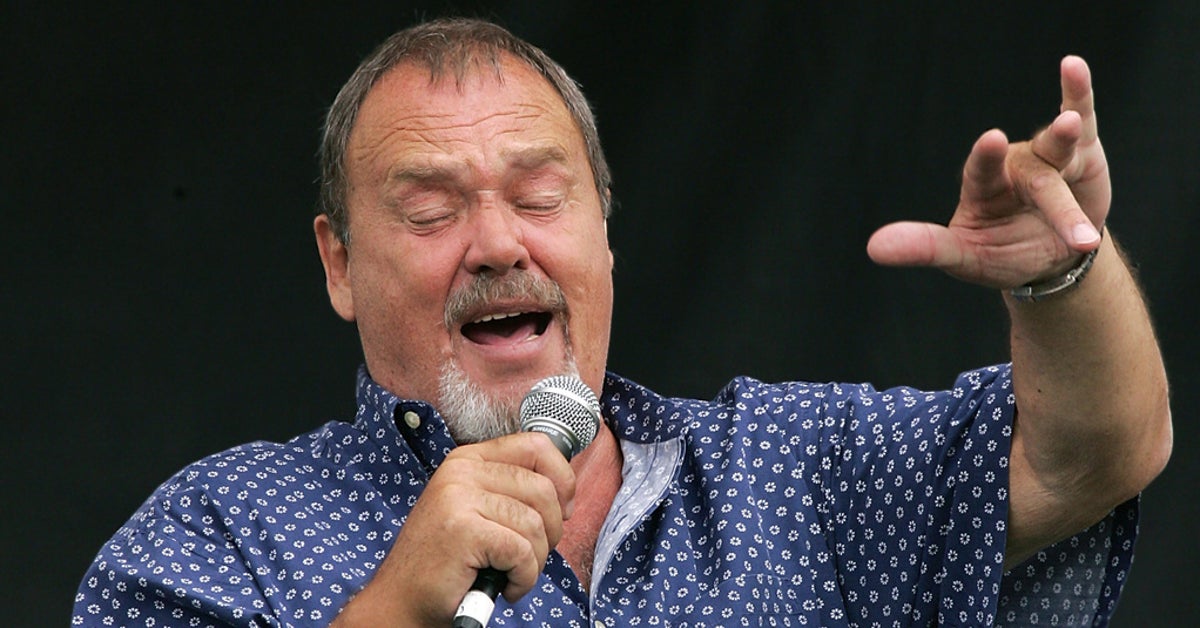
NEW YORK (AP) — David Clayton-Thomas, the lead singer of Blood, Sweat & Tears whose husky, high-strung tenor on “Spinning Wheel,” “And When I Die” and other hits helped make the so-called “brass rock” band among the most popular acts of the late 1960s, has died at age 84.
Spokesperson Eric Alper said that Clayton-Thomas died “peacefully” Wednesday at St. Michael’s Hospital in Toronto. Alper did not cite a specific cause.
Clayton-Thomas was a onetime street fighter and petty thief from Canada who briefly became a rock superstar, the front man of a nine-member group that sold millions of records and won two Grammys for “Blood, Sweat & Tears,” which beat out the Beatles’ “Abbey Road” for best album of 1969. Calling out amid a jazzy parade of horns, keyboards and percussion, Clayton-Thomas’ urgent shout was a signature voice of the era, preaching love on the Motown cover “You’ve Made Me So Very Happy,” a lasting legacy on Laura Nyro’s “And When I Die” and a cool head on his own “Spinning Wheel.” Meanwhile, Blood, Sweat & Tears helped inspire a wave of horn-led bands, among them Chicago, the Electric Flag and Ten Wheel Drive.
“A lot of the guys (in Blood, Sweat & Tears) would play a Broadway show matinee, then go up to Harlem and play Latin music or R&B and funk at night, or come down to the Village and play pure jazz the next night,” Clayton-Thomas told bestclassicbands.com in 2023. “I was just a blues player: give me three chords and I’ve got a song.”
At its peak, Blood, Sweat & Tears’ appeal was so broad it helped lead to the band’s downfall.
Hip enough to perform at the 1969 Woodstock festival, where they were among the highest paid acts, they also were known enough to the establishment to tour Eastern Europe the following year on behalf of the State Department. When Clayton-Thomas and other band members denounced the Communist regimes on the other side of the Cold War, Rolling Stone’s David Felton wrote that “the State Department got its money worth.”
The band had practical reasons for going along with the government: Clayton-Thomas, who had allegedly wielded a gun at his girlfriend, had been denied a green card and faced deportation. But after topping the charts in 1970 with the album “Blood, Sweat & Tears 3,” their appeal soon faded. A burned out Clayton-Thomas left the group in 1972, and neither he nor the remaining musicians ever regained their old stature. Blood, Sweat & Tears would continue recording over the next few years, and even briefly reunited with Clayton-Thomas, who went on to release more than a dozen solo albums and tour on his own for decades.
America beckons
Hooker had encouraged Clayton-Thomas to move to New York, where the American bluesman had an engagement at the Cafe Au Go Go in Greenwich Village. When Hooker unexpectedly departed for a tour of Europe, club owner Howard Solomon needed a replacement and recruited Clayton-Thomas.
“So I played him a couple songs on the guitar,” Clayton-Thomas told bestclassicbands.com. “He said, ‘Do you have a band?’ I said, ‘Sure,’ and went out into Greenwich Village looking for anybody carrying a guitar case or even looking like a musician, and we put together a little band and we opened there that night. We ended up staying there for several months.”
Around the same time, session man-producer Al Kooper was looking to a form jazz-rock group and was joined by such musicians as guitarist Steve Katz, drummer Bobby Colomby and horn players Randy Brecker and Jerry Weiss. They called themselves Blood, Sweat & Tears, releasing the debut album “Child Is Father to the Man” early in 1968. Although praised by Rolling Stone publisher Jann Wenner as “a fine, exemplary group,” members were torn between those allied with Kooper and those who thought his vocals too weak to attract a substantial audience.
By the end of the year, Kooper and others had departed, and the band was seeking a new singer. After Judy Collins saw Clayton-Thomas perform, she recommended him to Colomby.
“I got home and just a couple of days later, Bobby Colomby called me up and said, ‘Hey, Kooper’s gone. We got four guys left out of the nine. And we still got a record contract with Columbia. Do you want to come down and try out for the band?”’ Clayton-Thomas told bestclassicbands.com. ”I said, ‘You’re damn right.’ I knew (bassist) Jim Fielder real well and I knew they were superb musicians. So I was on the next plane. We had a rehearsal that afternoon, an audition, and it was instant magic. We just knew right off the bat.”
via Associated Press
Neil Sedaka
Neil Sedaka, the singer-songwriter behind dozens of hits such as “Breaking Up Is Hard to Do” and “Laugher in the Rain,” died on February 27, 2026. He was 86. Sedaka teamed with lyricist Howard Greenfield on songs that reflected the teen innocence of the post-Elvis/pre-Beatles era of the late 1950s-early 1960s, including “Happy Birthday Sweet Sixteen,” “Calendar Girl” and “Oh! Carol.”

Bobby Bank via Getty Images
Robert Carradine
Robert Carradine, the “Revenge of the Nerds” star who hailed from one of Hollywood’s prominent acting families, died on February 23, 2026. He was 71. Carradine earned a generation of new fans by playing the father in “Lizzie McGuire” and also had a prominent role in the Oscar-decorated “Coming Home” (1978) and appeared in Quentin Tarantino’s “Django Unchained” (2012).

Photo by Jordan Strauss/Invision via Associated Press
Eric Dane
Eric Dane, the actor best known for his roles on “Grey’s Anatomy” and “Euphoria” and who later in life became an advocate for ALS awareness, died on February 19, 2026. He was 53. Dane developed a devoted fanbase when he was cast as Dr. Mark Sloan, aka McSteamy, on the ABC medical drama “Grey’s Anatomy,” a role he would play from 2006 until 2012 and reprise in 2021. In April 2025, Dane announced he had been diagnosed with ALS, a progressive disease that attacks nerve cells controlling muscles throughout the body.

Neilson Barnard via Getty Images
Jesse Jackson
Civil rights leader Rev. Jesse Jackson, whose two presidential runs in the 1980s set the stage for today’s progressive movement, died on February 17, 2026. He was 84.
He participated in marches from Selma to Montgomery in Alabama and established a branch of the Martin Luther King Jr.-led Southern Christian Leadership Conference in Chicago. He was later appointed to lead SCLC’s economic arm, Operation Breadbasket.

Photo by Casey Curry/Invision via Associated Press
Robert Duvall
Robert Duvall, an acclaimed and prolific actor celebrated for his complex, rugged roles in films like “The Godfather,” died on February 15, 2026. He was 95. Duvall’s career spanned six decades, during which he accumulated many directing, producing and acting credits. He continued to work until late in his life, acting alongside Martin Sheen in 2021’s “12 Mighty Orphans,” a film about a football team at an orphanage in 1930s Texas, and appearing in 2002’s “Hustle.”

via Associated Press
James Van Der Beek
James Van Der Beek, star of the iconic teen drama series “Dawson’s Creek” in the late ’90s and early 2000s, died on February 11, 2026. He was 48. Van Der Beek had announced in November 2024 that he was diagnosed with colorectal cancer.
He participated in theater in middle school, and at 16, he made his professional debut off-Broadway in Edward Albee’s “Finding The Sun.” The next year, he made his feature film debut in the coming-of-age comedy “Angus.” He also starred in “Mercy,” “CSI: Cyber” and most recently “Overcompensating.” His film credits include “Varsity Blues,” “Bad Hair” and “The Rules of Attraction.”

Christian Petersen via Getty Images
Terrance Gore
Terrance Gore, who was part of World Series championship teams as a speedy bench weapon, died on February 6, 2026. He was 34. He played in 11 postseason games as a pinch runner, stealing five bases in six attempts and scoring three runs. He was a part of a championship team with the Royals (2015), who drafted him with a 20th-round selection in 2011, the Los Angeles Dodgers (2020) and the Atlanta Braves (2021).

via Associated Press
Sonny Jurgensen
Hall of Fame quarterback Sonny Jurgensen died on February 6, 2026. He was 91. He topped 3,000 yards in a season five times, including twice with Philadelphia, in an era before rules changes opened up NFL offenses. He was inducted into the Pro Football Hall of Fame in 1983 and remains the only Washington player to wear the No. 9 jersey in a game.

Chris Pizzello via Associated Press
Catherine O’Hara
Beloved comic actor Catherine O’Hara, best known for her roles in “Schitt’s Creek,” “Home Alone,” “Best in Show” and countless other comedies, died on January 30, 2026. O’Hara, a two-time Emmy Award winner, was 71. O’Hara got her start in 1974 performing with The Second City, an improv comedy troupe with an outpost in Toronto, then joined the group’s spinoff production SCTV.

via Associated Press
Bob Weir
Veteran rock musician Bob Weir, the Grateful Dead’s rhythm guitarist who helped guide the legendary jam band, died on January 10, 2026. He was 78. It was Weir who sang the verses on the band’s trademark boogie anthem, “Truckin’,” and who wrote such key songs as “Sugar Magnolia,” “Playing in the Band” and “Jack Straw.”

Tom Williams via Getty Images
Doug LaMalfa
Republican Doug LaMalfa, a seven-term U.S. representative from California and a reliable vote on Trump’s agenda, died on January 6, 2026. He was 65. LaMalfa was first elected to Congress in 2012 and represented Northern California’s 1st District, along the Oregon border, including Redding and reaching just north of Sacramento.