

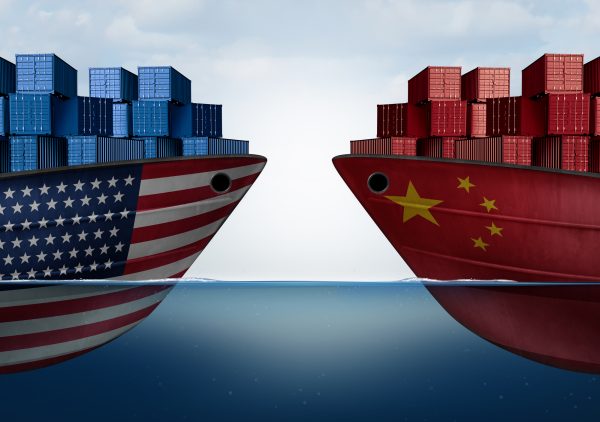
The threat and use of tariffs by the United States as a tool to achieve a broad range of goals, both related to trade and not, will garner various responses from targeted countries. Both Trump administrations, as well as the Biden administration, issued tariffs and other trade barriers against China, but with different goals and strategies. With mixed messaging on economic policies toward China across multiple administrations, it is important to understand what the current Trump administration is attempting to achieve, what the actual effects of different trade barriers will be, as well as the various ways Beijing might retaliate, respond, and adapt to increasing tariffs on its exports to the United States.
During his first term, Trump used economic pressure to bring Beijing to the negotiating table to address the bilateral trade imbalance. These negotiations resulted in the “Phase One” agreement, signed in January 2020, which obligated Beijing to increase imports of manufactured goods, agricultural goods, energy products, and services from the United States above their respective 2017 levels by December 31, 2021. This boost in U.S. imports was a prerequisite for negotiations to reduce the 2018 tariffs. As China’s economy slowed due to the pandemic and a housing market crisis, it fell far short of its commitments.
The Biden administration’s use of tariffs served a different purpose. It sought to keep a sizable U.S. lead in technological innovation by maintaining the higher tariffs and rolling out export controls on critical technologies. The objective of the Biden administration’s measures was explicitly to stunt Chinese technological capabilities.
The current Trump administration so far has already doubled its tariff hikes on China from an additional 10 percent to 20 percent. This time, the stated rationale for the tariffs was penalizing China for its role the opioid epidemic in the United States.
During Trump’s previous term, Beijing was able to circumvent some tariffs by simply diverting its products to countries exempted from the tariffs, from where the goods were then shipped to the United States. This time, Trump might be attempting to thwart this maneuver by imposing more tariffs on those third countries (e.g., Mexico), although officially he has linked the new round of tariffs to fentanyl trafficking.
From Trump to Biden and back to Trump, the list of reasons for imposing tariffs on U.S. imports from China has become broader and less focused, moving well beyond addressing international trade issues.
The inconsistent trade policy coming from Washington leaves Beijing with no clear path to take to get out of the crosshairs. However, China still has several retaliatory options that will have varying degrees of consequence for the United States.
The first round of tariff hikes on February 1 – when Trump increased tariffs by 10 percent on imports from Mexico, Canada, and China – received a sweeping response from Beijing. China’s State Council Tariff Commission announced additional 15 percent tariffs on coal and liquefied natural gas imports from the United States and a 10 percent tariff on U.S. crude oil, agricultural machinery, and certain cars and pickup trucks. In addition, the Chinese Ministry of Commerce and the General Administration of Customs issued a notice that it would impose export controls on 25 rare metal products – minerals that are used in the production of core technologies such as semiconductors and solar cells. The Chinese Ministry of Commerce added U.S. firms PVH Group and Illumina on the Unreliable Entity List (UEL). Finally, the State Administration for Market Regulation announced that it is investigating Google for violating the Anti-Monopoly Law.
After Trump doubled tariffs on China to 20 percent in March, Beijing responded yet again, adding tariffs ranging from 10 to 15 percent on many U.S. food and agricultural products (such as chicken, beef, pork, wheat, soybeans, and sorghum). It also added another 15 U.S. firms to the Export Control List and 10 to the UEL.
The retaliation across multiple fronts indicates China’s willingness to take broad measures against the United States. Should the Trump administration continue to pressure Beijing without clear and consistent signals of how the trade disputes might be resolved, Beijing might be willing to choose options that pack a greater punch against the United States.
Many U.S. farmers are dependent on exporting to the Chinese market; particularly in the soybean, corn, and sorghum industries. However, China can substitute imports of U.S. agriculture from less hostile countries, like Brazil, more easily than the United States can find alternative markets for its agricultural goods. Therefore, retaliatory tariffs on U.S. agricultural products represented the low-hanging option for China. In the future, Beijing may further up the ante through import restrictions, inspections, and additional tariffs. It could further expand on this approach by rejecting certain genetically modified organisms (GMOs), which have been a contentious issue between the U.S. agriculture sector and China in the past.
China also followed this playbook in 2018 as a response to tariffs on steel and aluminum imposed by the first Trump administration. That forced the U.S. government to provide a massive bailout for U.S. farmers, and negating the revenue generated from the tariffs. Even though China’s tariffs on U.S. agricultural imports were to be expected, they are still salient given the U.S. dependency on the Chinese market.
The next rung up from agriculture is Chinese export controls and restrictions on critical minerals – a move Beijing has already started to exercise against the Biden administration and the current Trump administration. China dominates the critical mineral supply chain, controlling approximately 60 percent of global production and 85 percent of processing capacity. While the United States has realized this dependency risk, establishing alternatives is not a quick process. Therefore, the ability to place export controls on these vital minerals will continue to offer Beijing significant leverage.
China can also enact a number of countermeasures against specific U.S. firms and other multinational corporations (MNCs), such as asset freezes, transactions bans, sanctions or blacklists, halting or canceling merger deals, and launching investigations. These moves would be calculated by Beijing to minimize the risk of making the Chinese market unattractive to foreign businesses – a problem Beijing has been forced to address – while harming top U.S. firms.
For instance, Chinese regulators previously slowed down their merger review of Intel Corp.’s $5.2 billion takeover of Israel-based Tower Semiconductor Ltd., and chip maker MaxLinear Inc.’s $3.8 billion purchase of Silicon Motion Technology of Taiwan. MNCs require Beijing’s approval to ensure access to the huge Chinese market. Additionally, Chinese agencies like the Cyberspace Administration of China (CAC) can conduct investigations into U.S. tech firms. For example, in 2023, the CAC investigated the U.S. chipmaker, Micron, and found their products to be a threat to China’s national security. Nvidia is also under an anti-trust investigation, which likely harmed its stock prices; China is Nvidia’s second largest market after the United States.
China will continue to dispute the tariffs and export controls issued by the United States at the World Trade Organization (WTO). The WTO currently lacks a dispute settlement mechanism due to the United States’ continued blocking of judges to the appellate body. Still, members can issue complaints and request consultations to resolve trade disputes. Considering its role in the creation of the WTO, the abrogation of international rules regarding trade inherently undermines the United States’ international reputation. Additionally, the WTO may find a work-around to reform the appellate body for resolving trade disputes. China currently has 19 cases against the United States, so if the appellate body reforms, Washington could lose several of these decisions.
Aside from pure retaliation, Beijing has been fortifying its economy from tariffs by attempting to reduce its reliance on exports. For instance, China offers an export tax rebate that essentially refunds the Value Added Tax and the Consumption Tax paid by exporters to help make their goods more competitive in foreign markets. In November 2024, however, the Chinese Ministry of Finance and the State Taxation Administration changed the rebate rate for products such as refined oil, photovoltaic products, and batteries, while rebates for aluminum, copper, and certain oils and fats were eliminated. Chinese businesses in these sectors will face higher export costs, potentially reducing competitiveness and impacting global supply chains. This will encourage companies to establish sustainable domestic supply chains and markets, which is in line with Beijing’s broader strategy to increase domestic consumption and reduce reliance on exports – therefore rendering the Chinese economy less vulnerable to shocks from tariff hikes.
By eliminating the tax rebate on certain goods that are vital to U.S. supply chains or consumer markets, Chinese manufacturers would export less to the United States. While this may have served as a preemptive concession for a trade deal, the reduction puts a strain on U.S. markets that use these inputs from China. This effect could be multiplied across global commodities, such as copper and aluminum, and especially goods for which China is a dominant global exporter.
Altering the tax rebates and incentives is an attractive option for China as it accomplishes multiple goals: correcting domestic economic issues such as overcapacity and export reliance, while inflicting pressure on U.S. supply chains and markets. Beijing even has the option to label these actions as non-retaliatory as they technically reduce overcapacity – a practice Washington has condemned China for. China’s government could argue it is addressing unfair trade practices by de-incentivizing exports, putting the impetus on the United States to respond.
Since the beginning of the trade war in 2018, China has sought alternatives to the U.S. market and implemented measures to fortify its economy against tariffs. The lessons learned by Beijing during the first rounds of the trade war, and the collapse of the Phase One agreement, are that China is not going to bet on negotiations with the United States. Instead, China will more likely respond to each escalation of tariffs or trade barriers that the Trump administration issues.
If the Trump administration is serious about using tariffs as leverage to address the fentanyl crisis, or any other issue they may want to negotiate with China, they must be careful not to underestimate Beijing’s higher tolerance to tariffs and its greater willingness to retaliate. In the absence of clear indications of which tariffs are linked to which issues, it may be difficult to convince Beijing that at least some issues might be resolved in a mutually acceptable manner through negotiations. The result could be an economically painful trade war that neither side knows how to end.