

• Home
  • Politics
  • Health
  • World
  • Business
  • Finance
  • Tech
  • More
    • Sports
    • Entertainment
    • Lifestyle
What's Hot

Pope Leo Pushes Reform on Zealously pro-Migration Bishops

October 1, 2026

Ynon Kreiz, Co-CEO of Paramount, Salary and Pay Package Worth $46.5M

October 1, 2026

The New Development Bank Quietly Delivers During India’s BRICS Year

October 1, 2026
Facebook Twitter Instagram
  • Contact
  • Privacy Policy
  • Terms & Conditions
Thursday, October 1
Patriot Now NewsPatriot Now News
  • Home
  • Politics

    18-Year-Old Student Dies After Falling from Fourth-Floor Balcony at Los Angeles High School in Apparent ‘Suicide’ Following Classroom Fight * The Gateway Pundit * by Jim Hᴏft

    October 1, 2026

    After Reflecting Pool Humiliation, Rep. Jamie Raskin Gives DOJ Hot Tip On Felon Orange Vandal Desecrating DC

    October 1, 2026

    Bedridden 93-Year-Old Marie-Louise Raped and Strangled In Her Home; Naked Sudanese Man Found On Her Body * The Gateway Pundit * by Robert Semonsen

    October 1, 2026

    The source of Brian Fitzpatrick’s campaign ad attack fodder: A guest at his own wedding

    October 1, 2026

    Harvard Harris Poll Shows Republicans and Democrats Dead Even on Generic Ballot Just a Month Before Midterms * The Gateway Pundit * by Mike LaChance

    October 1, 2026
  • Health

    Journal Science devotes issue to women’s health. Here’s why

    October 1, 2026

    As CDC redesigns annual health survey, it removes questions about disabilities

    October 1, 2026

    International visas, GLP-1s for kids, Medicaid: Morning Rounds

    October 1, 2026

    8 New Jersey Rehab Centers For Drug And Alcohol Recovery (2026)

    September 30, 2026

    Legal immigrants poised to lose Medicaid coverage| STAT

    September 30, 2026
  • World

    Pope Leo Pushes Reform on Zealously pro-Migration Bishops

    October 1, 2026

    Want ‘Free Palestine, Where Every Person, Between the River and the Sea’ Has Rights

    October 1, 2026

    Trump Busted Telling One Of His ‘Most Ludicrous Lies’ Of All Time

    October 1, 2026

    I Won’t Denounce Hamas Because It’s ‘Used as a Litmus Test’

    October 1, 2026

    Fox News Analyst Brit Hume Has Some Bad News For Republicans About The Midterms

    October 1, 2026
  • Business

    ATF Rule Could Cause Classic Showdown Between Mom And Pop Shops Versus Online Retailers

    July 10, 2026

    Costco Shows That You Can Build A Thriving Business With One Simple Trick (Pay Your Workers)

    July 9, 2026

    The Agency Elizabeth Warren Built Now Advances Trump’s Agenda

    July 9, 2026

    Meta To Shell Out Billions For New AI Data Center Outside US

    July 9, 2026

    How Big Banks Are Scheming To Jack Up Your Fees

    July 8, 2026
  • Finance

    The New Development Bank Quietly Delivers During India’s BRICS Year

    October 1, 2026

    Australia as an AI Middle Power

    October 1, 2026

    Can Myanmar’s New Government Revive the Stalled Dawei SEZ Project?

    October 1, 2026

    Fed’s Kashkari says inflation is ‘still too high’ even after softer-than-expected PCE data

    September 30, 2026

    Goodbye, ‘China Plus One’: The Real Change in US China Policy

    September 30, 2026
  • Tech

    Chinese AI Models Provided Instructions on Sarin Gas Production, Terror Attack Advice

    October 1, 2026

    Peter Schweizer Deflates the AI ‘Robot Apocalypse’ Scare

    October 1, 2026

    Leading AI Experts Fault Senate Democrats for Blocking Ratepayer Act

    October 1, 2026

    Hawley Unveils Bill to Rein In ‘Nightmare’ Abuse of AI-Powered Flock Cameras

    October 1, 2026

    FTC Launches Probe into Anthropic, OpenAI, Other AI Labs over Consumer Risks

    October 1, 2026
  • More
    • Sports
    • Entertainment
    • Lifestyle
Patriot Now NewsPatriot Now News
Home»Finance»Market Conditions, China Restrictions Put the Squeeze on Bidenomics 
Finance

Market Conditions, China Restrictions Put the Squeeze on Bidenomics 

August 27, 2024No Comments6 Mins Read
Facebook Twitter Pinterest LinkedIn Tumblr Email
Market Conditions, China Restrictions Put the Squeeze on Bidenomics 
Share
Facebook Twitter LinkedIn Pinterest Email

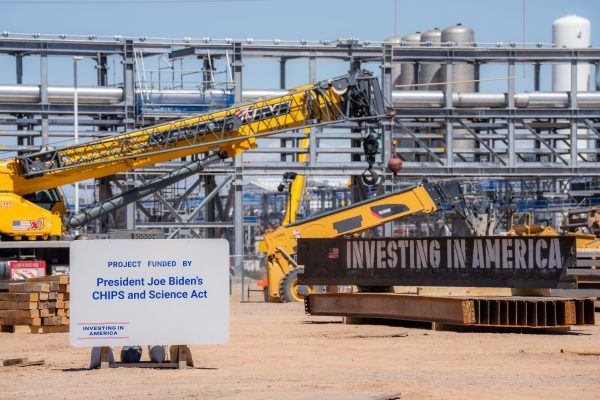
In many respects, the Biden administration’s economic strategy since 2022 can be summarized with two key pieces of legislation: the CHIPS and Science Act and Inflation Reduction Act. The former aimed to revitalize domestic semiconductor production and reverse a three-decade trend of declining global market share: from 37 percent in 1990 to just 12 percent today. By providing various incentives, including $39 billion in subsidies, the CHIPS Act was designed to enhance the competitiveness of U.S. companies, rejuvenate domestic manufacturing, and create jobs. 

In a similar manner, the Inflation Reduction Act (IRA) offered over $30 billion in tax credits for domestic clean energy purchases, most notably solar. Here too, the idea was to enhance competitiveness, rejuvenate domestic production, and create jobs.

Due to shifting market conditions and the United States’ increasingly adversarial stance toward China, both initiatives are now in peril.

Loss of Margins Stymies New Solar Manufacturing 

Despite billions in support, the U.S. solar industry is grappling with a rapidly evolving landscape in which high-quality, low-cost Chinese goods are dominating the market, offering prices far below American production costs. Even with IRA tax credits sweetening the deal for domestic buyers, it is estimated that Chinese production costs remain roughly 50 percent below average American costs. The resulting inability to compete has forced many U.S. companies to reassess their domestic expansion plans despite favorable support from the IRA. 

American companies like CubicPV, Enphase, and Convalt have all had to reassess their recent investments by scrapping new construction plans, delaying existing ones, or suspending manufacturing entirely. Others like First Solar have actively lobbied the Biden administration to do more to protect their profit margins through additional rounds of tariffs. 

See also  Over 80 Per Cent of Britons Fear Rising Influence of China

Foreign manufacturers investing in the U.S. have also had to respond to the changing conditions, with companies like Heliene and Enel pausing or delaying new projects in Minnesota and Oklahoma. All have indubitably come to the same conclusion that the high labor, operating, and logistics costs of manufacturing in the U.S. are no longer justified given current market conditions. 

An additional complication for most non-Chinese manufacturers is that they often rely on parts and components made in China. With a variety of U.S. policies now adding tariffs and other restrictions to Chinese goods and services, many have had to find ways to either bypass the restrictions or simply absorb the added cost, further reducing competitiveness. Hanwha QCells, a South Korean company, is one of several manufacturers currently under investigation for having benefited from IRA tax credits while failing to report Chinese component sourcing. These examples aptly demonstrate how the U.S. restrictions are generating serious tensions with foreign partners, often incentivizing deceitful business practices.  

Intel Illustrates U.S. Vulnerabilities

On the semiconductor side of things, the news is not much better. Intel’s recent decision to lay off 15,000 employees (representing over 15 percent of its workforce) marks a watershed moment for the tech giant, part of a broader strategy to cut costs by $10 billion over the next year. This is despite the fact that Intel was awarded over $8.5 billion in grants and $11 billion in loans through the CHIPS Act. 

Many of the underlying reasons for Intel’s floundering are the same as for the American solar industry: reduced competitiveness and shrinking profit margins. With cheaper and better alternative products filling the market, Intel has been unable to retain traditional clients like Microsoft and Apple, in addition to falling behind on the development of AI chips. 

See also  Huawei's Meng Wanzhou says applying 5G to business was difficult

A good portion of this pressure has been coming from a highly competitive ecosystem of 15,000 Chinese semiconductor companies. This emerging ecosystem has been rapidly expanding since 2020: accounting for less than 9 percent of global market share then and an estimated 17 percent now, with some projecting an eclipse of South Korea as the second largest producer by 2027.

The main fuel driving China’s rise as a global semiconductor producer is its own domestic consumption. China accounts for roughly a third of all semiconductor sales globally and roughly a quarter of all semiconductor-enabled device sales. This high demand has historically meant American companies enjoyed booming sales in China, profits that have become increasingly hard to come by as the Biden administration has adopted a more adversarial tone through tariffs and other trade restrictions. Nvidia, which enjoyed roughly a quarter of all of its revenue from China before the restrictions, now collects less than a third of that, indicative of how quickly the policies have hurt the margins of American companies.

Just like in solar, the potent combination of dropping prices, reduced competitiveness, and access restrictions to China have brought on numerous delays, pauses, and cancellations across multiple semiconductor infrastructure projects funded through the CHIPS Act. Here too, the damage has been felt by both domestic and foreign companies: with firms like Integra, TMSC, and Samsung all having to either pause or delay new infrastructure projects in Kansas, Arizona, and Texas. 

More Incentives and Restrictions to Come?

A recent analysis by the Financial Times revealed a staggering 40 percent of all major IRA and CHIPS Act projects earmarked for expanding domestic manufacturing capacity have either been delayed or paused, with another 13 percent facing serious uncertainty. These struggles are not restricted to the solar and semiconductor industries. Some of the biggest effects are actually being felt in the lithium battery and ore refining industries, as companies like LG and SK On have also had to put major projects on hold. 

See also  China says U.S. balloons flew over Xinjiang, Tibet, warns of countermeasures

The obvious question emerging from this picture of growing stagnation is: What can the United States do next? Given that the government has already committed tens of billions to growing domestic infrastructure, it seems unlikely the next president will simply abandon the sunk cost. What seems much more likely is that American and non-Chinese industry lobbyists will continue to seek more money and even stronger protective measures to support the viability of their clients. Chinese companies seem to be acutely aware of the impending escalation, with many already investing heavily in the United States ahead of the presidential election to avoid future restrictions.

Bidenomics China conditions market put Restrictions Squeeze
Share. Facebook Twitter Pinterest LinkedIn Tumblr Email

Related Posts

The New Development Bank Quietly Delivers During India’s BRICS Year

October 1, 2026

Australia as an AI Middle Power

October 1, 2026

Can Myanmar’s New Government Revive the Stalled Dawei SEZ Project?

October 1, 2026

Fed’s Kashkari says inflation is ‘still too high’ even after softer-than-expected PCE data

September 30, 2026
Add A Comment

Leave A Reply Cancel Reply

Top Posts

British Tourist, 53, Dies After Trying To Drink All 21 Cocktails On Bar Menu In Jamaica

June 28, 2023

Hollywood director defends child drag shows during rambling Oscars victory speech

March 14, 2023

NewsGuard Claims It Will Remain ‘Apolitical’ on Israel-Gaza Misinformation

October 20, 2023

Former Employee Sues Music Mogul L.A. Reid, Alleges Sexual Assault in 2001

November 10, 2023
Don't Miss

Pope Leo Pushes Reform on Zealously pro-Migration Bishops

World October 1, 2026

Pope Leo XIV is trying to impose a moderate migration compromise on his zealously pro-migration…

Ynon Kreiz, Co-CEO of Paramount, Salary and Pay Package Worth $46.5M

October 1, 2026

The New Development Bank Quietly Delivers During India’s BRICS Year

October 1, 2026

18-Year-Old Student Dies After Falling from Fourth-Floor Balcony at Los Angeles High School in Apparent ‘Suicide’ Following Classroom Fight * The Gateway Pundit * by Jim Hᴏft

October 1, 2026
About
About

This is your World, Tech, Health, Entertainment and Sports website. We provide the latest breaking news straight from the News industry.

We're social. Connect with us:

Facebook Twitter Instagram Pinterest
Categories
  • Business (4,399)
  • Entertainment (7,189)
  • Finance (5,197)
  • Health (2,926)
  • Lifestyle (1,946)
  • Politics (4,801)
  • Sports (5,382)
  • Tech (2,769)
  • Uncategorized (4)
  • World (7,452)
Our Picks

Huw Edwards Named as BBC Star Accused of Paying Teen for Sex Pics

July 15, 2023

Couple Who Survived Maui Fires: ‘Biden Has Really Failed Us’ (VIDEO) | The Gateway Pundit

August 22, 2023

Big 12 Schools Consider Boycott of Texas Tech After Controversial Eligibility Ruling

June 9, 2026
Popular Posts

Pope Leo Pushes Reform on Zealously pro-Migration Bishops

October 1, 2026

Ynon Kreiz, Co-CEO of Paramount, Salary and Pay Package Worth $46.5M

October 1, 2026

The New Development Bank Quietly Delivers During India’s BRICS Year

October 1, 2026
© 2026 Patriotnownews.com - All rights reserved.
  • Contact
  • Privacy Policy
  • Terms & Conditions

Type above and press Enter to search. Press Esc to cancel.