

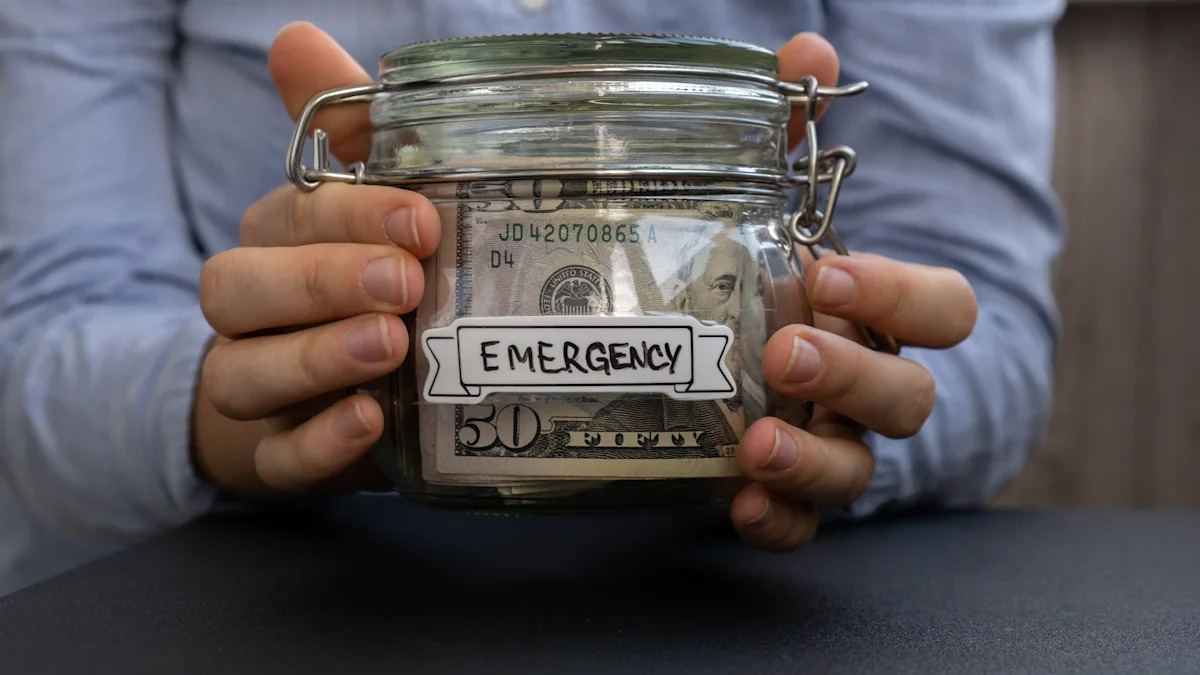
Building an emergency savings fund is an important financial milestone. But where should your money go once your emergency savings account is fully funded? Should you start investing? Save for other expenses? Take a vacation?
As a financial educator and a former NFCC-certified credit counselor, I’ve helped thousands of people answer this question. In most cases, the answer is similar. There’s a specific progression of financial moves that nearly anyone can make to increase their financial stability.
If you’ve fully funded your emergency savings, here’s where I recommend putting your money next.
Signs your emergency savings are adequately funded
How do you know if you have enough money saved for emergencies? Although there’s no set amount that works for everyone, most experts agree that you should aim for at least three to six months’ worth of your living expenses (not income).
That said, this amount won’t be adequate for everyone. You should aim to save more than six months’ worth of living expenses if you fit into any of the following categories:
What to focus on next
If your emergency savings is fully funded, congratulations! As for your next steps, there’s a progression of financial milestones you’ll want to focus on accomplishing. Here’s the best order to follow.
1. Pay off high-interest debt
High-interest debt can be a major threat to your financial stability. Even if you invest in the stock market, you won’t earn high enough returns to offset the interest charges. That’s especially true if you have credit cards, which average 21% APR.
As counterintuitive as it may seem, I recommend prioritizing high-interest debt — generally debt with an APR of 8% or higher — before putting extra money toward savings beyond a basic emergency cushion. Paying off an 8% debt effectively gives you a guaranteed 8% return by eliminating future interest charges.
By comparison, even competitive high-yield savings accounts (HYSAs) and certificates of deposit (CDs) top out at about 4% APY. So, you’re actually losing money if you put extra funds into a savings account instead of using the money to pay off high-interest debt.
2. Open a health savings account (HSA)
Do you have a high-deductible health plan (HDHP), such as a Bronze or Catastrophic plan?
If you do, I would highly encourage you to open a health savings account (HSA) right away. These accounts can be used to pay for qualified medical expenses, including prescriptions, dental services, and lab fees. Plus, they have an incredible combination of benefits that you don’t get from any other type of financial account, including:
-
Contributions are tax-deductible, meaning they reduce your tax bill.
-
Withdrawals for qualified medical expenses are not taxed.
-
If you invest the money, your returns are not taxed.
-
The funds don’t expire, so you can roll them over from year to year.
-
Once you’re 65, you can use the funds for non-medical expenses (but you’ll have to pay income tax on distributions).
Because of these benefits, an HSA can serve as a backup retirement savings account. Some people even choose to fully fund their HSAs and cover their medical expenses out of pocket, since HSAs have more tax benefits than other retirement accounts.
For 2026, the maximum HSA contribution is $4,400 for individuals and $8,750 for family coverage. However, people 55 and over can contribute an extra $1,000 per year.
3. Increase retirement contributions
Now that you’ve saved money to cover short-term expenses, it’s time to start chipping away at the behemoth that is retirement savings.
Most people underestimate how much they really need in order to retire comfortably. To get a sense of the cost, multiply your anticipated annual cost of living by the number of years you may spend in retirement (usually 20+).
Considering how big that number can be, I recommend making it a habit to contribute part of every paycheck to your retirement, even if it’s a small amount. Then, increase your contribution whenever you can. For example, if you get a pay raise or a tax refund, increase your retirement contribution instead of your expenses.
Here are a few additional ways to boost your retirement savings:
-
Use tax-advantaged accounts: Save for retirement by using accounts that help reduce your taxes, such as 401(k)s and traditional IRAs. If you can afford it, make the maximum allowable contribution each year.
-
Max out your employer match: If your employer matches a portion of your retirement contribution, aim to earn their maximum match amount. After all, this is one of your only opportunities to earn free money.
-
Use catch-up contributions: If you’re 50 or older, you can contribute extra money to retirement accounts beyond the maximum allowable amount for the year. These are also known as “catch-up” contributions.
To make the best, most tax-advantaged decisions, be sure to discuss your retirement strategy with a financial advisor.
4. Create sinking funds
Do you have a specific expense coming up, such as a wedding, a car purchase, or college tuition? If so, start putting money into a “sinking fund” in preparation. That’s a savings account specifically earmarked for an irregular — but planned — expense.
To get the most out of your sinking fund, find an account that pays a competitive interest on your deposits. Depending on the market, the best choice could be an HYSA, CD, money market account, or even a Treasury bill that matures by the time you need the money. That way, your savings continues to accrue interest and grow while it sits in the bank.
5. Build multiple passive income streams
Now that you’ve set money aside for most of your foreseeable expenses, you can start using your surplus in ways that earn you more money.
You don’t have to start a side hustle to establish a new stream of income. Instead, you can invest in assets that earn cash for you. For example, you might purchase a home to use as a vacation rental, or invest in real estate investment trusts (REITs).
However, if you’re nearing retirement or are already retired, you’ll want to make sure your investments are low-risk. That’s because you likely can’t afford to take a big loss. Some investments that are better suited for your phase of life include bonds or stocks that pay dividends.
