

Steve Hanke was an economic advisor to President Ronald Reagan in the 1980s and has worked with governments around the world in the decades since.
He is now a professor of applied economics at Johns Hopkins University in the U.S., and an influential proponent of the idea that the U.S. should not – in any circumstances – impose sanctions on foreign regimes.
In July 2020, the then U.S. Secretary of State Mike Pompeo called Hanke to discuss the imposing of sanctions on Hong Kong as its autonomy was being undermined by China. Pompeo told him that a final decision would be made by President Donald Trump the following day and that Hanke’s opinion had been requested. Pompeo argued for sanctions, while Hanke was adamantly against them. The final decision was not to go ahead with the sanctions.
Hanke opposes the use of such tools on grounds of both principle and practice. In an interview, he said that he was a strong supporter of free markets and free trade, and that he opposes “all forms of protectionism, whether they be tariffs, quotas, non-tariff barriers, or sanctions.” In practical terms, Hanke said, sanctions “rarely achieve their stated objectives. Sanctions typically generate large, costly unintended consequences. In short, they backfire.” He gave the example of European sanctions on Russia, which, he argued, have done more economic damage to the former than the latter.
The debate over the overall economic effectiveness of sanctions is complex and a huge literature exists on the subject. The discussion has been hampered by the assumption that states are the sole focus of international relations. That idea is challenged in a book by Aleksi Ylönen, “The Horn Engaging the Gulf: Economic Diplomacy and Statecraft in Regional Relations,” published by Bloomsbury this year.
Ylönen argues that current interpretations of international relations focus on powerful states as sole unitary actors, an assumption that emerged in the U.S. after World War I and continues to provide the dominant framework for analysis. Ylönen writes that in the Horn of Africa, governments often lack the capacity to monopolize the state’s foreign connections, and sub-state and non-state actors develop their own external ties, notably with the Middle East.
The result, his book shows, is that foreign relations between the two regions can’t be reduced to inter-state relations, as a complex web of non-state actors deploys pragmatic combinations of incentives and sanctions against each other.
This suggests that a debate on sanctions conducted through the exclusive prism of sovereign states is of limited use in the case of regimes that rely on non-state actors to prop them up. In Asia, Cambodia and North Korea are examples of authoritarian regimes that are committed to transmitting power on a hereditary basis, without any suggestion that this process is, or will be, open to public discussion. Both regimes are entirely willing to use violence against their populations to ensure their survival. Both make negligible contributions to global trade, and there is no reason to imagine this will change in future.
The U.S. has a range of counter-proliferation sanctions in place against North Korea, designed to prevent the further development of nuclear weapons, in addition to a set of human-rights-related sanctions, including economic sanctions and travel restrictions on Kim Jong Un. Washington has also in isolated cases imposed sanctions against figures associated with the Cambodian regime, such as Try Pheap, a former adviser to Hun Sen who built a large-scale illegal logging operation.
Hanke wouldn’t make an exception for North Korea or Cambodia. “For me, there are no exceptions to a ‘no sanctions’ policy,” he said. “Sanctions are for losers.” He added that sanctions promote international criminal mafias that are designed to provide workarounds.
Non-state agency in the shape of organized crime is key to understanding the survival of both regimes. North Korea, as the Financial Times has reported, needs Chinese organized crime to survive by providing illegal oil supplies that violate United Nations sanctions. Hugh Griffiths, a former coordinator of the U.N. panel that monitored violations of the sanctions, has said that reliance was already in place before the sanctions were imposed.
In the Cambodian case, external non-state actors play a crucial part in propping up the Hun family regime, said Mu Sochua, vice president of the banned opposition, the Cambodia National Rescue Party. “Dictators survive on ill-gotten wealth from money laundering, corruption, drugs, human trafficking, and deforestation which is pumped into their pockets by their protected tycoons and in Cambodia, by the Chinese mafia,” she said. “Sanctioning these tycoons and high-ranking officials is a critical step in destabilizing their power.”
One country where the U.S. has been willing to impose sanctions is Venezuela, where President Nicolas Maduro has held power since 2013. Maduro has been accused of allowing forced disappearances, arresting opposition supporters, human rights defenders, and journalists, and manipulating the country’s electoral process.
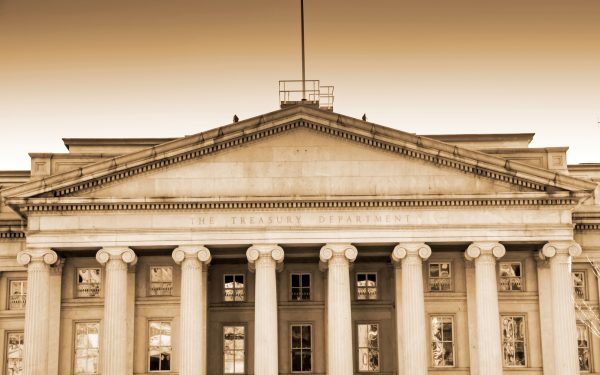
Opposition politicians Maria Corina Machado and Henrique Capriles have been disqualified by the Supreme Court from this year’s presidential elections. In January, that prompted the U.S. Treasury’s Office of Foreign Assets Control to tell U.S. companies to wind down their dealing with the state-owned mining company Minerven.
Hanke is currently advising Roberto Enriquez, a leading figure in Venezuela’s opposition, yet is happy to argue against the imposition of sanctions on the Maduro regime. A further unintended consequence of sanctions, he said, is their tendency to produce a “rally around the flag.”
The U.S. should remove its sanctions on Venezuela regardless of whether free and fair elections take place in 2024, he argued. “Sanctions are counterproductive, ineffective, and have created a ‘rally around the flag’ effect that has kept Maduro in power for a decade,” Hanke said.
However, the idea of a “rally round the flag” is based on a one-size-fits-all view of statehood. “Rallying around” assumes that states have mechanisms of public accountability which would make this a rational strategy. This is not the case in either North Korea or Cambodia, where the regimes are fully confident in their ability to suppress dissent in all circumstances. Their survival does not depend on any degree of domestic popularity or unpopularity.
Any regime wanting to encourage a rally round the flag would also have to be capable of encouraging and managing political nationalism. Modern history makes this impossible in North Korea and Cambodia. North Korea was part of a country arbitrarily cut in half by a civil war fought between 1950 and 1953. The development of nationalism in North Korea would be a potent and unpredictable force for reunification. In Cambodia, the Hun family regime resulted from the invasion of Cambodia by Vietnam in 1979, which overthrew the Khmer Rouge. Cambodian historical grievances against what many perceive as Vietnamese expansionism date back to at least the first half of the nineteenth century, and have been reinforced by what many see as Vietnamese-backed domination under Hun Sen.
Whether that is a fair and accurate portrayal is beside the point. What matters is that any future upsurge in Cambodian nationalism would be likely to have an unpredictable anti-Vietnamese dimension. As in North Korea, such nationalism is pretty much the last thing the Cambodian regime wants to see. The inability of North Korea and Cambodia to access the standard toolkits of nationalism which are successfully used by many governments to give their populations a sense of having a stake in the country’s future is one reason why both need to rely so heavily on internal repression to survive.
Though Hanke won his argument with Pompeo about Hong Kong, the U.S. did impose individual sanctions on 11 people in August 2020 for undermining Hong Kong’s autonomy. Hanke argues that national and international courts are the right way to deal with lawbreaking. Free trade, he said, is not pure laissez-faire: those engaged in trade must submit to the laws of contract and, by extension, to a form of government regulation.
Yet some regimes are unwilling or unable to supply such public goods as rule-based contracts and independent judiciaries which make predictable, rule-based decisions. The cause of free trade doesn’t provide a justification for sitting on the fence in such cases. Unless global trade is to become morally unbounded, it must be possible for a country to be beyond the pale. Regimes that rely on organized crime to prop them up are the clearest candidates for sanctions.