

“It is critical that we utilize data to identify individuals who have not contributed to the social security program. Currently, some people have not participated in the program, but we will use different means to identify and find them to encourage them to join.” These are quotes from Li Zhong, deputy minister of the Chinese Ministry of Human Resources and Social Security (MOHRSS), on the government’s goal to increase the number of individuals in the Chinese social security program.
Li’s remarks at the ministry’s news conference on October 10 quickly gained the public’s attention. Using digital technology to identify individuals is one of multiple measures announced by the MOHRSS toward its goal to “optimize and enhance” the sustainability, fairness, security, convenience, and standardization of the Chinese social security program. The Chinese government will encourage gig economy workers, rural migrant workers, and individuals in new forms of employment to join state-managed pension plans. On the corporate side, the government will focus on small and mid-size businesses and social groups to increase its pool of social security funds.
With low birth rates and high retirement numbers in the coming years, the Chinese social security program is under increasing stress. Warning signs began emerging as early as 2014. According to predictions from the Chinese Academy of Social Sciences (CASS) in April 2019, the Chinese pension plan could see a funding deficit by 2028. The financial gap could jump to 11.28 trillion yuan by 2050 – or 16.73 trillion yuan in a scenario without government financial assistance.
At the rate CASS projected seven years ago, the Chinese state pension plan will see its funds depleted by 2035. Given that the Chinese economy is facing continuous challenges in its post-COVID recovery, the Chinese state pension plan is likely facing a worse scenario than researchers predicted back in 2019.
The Chinese government has already taken steps such as increasing the basic social security deduction to maintain contribution inflow. China has also implemented a gradual delay in the retirement age since January 2025. Starting in September 2025, the Chinese government announced plans to force businesses to contribute to social security funds. Now Li’s comments have raised speculation that MOHRSS will use data-tracking tools to force individuals to join the pension scheme as well.
However, in a deteriorating economy, both employers and employees show little faith in the state-managed social security program. Businesses view this as a substantial cost that could lead to shutdowns, and employees view the mandatory contribution as a significant reduction of their disposable income. Younger Chinese workers have doubts about the likelihood of them getting the contributions back in the form of payments when they reach retirement age.
In the first quarter of 2026, approximately 58 million individuals paused their social security contributions. In some regions, banks and local governments have started low-interest loan products to encourage individuals to contribute to the social security program amid financial difficulties.
For low-income individuals, pension plan deductions become an additional burden because of the continuously increasing minimum contribution base. For example, in Shanghai, a job with a monthly salary of 7,546 yuan or less would require the employer and the employee to contribute a combined minimum of 2,712 yuan each month. But, the monthly minimum salary in Shanghai is just 2,740 yuan. As a result, the social security contribution ratio could reach as high as 98.9 percent to hire a minimum-salary worker.
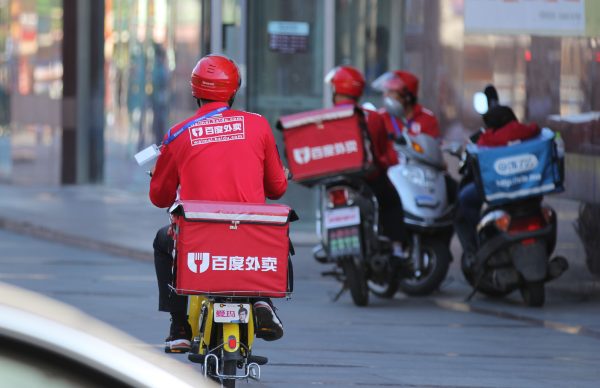
Facing pressure to maintain the employment rate and address youth unemployment, the Chinese government decided to target its “flexible employment” population, who rely on the gig economy to survive in China’s post-COVID economic downturn. Research from the Chinese Academy of Labor and Social Security indicates that 34.9 percent of China’s 200 million gig economy workers participated in the social security program, far lower than the 95 percent participation rate set by the MOHRSS. Media reports also predict that the flexible employment population could reach 320 million in 2026. That suggests the social security gap will grow even larger as the Chinese economy creates fewer high-paying, stable jobs.
With a struggling economy and a challenging employment market, the Chinese government needs solutions to maintain the financial contributions to its social security program. Yet targeting individuals already facing significant challenges in flexible employment is unlikely to lead to positive results.