


The Federal Reserve on Wednesday approved its first interest rate hike in more than three years and indicated another is to come, as part of an effort aimed at combating inflation brought on by spiraling oil prices and other factors.
In a move that markets widely anticipated, the central bank’s Federal Open Market Committee voted 12-0 to increase its key interest rate by a quarter percentage point, or 25 basis points. The move brought the overnight funds rate to a target range of 3.75%-4%.
“Inflation remains elevated,” the committee said in its brief post-meeting statement. “Today’s policy action will support a timelier return to the Committee’s 2 percent goal. The Committee will deliver price stability.”
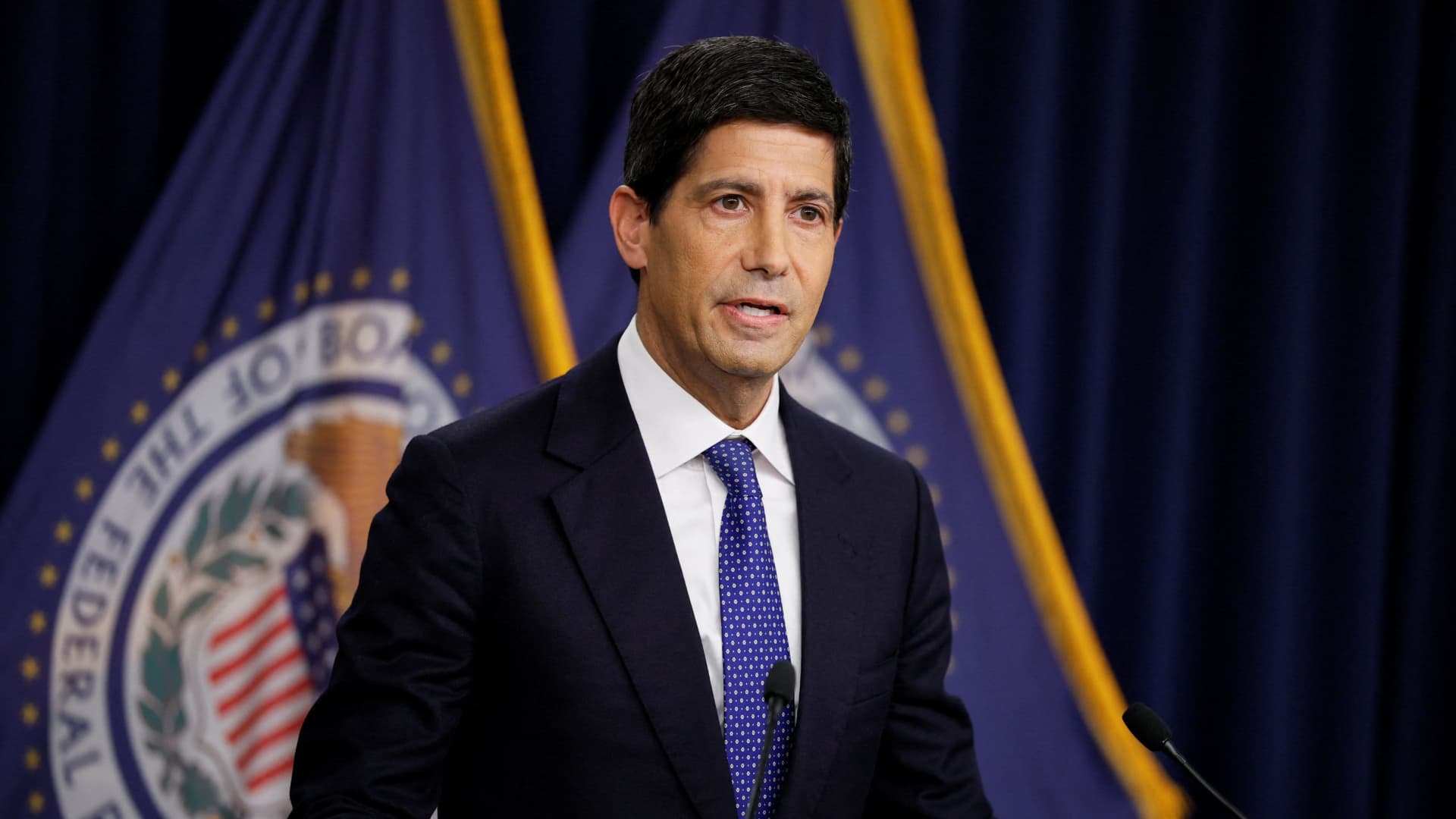
During a news conference, Chairman Kevin Warsh said inflation has been “too high … for too long.”
“We must be confident that underlying inflation is moving to our objective clearly and at sufficient speed,” he said. “Today, the FOMC decided that this standard has not been satisfied.”
Warsh further explained that recent economic reports showed the economy, including the labor market, was strong. However, inflation remained above the central bank’s target, and added that tension in the Middle East also contributed to the decision.
“All three of of those things lend themselves to a firm unanimous decision today,” he said.
Highly anticipated
Despite a raft of conflicting recent statements from policymakers, markets had priced in a better than 90% chance that the FOMC would approve the increase, though there was chatter about the possibility of multiple dissents.
Updated projections the committee released Wednesday showed that a strong majority of officials think another hike is possible later this year.
The dot plot grid of individual officials’ expectations indicated that 16 of the 18 participants – Warsh has chosen not to submit a dot since taking the position – expected another rate increase, with four of those seeing two more as possible. Two participants expected the committee to stop at one hike.
However, there are no increases penciled in for subsequent years, with one cut each indicated for 2028 and at least one for 2029.
Officials also nudged up their expectations for inflation this year.
They see the headline personal consumption expenditures price index at 3.7% and core excluding food and energy at 3.4%, both 0.1 percentage point higher than the last update in June. The Fed doesn’t expect to reach its inflation target until 2029, though it sees both measures dropping off sharply in 2027 – 2.3% for headline and 2.5% for core.
The committee had been on hold all year and was expected to stay there, until the tide began turning towards a hike in late August.
Fed rarely moves once
The Fed rarely only moves once, as policymakers generally eschew incremental decisions when they think inflation is too high and needs elevated rates, or when growth is too slow and the Fed tries to boost demand with lower rates.
While the Fed’s action was expected, the rationale behind the hike was unusual.
The Fed generally looks through the kind of inflation the economy is experiencing now, with the higher fuel costs from the Iran war and the lingering impacts from tariffs. However, officials in recent days have weighed the cost of continuing to look through the price increases, particularly in light of a stabilizing labor market. The committee lowered its outlook for the unemployment rate to 4.1%, down 0.2 percentage point from June.
The worry now is that the duration of the energy prices could raise inflation expectations and start to spread through the economy. Economists also see expanded investment in artificial intelligence as a potential inflationary factor.
Also, the “transitory” episode from a few years ago is still fresh in policymakers’ minds, as Fed officials thought the supply-and-demand shock from the Covid pandemic eventually would fade. Instead, inflation readings hit 40-year highs before the Fed decided to act.
In July, the debate generated considerable dissent on the policy view, with three FOMC members voting against the decision to hold, preferring instead a quarter-point hike.
At this week’s meeting, 2027 was a fairly close call, with eight officials pointing to another hike, six seeing the funds rate holding steady and four envisioning cuts.
Markets already have been pricing in higher rates across the spectrum. The S&P 500 rose after Wednesday’s announcement.
Treasury yields have been surging. The 10-year note has risen about a quarter percentage point since Warsh’s remarks at the Fed’s Jackson Hole, Wyoming, symposium on Aug. 28. The benchmark is up about a full percentage point since its February low. The 2-year note, which is most sensitive to rate expectations, has seen even sharper gains.
Borrowing costs also have been on the move. A 30-year fixed rate mortgage had soared to 7.19%, up some 38 basis points since the Jackson Hole speech and more than a full percentage point from a year ago, according to Mortgage News Daily.
In the wake of the decision, Treasury yields were lower, a signal that investors were encouraged by the central bank’s attempt to tamp down inflation. Yields and prices move in opposite directions.
“Today’s FOMC could mark the moment when the FOMC regained a measure of spine,” Brad Conger, chief investment officer at Hirtle & Co. said. “There were many arguments for standing still. But for once, the committee sided with main street.”
“Inflation is a pervasive concern, and its uncertainty is impeding decision making among all businesses. One swallow doesn’t make a spring, but we might have just caught a glimpse of Volckerian decisiveness as opposed to the eternal sycophancy of the Powell era,” Conger added.